Author: Grace Martinez

Grace Martinez is a Ramapo college history major with a minor in museum & exhibition studies.
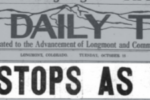
  • A headline from the October 18, 1927 edition of the Daily Times. It reads "Coal Mining Stops as Workers Quit."

    The Columbine Mine Massacre

    Overview Planning the Strike The 1927-1928 Colorado Coal Strike marked an intense period in the state’s labor history. In August of 1927, leaders of the International Workers of the World…

  • 1920s Historiography and the American Textbook Project

    David J. Goldberg’s article “Rethinking the 1920s: Historians and Changing Perspectives” offers brief descriptions of over 50 books written between 1929 and 2006. The author organizes the books by topic,…

  • Anti-Reform Sentiment and the Columbine Mine Massacre

    The 1927 Columbine Mine Massacre was part of a greater pattern of unsuccessful coal strikes in the 1920s. According to Lynn Dumenil’s book The Modern Temper, strikes were rare during…

  • The Modern Temper Chapters 1-3: Transportation Technology and the Press in the Nome Serum Run

    The 1920s were a decade of rapid industrialization that are often remembered for their improvements in transportation technology. These advancements, however, did not prove useful to the town of Nome…

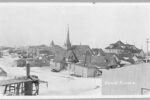
  • A black and white photograph depicting the small town of Nome, Alaska. It is covered in snow. Most of the buildings are very small, with a church steeple rising above the rest of the structures. There are no paved roads pictured in the town. The picture was taken in 1916, less than ten years before the 1925 Serum Run.

    The Nome Serum Run

    Overview Discovering the Epidemic Established as a Gold Rush town in the late 1800s, Nome, Alaska was home to roughly 1,800 people in 1925. Only one of them was a…

  • What the 1920s Mean to Me

    When I think of the 1920s, the image that most often comes to mind is that of the “New Woman” or flapper. I know from some of my past courses…

css.php