
Blog Post #2: Designing Surveys: There Is More To Surveys Than Filling Bubbles
There Is More To Surveys Than Filling Bubbles
Diversity in the United States has made collecting accurate demographics that can represent the whole United States from a small population a challenging ordeal. As a result, survey making has become a complicated process as writers try to phrase and organize the questions in a manner that will not ruin the validity of the survey by influencing the results. Wording aside, there are many factors that influence the answers of individuals, the most important of which are gender, race, and social class.
While recent changes in the United States have narrowed the gap between men and women in the social structure, gender still has a noticeable impact on the way people experience the world, therefore, changing their answers for the survey. According to the sociology professor, Anna Leon-Guerrero, “there is no society where men and women perform identical functions, nor are they ranked or treated equally” (1). In other words, the persistent gender gap affects the way individuals are treated and the degree to which different problems affect them. For example, working women in 2016 still receive only eighty percent of what their counterpart men were paid. Furthermore, women are still the minority in many career fields and more likely to be victims of sexual assault or relationship violence. As a result, when asked on a survey to rank social problems women might be more inclined to choose the pay gap than men who struggle with different societal problems.

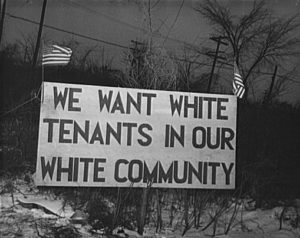
Other influences to survey answers come from race and social class, which are two interconnected social problems. Basically, race is directly connected to housing, schooling, political power, income, and personal values. Furthermore, people of high social class tend to come from cerian races, furthering the divide of opinions between the rich and poor. In other words, the ‘undesired’ races often have different worldviews from the ‘superior’ races since they rarely share the same neighborhoods, public schools, and social classes. Therefore it should come as no surprise that race and social class influence survey answers in matters concerning welfare, housing discrimination, wages, and political opinions. As a matter of fact, race and social class are often targeted as a means of changing survey answers. In the years 1993 to 1994, “Governor Zell Miller….ignited racial tension and racialized the state’s political discourse….[by] shift[ing] his attention from the state flag to welfare reform….[so] Georgia passed….punitive welfare programs” (1). In this instance, race was intentionally used to polarize people’s answers to the welfare question and halt the reform efforts. In essence, race and social class will undoubtedly influence survey answers in a variety of subjects especially if the questions are written in a provoking manner or at a time of racial tension.
Overall, gender, race, and social class definitely impact the world view of individuals and their answers to survey questions, which is why survey takers rarely agree on the answers to the questions asked. However, careful wording and considerate questions can help ease the tension and wield valuable data that could not be collected by qualitative research. Moreover, placing sensitive questions at the end of the survey instead of at the start reduces the influence of those sensitive questions on the rest of the survey.
Footnotes:
1. Leon-Guerrero, Anna. Social Problems: Community, Policy and Social Action. 6th ed. Thousand Oaks, CA: SAGE Publications, Inc., 2019.

