Day: February 5, 2020

There Is More To Surveys Than Filling Bubbles

Diversity in the United States has made collecting accurate demographics that can represent the whole United States from a small population a challenging ordeal. As a result, survey making has become a complicated process as writers try to phrase and organize the questions in a manner that will not ruin the validity of the survey by influencing the results. Wording aside, there are many factors that influence the answers of individuals, the most important of which are gender, race, and social class.

While recent changes in the United States have narrowed the gap between men and women in the social structure, gender still has a noticeable impact on the way people experience the world, therefore, changing their answers for the survey. According to the sociology professor, Anna Leon-Guerrero, “there is no society where men and women perform identical functions, nor are they ranked or treated equally” (1). In other words, the persistent gender gap affects the way individuals are treated and the degree to which different problems affect them. For example, working women in 2016 still receive only eighty percent of what their counterpart men were paid. Furthermore, women are still the minority in many career fields and more likely to be victims of sexual assault or relationship violence. As a result, when asked on a survey to rank social problems women might be more inclined to choose the pay gap than men who struggle with different societal problems.

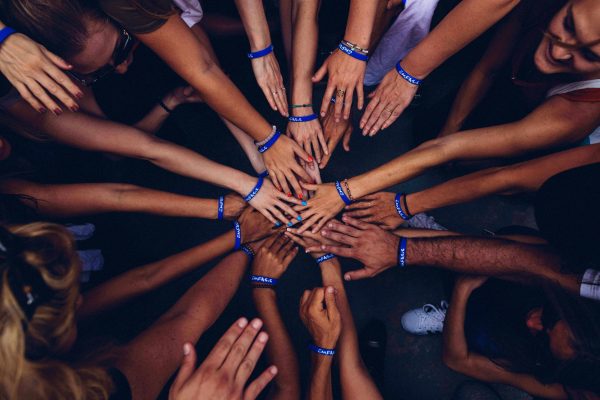
The gender pay gap and the limitations in career choices affect women’s views on various topics. (Photo by The New York Times) 

Other influences to survey answers come from race and social class, which are two interconnected social problems. Basically, race is directly connected to housing, schooling, political power, income, and personal values. Furthermore, people of high social class tend to come from cerian races, furthering the divide of opinions between the rich and poor. In other words, the ‘undesired’ races often have different worldviews from the ‘superior’ races since they rarely share the same neighborhoods, public schools, and social classes. Therefore it should come as no surprise that race and social class influence survey answers in matters concerning welfare, housing discrimination, wages, and political opinions. As a matter of fact, race and social class are often targeted as a means of changing survey answers. In the years 1993 to 1994, “Governor Zell Miller….ignited racial tension and racialized the state’s political discourse….[by] shift[ing] his attention from the state flag to welfare reform….[so] Georgia passed….punitive welfare programs” (1). In this instance, race was intentionally used to polarize people’s answers to the welfare question and halt the reform efforts. In essence, race and social class will undoubtedly influence survey answers in a variety of subjects especially if the questions are written in a provoking manner or at a time of racial tension.
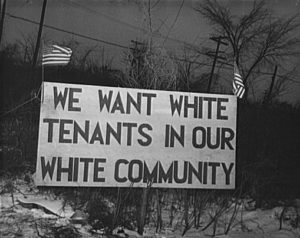
While now illegal, housing and schooling segregation by race still continues informally and affects world views (by Washington Monthly)

Overall, gender, race, and social class definitely impact the world view of individuals and their answers to survey questions, which is why survey takers rarely agree on the answers to the questions asked. However, careful wording and considerate questions can help ease the tension and wield valuable data that could not be collected by qualitative research. Moreover, placing sensitive questions at the end of the survey instead of at the start reduces the influence of those sensitive questions on the rest of the survey.

Footnotes:

1. Leon-Guerrero, Anna. Social Problems: Community, Policy and Social Action. 6th ed. Thousand Oaks, CA: SAGE Publications, Inc., 2019.

Today we are often inundated with requests for our opinions. How many times have you been asked to take a survey by a brand in exchange for a potential reward? In a world where everyone wants our data for everything, it can feel obnoxious at times. The digital age makes it almost too easy to ask everyone what they think of everything nearly all the time. It can be very overwhelming. Even my college sends out surveys for its students to take all the time. For someone to want to take your survey, it must seem interesting while not appearing to be too difficult to respond to. People need to want to take your survey, as so many are shoved in their faces on the regular. This is unfortunate, especially considering how useful a survey is as a method of research.

With a healthy awareness for the many ways that bias can affect the results of a survey, one can retrieve some viable data. The most important aspect of a survey is how well the questions and formatting work to help prevent as much bias as possible from affecting the answers from each respondent. Surveys are especially effective when it comes to social science as well, considering how trying to run experiments to test out complex real world problems can be difficult in comparison to other more traditional sciences which may use other research methods. Within more traditional science, there are many unchanging patterns and rules which govern how the world works. In social science, it is not that simple as people are highly variable. What may be true in one scenario may not be true in the next. This is why we often need the voices of the people themselves when it comes to research in a social science.

As for the world views of the other survey respondents, I am not entirely sure if they will share a similar world view as me. I like to think that most people are progressive in this day and age, but most people are not well-informed on modern social issues, and by no fault of their own. That sort of knowledge and awareness must be sought out, as it might only be skimmed in public education. There is also the factor of ones own gender, race, and social class. These aspects can have a real impact upon ones world view, which can definitely have an impact upon a response to a survey. Gender, race, and social class all together have a very real impact on the way someone lives their day to day lives in a society that is divided along those lines. These factors create a substantial enough change in the way someone grows up and lives their life, that we have to be conscious of them when considering survey respondents. A man has a very different experience than a woman, a white person has a very different experience than a black person, and a poor person has a very different experience than a rich person. These all influence perspectives.

“Questionnaire Design.” Pew Research Center Methods. Pew Research Center. Accessed February 5, 2020. https://www.pewresearch.org/methods/u-s-survey-research/questionnaire-design/.

The process of using surveys has always been simple. People could walk in a booth and express their opinion on a topic and walk out with no questions asked. But as time progressed surveys began taking a new direction with the way they were being given to the people. Surveys began to be used as a way to get a percentage from a target group of people, such as African Americans or Hispanic people. But one thing that has been learned throughout the years is that not everyone expresses the same opinion. People tend to have different views on things because of the fact that they feel differently on a particular subject. Ethnicity and race are not the only factors that contribute to an opinion. Gender, religion, and culture also are defining factors in what makes a person think the way they do and feel the way they do. Opinions vary due to many factors and that fact alone is something that everyone ignores. Feelings about abortion can be used as an example. Issues with abortion has become one of the biggest social issue in this generation. So when being surveyed about abortion, the main question is always, are you pro-life or pro-choice? 

Plenty of surveys have been conducted asking people how they feel about this social issue and there is never a clear cut number of people who feel such a way about the topic. Looking at the chart above, you can see how the opinions vary and that’s without looking at them from a boy/girl perspective. Other studies have been conducted about abortion and a survey was taken from social work students. Social work students were chosen because it is in the job description of a social worker to advise their clients about abortion. They provide the information and resources that can help a person make a life changing decision. The article; Religiosity and Personal Beliefs Regarding Abortion: Results from a Survey of Social Work Students in the United States, states, “Survey data were collected from 504 social work students, who were asked about their practice and education experiences and their personally held beliefs about abortion. Linear regressions showed that higher religiosity was significantly associated with greater endorsement of anti-abortion attitudes.” In religion, it is against the customs to partake in certain activities and abortion is one of them. So even religion begins to play a part in the direction a survey can take and abortion is just an example of how a survey can draw out different opinions. But in the end that’s what a survey is searching for. So believe me when I tell you that no one has the same opinions on a topic. We can agree with another person or share similar views but our opinions on a topic will most likely never be the same. For example, the way I see abortion is that I have no issue with a woman going to get one. If that is what she feels she needs to do then by all means, do what you must. But I would feel differently if a woman wanted to have an abortion with my child. I know I would not be okay with that. So it can be said that I am pro-choice in general but pro-life when I am involved. That is something I am sure that not too many people share the same opinion as me but would agree with me. So with that being said, I do expect that people will not share the same opinions as me but factors such as gender, race, and social class will impact the world and will be reflected in surveys. 


Bird, Melissa, Stephanie Begun, and Kimberly McKay. “Religiosity and Personal Beliefs 

Regarding Abortion: Results from a Survey of Social Work Students in the United States.” Women’s Reproductive Health 5, no. 2 (April 2018): 117–31. doi:10.1080/23293691.2018.1463742.


Frazee, Gretchen. “New Abortion Laws Are Too Extreme for Most Americans, Poll Shows.” 

PBS, Public Broadcasting Service, 7 June 2019, 

www.pbs.org/newshour/politics/new-abortion-laws-are-too-extreme-for-most-americans-poll-shows.


Dixon, Matt. “Is It Time to Ditch the Post-Call Survey?” ICMI, August 7, 2019. https://www.icmi.com/resources/2019/is-it-time-to-ditch-the-post-call-survey.

No matter the topic, surveys allow for people to express their opinions so that they impact results of a survey and/or questionnaire.


Despite their expected brevity, surveys are an easy way to get access to so many individuals’ thoughts and opinions, especially if they do not wish to vocalize them publicly.  They are tools used to gauge public opinion regarding certain topics. The process of using surveys is easy and accessible to many due to the different forms they take.  Digital?  Written?  Over the phone? There are so many types of surveys with numerous ways to conduct them in order to receive the most accurate and useful data as possible in the most efficient ways.

Nowadays, surveys are all around us whether we realize it or not, whether they be disguised in an email asking us about a recent visit to a store or through the credit card machines while we are paying for our merchandise on the lines of department stores.  Engines such as Survey Monkey and Google Forms provide easy access to partaking in a survey about any given topic.  Traditional research methods tend to be longer and more tedious while surveys typically produce immediate results that are later used for further analysis to determine a general consensus. To construct a successful and effective survey, one should be aware of the power of psychology.  The diction is a key factor in expressing the meaning and intent of the question so that the same question is understood by all participants to have the same meaning.^1  If people are asked questions in a biased manner, their answers will most likely be reflective of that.  For this reason, it is important to avoid prejudice as well as ask a variety of questions while also being mindful of being simple.  Asking complex questions with longer phrases may mislead participants while answering.

Surveys take many different forms and allow individuals different ways to express their opinions and feelings.

“3 Essential Ingredients of Survey and Feedback Campaigns.” Iterable, November 26, 2019. https://iterable.com/blog/3-

essential-ingredients-survey-feedback-campaigns/.

(more…)

Surveys and questionnaires have become a useful tool in marketing and research. Surveys can be used for a variety of reasons and the structure of the survey can direct it in a particular direction. The anonymousness that surveys can allow brings a larger pool of participants to the survey group. Allowing the answers to remain anonymous allows participants to answer questions more truthfully, whereas if their name was attached to an answer, they may hesitate and choose a more socially correct answer in the fear of judgement or disapproval. Although anonymous, surveys can still ask questions in order to define a particular age group, race, or subject pool which can help infer the data of the results. The ability to be anonymous in a survey separates surveys from other research methods such as interviews because it is easier to obtain data from a larger, more honest pool of participants.

Anonymity of surveys allow all individuals to participate truthfully without judgement.

Surveys allow participants to tell the truth on their opinions and views of the world. While designing a survey, I may have my own personal distinct view on a topic and I may construct the questions in a way that lead participants to answer how I want them to by using certain wording techniques and placing the questions in a certain order. If conducting a survey, I would not expect any of my participants to share the same world views with me although I may be able to word the questions in a way to persuade the participants to answer the same way I did; surveys can be manipulative.

Being in a society such as we are now, every can have their own, distinct views on the world and problems occurring within it. Race, ethnicity, and social class have a clear impact on an individual’s world view. New Jersey and states bordering us, such as New York, problems with police brutality have been rising in the communities. Although unjust for everyone, black or African American individuals are more likely to be concerned on this issue than other races. An article from nj.com explains how the black community feels that they are more likely to be punched by a cop. This issue would be of a greater significance to certain races than other and answers may vary about the severity of the situation and the importance of it. Black individuals see the world differently than let’s say non-Hispanic white individuals. Ethnicity has also separated society into groups based on their culture such as their traits, language, religion, or diet. With this separation comes different world views as each group has different values. Social class is another distinction that can alter the way that individuals view world topics. Unemployment in the US and in the world are a concern to all, but primarily a concern to the poor and lower social classes. The rich, wealthy class can rely on their trust funds and money to support them, while the homeless get fired from their job for no specific reason and can no longer afford items such as food. If asked, lower social classes would be more concerned about unemployment rates because it personally affects them. Race, ethnicity, and social class are three socioeconomic statuses that can affect an individual’s world view.

Being that each individual can have their own opinions on which worldly topic is most important, or least important, surveys would be able to reflect that. Surveys speak for the people and show how they feel. You can provide ten people that a very similar with the same ten questions and still come out with ten different results because every individual has their own values and opinion. Surveys are a very useful method to conduct research and analyze data.

css.php