Month: February 2020

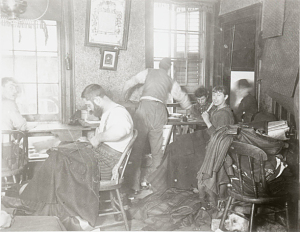
After leaving the Tenement Museum, my knowledge of sweatshops and its workers expanded beyond my imagination.  As our tour guide, Joshua, transported us back into the 1800s traveling through the single home of hundreds of immigrants, we learned that the individuals residing in the tenement house also ran their businesses within the small confinement of their four walls.  A distinct difference between the sweatshops in the past and those operated today are the locations. While past sweatshops were operated within the homespace, given a designated spot in the living room, the sweatshops operating today are more so located in factories or confined workplaces.  A significant difference between the sweatshops of the past and those in present-day is the advancement in technology and efficiency.  In the past, individuals working in sweatshops were forced to breath in fabric dust, which was fatal.  The Levine family we learned about had their own family business designated in their living room space (pictured below).  Nowadays, the sweatshops are more modern and depict a more factory-like environment, compared to the home environment that was used in the late 1800s.

This image depicts the Levine family’s living room/sweatshop. The room would have been dimly lit during its existence, full of toxic fabric dust (Monica Suma).

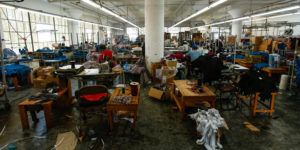
Compared to today, wages in both eras are low, and workers are underpaid for their labor.  The Levine family’s rent was fifteen dollars a month while they sold dresses for ten dollars each piece.^1  Today, there are existing sweatshops for large companies, such as Forever 21.  One of the workers was earning six dollars an hour for pinning tags on shirts and cutting their loose threads.^2  Most of these workers, unlike history’s, were women.
This image depicts the sweatshops’ harsh conditions still existent today (Los Angeles Times).

Upon entering a new nation, there are more opportunities, but that does not mean that those opportunities have been granted.  Immigration and sweatshops are typically interconnected because immigrants are more willing to conduct this type of work than those who are native to the nation and dominate the language.  Immigrants’ options are limited, so they are more accepting of any opportunities coming their ways.  The Levine family immigrated, and like others’ situations, “They had few skills and little money. They couldn’t really read or write and they didn’t speak English. Needing to support themselves and their five children, the Levines, like many other immigrants in the area, literally set up shop in their home.”^3  Immigrants did not have many options, so they were willing to make do with whatever came their way in order to support their families.

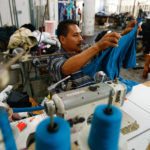
Pictured above are the materials used at a sewing factory in downtown Los Angeles (Los Angeles Times).

Considering their harsh conditions, sweatshops can be beneficial for immigrants and other workers only in the sense of getting acclimated to surroundings and the language.  There are no monetary upsides as workers are extremely underpaid for the amount of work and hours they put into production, but as discussed on the tour, sweatshops were often the places where individuals met their spouses and worked with their families.  For immigrants, sweatshops allowed families to stay together while navigating their way into their new residing nation.  On the contrary, sweatshops are not all that beneficial to natives or citizens of a nation. Being a native-born citizen already elicits an advantage in which he/she is exposed to more opportunities in education, work opportunities, and financial stability.  There is more aid that is able to be provided to the citizens given the circumstances of their situations.  Sweatshops benefit large companies/corporations, as seen in retailers such as Forever 21.^4  They save money since they pay people less for their labor while they earn more profit from their products, benefitting in both areas of production and labor.  Sweatshops benefit the large companies, but they take more from their workers than they give them. 


Bibliography

(^2, ^4) Kitroeff, Natalie, and Victoria Kim. “Behind a $13 Shirt, a $6-an-Hour Worker.” Los Angeles Times. Los Angeles Times, August 31, 2017.

(Image 1, ^1, ^3)Wanderer, The World, and Monica Suma. “The Tenement Museum, Immigration and My Grandmother.” Monica Suma, August 13, 2013.

Visiting the tenement museum was a great experience to have last Wednesday. Never before had I heard of tenements but after seeing them I was amazed. They were just regular apartments that were occupied by immigrants but I never knew that immigrants used them to operate sweatshops. This amazed me because it showed me how relentless and determined people can be when they want to provide for their family. Operating a workshop from your home is dangerous. Anything can occur out of the blue moon such as equipment issues or a child issue and those are just a couple examples. The article Sweatshop Subjectivity and The Politics of Definition and Exhibition states, “Inspectors relied on their sensory responses. Citing odors as evidence, inspectors united fears of poverty, pestilence, and promiscuity in their definition of the sweatshop. Clothing produced in filthy shops by diseased workers could infect consumers and male and female immigrants working in close quarters were becoming an enfeebled, immoral race.”
While that can be said for sweatshops in the 1800s, things are different in the world today. Sweatshops are different today than they were back then because sweatshops to people in the 1800s was just being in a small room surrounded by lots of equipment with other people occupying the room. The article states, “ The work is done under the eyes of task-masters, who rent a small room or two in the rear part of an upper floor of a high building, put in a few sewing machines, a stove suitable for heating irons, and then hire a number of men and women to work for them.” Even in those times that was considered to be a form of slavery because of the work conditions people were subjected to, yet no one did anything about it. Which led to people continuing on with the process. That was until 1994, where the United States General Accounting Office gave a definition for a sweatshop. Sweatshops were defined as, “‘a workplace’”that violates more than one federal or state labor law governing minimum wage and overtime, child labor, industrial homework, occupational safety and health, workers compensation, or industry regulation.”Image result for sweatshops ny
Lots of these workers were immigrants who did not have the opportunity or resources for anything better. They came from another country clueless to the environment and the struggles that were ahead of them because they were foreigners. This connects all immigrants because they are subjects to the same conditions. Working in the sweatshop conditions is illegal if they face conditions that are below the human standard, such as not being paid minimum wage. Yet, they are clueless to this fact because they do not possess the resources to learn this information when they first arrive in this country. So they instead break their backs and teach their children the value of having an education or pursuing anything greater than working some factory for someone who underappreciated them. Immigrants from the 1800s-2000s face the same conditions, which I believe connects us. But I believe there is a chance for sweatshops to be good. All a sweatshop needs to be good in my opinion is for someone that is someone in charge that actually cares about their workers. When you have an employer who cares about you, they take care of you, so you can help take care of them and their business.

Bender, Daniel. “Sweatshop Subjectivity and the Politics of Definition and Exhibition.” International Labor and Working-Class History, no. 61 (2002): 13-23. Accessed February 19, 2020. www.jstor.org/stable/27672769.

Gannon, Devin. “Tenement Museum Will Stay Open Late on Thursday Nights for Special Tours and Programs.” 6sqft, 24 Sept. 2018, www.6sqft.com/tenement-museum-will-stay-open-late-on-thursday-nights-for-special-tours-and-programs/.

Intern. “American Sweatshops.” Boston Review, 1 Mar. 2019, bostonreview.net/gordon-american-sweatshops.

Sweatshops are referred to as a place of work, typically a factory or clothing production company, that abuses their workers by placing them in inhuman working conditions for very long hours with very little pay. While sweatshops were typically more common in less developed countries many years ago, suspicion has led to the investigation of big companies today, such as Nike, for making their factories into sweatshops. Being that Nike operates their production in about 41 countries, some being less developed countries such as Bangladesh and Cambodia, Nike has been accused of operating sweatshops in these smaller regions. Research from

Cartoon illustration of Nike sweatshop    treatment.

WHO shows that Nike workers in Cambodia, since the year 2000, have complained of working in small buildings in which temperatures went as high as 37 degrees Celsius (98.6 degrees Fahrenheit) and earned wages of approximately fourteen cents and hour.  While Nike has covered its tracks in recent years and have begun to include sustainability and women’s/LBGTQ+/minority group empowerment in their campaigns, it is unsure if the working conditions have entirely approved as Nike claims that they are not all responsible because those factories are subcontracted.

Sweatshops have been historically shown to provide employment for foreign immigrants and individuals expected not to work, such as women. In the years 1880-1940, the United States population grew by approximately 26 million people through immigration according to Smithsonian records. Being that so many immigrants traveled to the United Sates to start a new life with new opportunities, it was often hard to find employment. Sweatshops would become rather popular in the US at this time as they allowed a countless number of employees as the work environment was often overcrowded and it was cheap labor. Often, sweatshops were located in larger factory buildings to ensure the most amount of labor could be fit and used, however, sweatshops were also found in many tenement apartments.

The third, factory room of a tenement apartment in which the family business would be run in.

Tenement apartments were typically three room apartments that would house families with any number of members; in this time period, families sizes were around five to nine members. The first room would be a bedroom in which the bed took up predominantly the entire room; some families would fit a much smaller futon-like piece of furniture in this room to maximize sleeping space. The second room in the apartment also contained at least one other bed while the rest of the space was the kitchen. Most apartments contained a stove and sink area although running water was not always running throughout the building, rather it was just outside and families would fill buckets up and bring them to their rooms. The third room was the sweatshop/factory space. This room, unless your family worked in a factory located outside of your home, would consist of sewing machines and fabrics as the father, possibly other families members, and outside workers would work long days constructing clothing. Many workers would fit in the rather tight space to complete their work tasks and pay levels were never that high.

Sweatshops were very commonly linked to immigration as they were the easiest form of employment to obtain and their were always open positions. While conditions were not always the best, immigrants would take these jobs because it was better than being unemployed and gave them a chance to provide income to the family. Containing a factory setup in a tenement apartment also allowed families to work longer hours and be in the environment of their own home and family. Sweatshops were very common at this time, however, they quickly grew out of business once labor laws begun to be implemented and workers were provided better working conditions.


I was amazed walking through the tenement house, seeing how small the apartments were and finding out how many people lived in each; it was surprising to me that an eight-person family would have had to make due living and sometimes working in a space that small. Learning about two particular immigrant families touched me since each had their own story and way of life that were both similar to and different from each other. Learning about the garment factories that families ran in their own homes as well as the larger sweatshop factories that were established was an additional eye-opening experience for me. I remember learning about the sweatshop factories in middle school and high school, but to be put in the immigrants’ shoes by touring a legitimate tenement house, seeing printed government census reports as well as images of these families, of Orchard Street, and of the sweatshop factories impacted me.

I learned at the museum that mostly women worked in the sweatshops and they were paid very low wages, following the gender roles of the time. The health conditions were fatal, especially because of all the fabric dust they would inhale from the air. Additionally, they worked very long hours, ranging from fifty to close to one hundred hours per week. The larger sweatshop factories resembled a high school cafeteria; they were very crowded spaces with little to no sanitation. Unfortunately, immigrants had to deal with these conditions because they had just moved to a new country where they were unfamiliar with the language and had no idea where to start; they were desperate to find a job to start rebuilding their lives and to support their families. However, many joined labor unions and went on strikes, but this did not bring positive results. I believe sweatshops can be a good thing for immigrants to an extent, that being that they were at least employed and were paid. It is difficult for foreigners who have no idea how society runs in a country other than their own to find a job, and other jobs that do not require one to speak a certain language or to have a specific skill set, such as various housekeeping jobs, would have had equally unfair working traditions. Employers took advantage of the immigrants’ desperation to find a job, and found no shame in treating them unjustly.

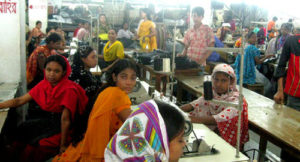
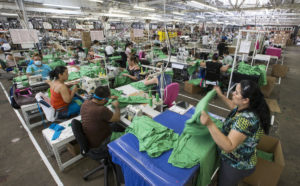
This is a picture taken from an article published by the LA Times of a present-day sweatshop factory of Forever 21 located in Los Angeles, California.
This is a picture of an immigrant worker at a sweatshop. This photo is borrowed from the same LA Times article the other photo was borrowed from.

According to Benjamin Powell, the author of the article Meet the Old Sweatshops: Same as the New, the conditions in the sweatshops of the past were worse than those in many currently operating sweatshops. Child labor was very common back then and the cities were dangerously swelling with people and disease.[1] However, an article published by Los Angeles Times about the factory workers for Forever 21 proves the unfortunate fact that sweatshops still persist today in America and that many of the unsanitary conditions in the early sweatshops exist in those of today. The claims made in this article parallel those made on our tour in the city. It is distressing to think that many of the articles of clothing we wear, even those that are sold to us at a high price, are made by laborers who work about 10 hours a day and are paid a few dollars an hour. As said in the article, these factories are “stifling” and “sweltering” and consist of only “one-room workshops” where workers sit “behind a sewing machine,” similar to those of the past. Additionally, the factories in America such as the one located in Los Angeles where the workers produce the clothing for the brand Forever 21, aim to keep the prices low so they hire immigrants, many of them undocumented, who are willing to work for below minimum wage.[2]

After the field trip to the museum and reading these two articles, my eyes have been opened and I have become more sensitive and curious about the past in relation to the present as well as about the stories of different immigrants.

Bibliography

[1] Powell, Benjamin. “Meet the Old Sweatshops: Same as the New.” The Independent Review, v. 19, n. 1, Summer 2014, ISSN 1086–1653, 2014, pp. 109–122.https://www.independent.org/pdf/tir/tir_19_01_08_powell.pdf

[2] Kitroeff, Natalie, and Victoria Kim. “Behind a $13 Shirt, a $6-an-Hour Worker.” Los Angeles Times. Los Angeles Times, August 31, 2017. https://www.latimes.com/projects/la-fi-forever-21-factory-workers/.


Sweatshop in Ludlow Street tenement, New York City, around 1889 Photographer: Jacob Riis. Courtesy Library of Congress.

You would be surprised how many similarities the sweatshops of the past have to the ones of today. In the past, during the late 1800s, many families, especially immigrants lived in small tenements. The majority eventually began their own garment business within their own homes with manual machines.

In Bangladesh, 3.5 million workers in 4,825 garment factories produce goods for export to the global market, principally Europe and North America. The Bangladeshi garment industry generates 80% of the country’s total export revenue. However, the wealth generated by this sector has led to few improvements in the lives of garment workers, 85% of whom are women.


In fact, immigrants created more than 60% of the clothes for women in America during this time. The fabric dust commonly caused lung issues. This is still true today, but unlike in the past, the majority of the workers are women. If clothing appears to have been done by hand, like embroidery, “there’s a good chance the garment was quite literally homemade, at least in part—and most likely by a woman who was paid a pittance for it.” 1 By the early 1900s, garment making had shifted. Many people began working in factories, but they were still mostly immigrants. Today immigrants are still exploited to work in sweatshops, but especially in developing countries, the workers may be citizens or migrants. Both had extreme work hours, disease, and poor working conditions. Child labor is a huge problem especially

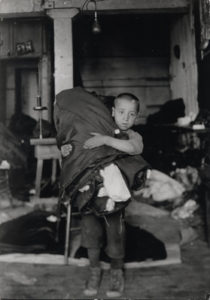
Italian boy holding a bundle of cloth, New York City, around 1910 Photographer: Lewis Hine. Courtesy Eastman House Children often carried goods to and from shops and performed simple operations such as removing basting threads.

today. Children in the past worked, but in the case of sweatshops producing garments, many children did small tasks like transporting smaller items. Today “in developing countries, an estimated 168 million children ages 5 to 14 are forced to work.” 2 Immigration is heavily connected to sweatshop labor. Coming to a new country, especially one where the language is different, is extremely difficult. The work you can do without knowing English or having connections is limited to labor-intensive work. This includes sewing in sweatshops. One woman was “lured to the United States by a human trafficker promising a good job as a nanny. She was exploited, undocumented, and unable to speak either English or Spanish.” 3 Immigrants are easily taken advantage of because of their lack of support and the temptation of a new and better life. Many of those who are first-generation immigrants take these jobs to get a footing in a new place and plan to have their children learn English and get better jobs in the future. Despite the poor conditions and pay, sweatshops have a silver lining. In history, immigrants could eventually rise the ranks of wealth to live a mostly comfortable wife. For example, one family living in a tenement in New York City was eventually able to gain enough money to start their own garment factory and move to a new building. Even if one is unable to do this, they have a job at the very least. Today ideas for anti-sweatshop laws would prevent America from importing goods made in sweatshops. Unfortunately “anti-sweatshop laws would make third-world workers worse off by lowering the demand for their labor.” 4 Despite the sweatshops not being good work, at the current moment, without them, many people would be living even worse than they are.


Work Cited and Footnotes

1 Bain, Marc. “A Huge Underclass of Ghost Workers Are Making Your Shirts in Their Homes.” Quartz.      Quartz, January 20, 2016. https://qz.com/494818/in-much-of-the-world-the-sweatshop-isnt-a-factory-its-someones-kitchen-floor/.

2 “11 Facts About Sweatshops.” DoSomething.org. Accessed February

3 Davis, Charles. “The Dark Side of Your Clothes Being ‘Made in America’ No One Talks About.” ATTN. ATTN: July 26, 2017. https://archive.attn.com/stories/18483/made-america-how-sweatshops-exploit-immigrants-make-your-clothes.

4 Powell, Benjamin, Craig J. Richardson, Jon Murphy, John Schuler, Jeffrey Rogers Hummel, Charles L. Hooper, and David R. Henderson. “In Defense of ‘Sweatshops.’” Econlib, June 3, 2019. https://www.econlib.org/library/Columns/y2008/Powellsweatshops.html.

The stigma surrounding mental health would be the first social issue that I would like to explore. When doing some preliminary research, I was fascinated to learn that there is actually a fair amount of recorded history on mental health. For my project, I will definitely be able to dive deeper into the history of mental health a bit more. According to the World Health Organization, in January 2020 they published that “depression is a leading cause of disability worldwide and is a major contributor to the overall global burden of disease,” (1) with over 260 million people suffering from a mental health illness, more specifically depression. This affects me because I am one of those 260 million people that has had to overcome struggles from depression.

Photo by Anthony Tran on Unsplash.

The path I plan to take with researching this topic is to definitely focus on and mention the overall aspect of mental health in New Jersey while touching upon the United States as well, however taking it one step further and researching how mental health is perceived on college campuses by both students and faculty. This will allow me to examine how mental health and its effects vary among different economic classes, genders, races, and ethnicities. Most importantly, the main aspect of my project will allow me to see how my fellow peers feel when it comes to the topic during the years they are more prone to developing a mental health disorder due to the pressures of truly transitioning into adulthood.

Furthermore, it affects the community because of the insane number of people that are affected by mental health and because when mental health is left untreated or if the treatment is not working, the number of people who feel that suicide is the only option has unfortunately greatly increased, and is now, therefore, one of the leading causes of death in the United States. WHO also mentions that while mental health disorders are treatable, about 76%-85% of people that are diagnosed do not have the resources or even necessary funds to get the treatment which has been known for a very long time, yet not much has actually been done.

Another social issue that is very important to me is women’s rights, especially it comes to the pay gap. This is yet another topic in which most of society has acknowledged that there is a present gender disparity in the labor force, yet not that much significant action has been taken to truly solve this issue. One may say, wait, wasn’t there the Equal Pay Act of 1963 which was signed into law by President John F. Kennedy? Yes, however, according to numerous publications, women are still only earning seventy-nine cents for every dollar a man makes. AND this is not accounting for women of different races or people from different educational backgrounds.

Photo by lucia on Unsplash.

Furthermore, within the past few years, there have been multiple class-action suits that argue against gender discrimination as well. For example, in April 2019 a group of women claimed that media giant Disney treats women extremely poorly and like cheap labor. (2) Similarly, in August 2018, four women who had worked for the athletic company Nike filed a class-action lawsuit acquired that Nike participated in activities that covered up sexual harassment and gender wage discrimination. (3) This affects both me and women of my community because as a woman myself, it is important that both genders are treated equally and given the same opportunities to grow. I have done research on this topic before and as mentioned earlier in this section, there are many statistics and a great deal of history to support the argument for women’s rights.

The final social issue that I would potentially research is government and political problems. This is an area in which I am probably most inexperienced but do have some background knowledge from an internship I had through the House of Representatives in the summer of 2019. While the internship did somewhat show me behind the scenes of being a Congressman and what goes into being a politician, what I saw most was the distrust that the people have in our government as a whole. When the government was first created, it was to help and better express the needs of the people. However, as it modernized, it seems that it has become more of a game and a competition.

Photo by Marco Oriolesi on Unsplash.

According to a study done by the Pew Research Center in 2018, (4) 63% of Americans have very little to no trust in their elected officials. And the numbers only grow larger when looking at the people’s trust in major institutions. Not only do the people then feel uncomfortable with their officials for the time of their position, but Americans have also reported that this distrust prevents societal issues from getting solved as well. According to a New York Times Article, people believe that this distrust can be solved through electing officials that are “older, more educated, and had higher household incomes…” (5)

This effects my community and myself because it is very obvious that there are many pressing issues happening in our society, but the public and politicians need to come together in order to come up with a solution that will take time but overall improve the situations. A way this research can be conducted is by looking at trust in elected officials over the years and identifying what events took place at the time when trust sank. There are many statistics and studies done such as the one previously mentioned by the Pew Research Center.

References:

  1. “Depression.” World Health Organization. World Health Organization. https://www.who.int/news-room/fact-sheets/detail/depression.
  2. Sam Levin, “Treated as Cheap Labor’: Disney Underpays Women, Lawsuit Alleges,” The Guardian (Guardian News and Media, April 4, 2019), https://www.theguardian.com/film/2019/apr/03/disney-company-women-pay-gap-lawsuit).
  3. Alexia Fernández Campbell, “Why the Gender Discrimination Lawsuit against Nike Is so Significant,” Vox (Vox, August 15, 2018), https://www.vox.com/2018/8/15/17683484/nike-women-gender-pay-discrimination-lawsuit).
  4. “Distrust in America Viewed as Problem.” Pew Research Center for the People and the Press, December 31, 2019. https://www.people-press.org/2019/07/22/how-americans-see-problems-of-trust/.
  5. Stevens, Matt. “Falling Trust in Government Makes It Harder to Solve Problems, Americans Say.” The New York Times. The New York Times, July 22, 2019. https://www.nytimes.com/2019/07/22/us/politics/pew-trust-distrust-survey.html.

Three Social Issues

Social Issue #1: Education:

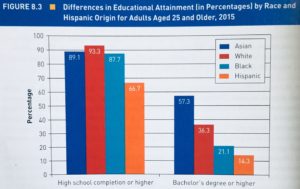
Presently, many professions and jobs have been locked away behind degrees, therefore flaws in the educational system have become more damaging to society. To clarify, for every student that fails to acquire a bachelor’s degree, society loses a professional employee and many opportunities are closed off for that individual. Due to the complex nature of education, there are many aspects of the problem that need to be tackled. For instance, student debt, quality of public education, the effects of race and gender on degree acquisition, and school violence are all issues that are still to be addressed. When it comes to historical background, debates over education and how its various aspects stretch back all the way past the ancient Romans and Greeks. In the Republic, Plato, an ancient Greek philosopher, writes that education is the key to reaching a higher state of being that is necessary for anybody entering politics. In other words, education has been a matter of debate for centuries and there is much material and history to explore. By the same token, there is also a rich statistical database provided by the U.S. Department of Education and many other contributors that addresses most of the aforementioned issues with education. 

This statistical bar graph shows the correlation between race and degree acquisition. Sources: (1) and U.S. Department of Education, National Center for Education Statistics 2017d

Social Issue #2: Work:

Being an essential part of every society, work and its related policies are subject to much change and criticism. Ideally, a full-time job should bring some satisfaction to the employee and provide a livable wage. Furthermore, work should provide a safe environment and the right to unionize. However, these aforementioned goals have not yet been achieved in all of the United States. Due to this, skilled workers are unemployed or underemployed and minimum wage workers struggle to survive. Moreover, the sociology professor, Anna Leon-Guerrero, states that, “According to the U.S. Bureau of Labor Statistics (2017h), there were 5,190 fatal work injuries in 2016” (1). To clarify, some workplaces are still hazardous to employees. Race and gender also play a role in these work issues by making certain individuals more vulnerable to unemployment and lower wages even if the certifications. Any of these work aspects that need improvement can be individually explored extensively. In order to address work issues, it is important to consider how recent events have changed the nature of the workplace. For example, the Industrial Revolution, Great Depression, and World War II have all contributed to major shifts in the demographics of employees and the nature of jobs available. The U.S. Bureau of Labor Statistics and many other reliable sources have collected valuable statistical information to aid in understanding the extent and effects of these work issues and the shifts displayed over time.

In many states, the minimum wage is not enough to pay all the bills. Source: https://www.nytimes.com/2019/06/05/smarter-living/what-a-living-wage-actually-means.amp.html

Social Issue #3: Medicine:

Despite being an essential part of life, healthcare is a major problem worldwide. The most obvious healthcare problems are in developing countries where epidemics commonly breakout and kill hundreds of people before being contained. However, even in developed countries healthcare is still an issue, especially in the United States. According to the sociology professor, Anna Leon-Guerrero, “Even though the U.S. health system is the most expensive in the world, ‘comparative analyses consistently show the United States underperforms relative to other countries on most dimensions of [health] performance’ (Davil. 2007:viii)”(1). In other words, the U.S. healthcare system is both overpriced and underperforming, which is a heavy burden on society’s members that now have to struggle to pay their medical bills. Furthermore, the United States’ healthcare system is ranked last for equity, which means that race and gender play a major role in the quality of healthcare a patient receives, and Anna Leon-Guerrero shockingly states that, “there is a 20-year gap in life expectancy between the most and least advantaged populations”(1). Overall, healthcare is a serious issue in most societies and the problems vary between countries. Due to the international scale of the problem, it is important to focus on one piece at a time. Moreover, the recent efforts to reduce healthcare costs in the United States through insurance and other means yields valuable insight into the nature of the problem and the effectiveness of the aforementioned efforts. Statistics concerning various aspects of the issue are provided by The World Health Organization, which provides information about international healthcare problems, and the National Center for Health Statistics, which provides more precise statistical information concerning only the United States.

    In the United States, individuals struggle to deal with the overpriced healthcare system. Source: https://amp.cnn.com/cnn/2019/12/05/politics/us-health-care-spending-2018/index.html

Footnotes:

  1. Leon-Guerrero, Anna. Social Problems: Community, Policy and Social Action. 6th ed. Thousand Oaks, CA: SAGE Publications, Inc., 2019.

Three social issues that interest me is the issues with abortion, bullying, and racism/discrimination. Racism and discrimination is the social issue that is most important to me because as an African American male, I face the possibility of being discriminated every time I leave the house. The history of racism and discrimination in the African American community dates back before the 1800s and it continues to happen to this day. According to the article, The Black Lives Matter Movement, Crime and Police Brutality: Comparative study of New York Post and New York Daily New states, “Even though the era of Jim Crow is gone, once an African American is branded a felon, it becomes difficult to get a job because of having a criminal record. The sheer numbers of African Americans now languishing in prison across the country are a clear sign that not much has changed.” Racism and discrimination is not just an African American issue as it spans across the world. Every ethnic group faces a form of discriminations. The Hispanic group face citizenship discrimination, the Muslim group faces terroristic discrimination, and those are just a few examples to name. Citizenship education and the challenge of racism, discrimination and disadvantage is an article that states, “The idea behind citizenship education is that it will help both to integrate the demands of justice, equality and community and to prevent the increasing apathy towards politics and government, which may damage the health and stability of a modern liberal democracy.” Which is a valid point because instead of being united the way the United States is preached to be, we focus on our own individual ethnic group while we treat others as being beneath us.

Abortion makes the top two of social issues that are important to me because the way the situation is being handled.  Being pro-life or pro-choice should not be a one or the other issue. Women should have the right to choose what they want to do. What I feel like makes this an issue is the reason  women have when they go to get an abortion. Some women seek out abortions because of a one night stand or because they accidently got pregnant because they were not safe and protected when they have sex. Other women seek abortions because they were raped and do not feel comfortable raising after an incident like that. This may seem like a breach of women rights because it is their body that is at risk. WOMEN’S REPRODUCTIVE RIGHTS AND SOCIAL EQUALITY IN DEVELOPING COUNTRIES, is an article that talks about how women reproductive rights are being analyzed. The article states, “Current literature offers two types of models in terms of the impact of human development and social equality on women’s reproductive rights. The first model proposes that social and political equality guaranteed to women regardless of the levels of development is positively related to the levels of reproductive fights (Dixon-Mueller, 1993; Correa, 1994). The second model suggests that reproductive fights are likely to emerge at high levels of socioeconomic development (Li, 1993).” Solutions to abortions seem no where in sight which makes it an important topic to me because the issue has a versatile approach.

Last but not least, bullying is the third on my list of top social issues. Bullying is third on my list because bullying prevention has gotten nowhere in our society. Bullying has led to so many issues in our world today and the biggest one is suicides. Lots of teens has chosen suicide as a solution to being bullied because they feel like they have no one to turn to when being bullied. They feel alone and isolated when facing bullying and bullying comes in many forms, cyber-bullying, verbal bullying, and physical bullying. Bullying and Suicidal Ideation and Behaviors: A Meta-Analysis, is an article that identifies how bullying has transcended over the years and provides an analysis of bullying to suicide rates. The article states, “We searched multiple online databases and reviewed reference sections of articles derived from searches to identify cross-sectional studies published through July 2013. Using search terms associated with bullying, suicide, and youth, 47 studies (38.3% from the United States, 61.7% in non-US samples) met inclusion criteria. Seven observers independently coded studies and met in pairs to reach consensus.” That article does not include reasons for people being bullied. People are constantly bullied because they are different from what society deems to be normal and this causes rejection among the population, which is why bullying makes my top three list of social issues.

Chama, Brian. 2019. “The Black Lives Matter Movement, Crime and Police Brutality:

Comparative Study of New York Post and New York Daily News.” European Journal of 

    American Culture 38 (3): 201–16. doi:10.1386/ejac_00002_1.


Holt, Melissa K., Alana M. Vivolo-Kantor, Joshua R. Polanin, Kristin M. Holland, Sarah DeGue, Jennifer L. Matjasko, Misty Wolfe, and Gerald Reid. 2015. “Bullying and Suicidal Ideation and Behaviors: A Meta-Analysis.” Pediatrics 135 (2): e496–509. doi:10.1542/peds.2014-1864.


Singh, Basil R. 2001. “Citizenship Education and the Challenge of Racism, Discrimination and Disadvantage.” Contemporary Politics 7 (4): 299–318. doi:10.1080/13569770120106444.


Pillai, Vijayan K., and Guang-zhen Wang. 1999. “Women’s Reproductive Rights and Social Equality in Developing Countries.” Social Science Journal 36 (3): 459. doi:10.1016/S0362-3319(99)00017-8.


This is a picture of a mother and her adopted daughter at the March for Life. Yoder, Katie, and Mairead McArdle. “March for Life Art Contrasts with Vulgar Signs at Women’s March in 30 Photos.” National Review. National Review, January 19, 2019.

As I mentioned in my first blog post, I am adopted, so the social issue of abortion is particularly meaningful to me because if my biological mother had not chosen life, I would not be here today. I do not know the reasons as to why she could not raise me, but I am beyond blessed to have been given the chance to live. I am pro-life, but if I decide to base my project on this social issue, I am interested in analyzing both sides of the issue: those who are pro-choice and those who are pro-life. According to Wikipedia, “pro-choice” means believing that it is a woman’s civil right to decide whether to have an abortion or not since it is her body. Wikipedia also defines “pro-life” as placing emphasis that the growing embryo or fetus has the right to be born and that abortion is the act of killing a life.[1] I would like to research about adoption and the other alternatives to abortion and why people who decide to have an abortion do not choose to give birth to the child and put him or her in an orphanage or in the foster care system, for instance. I do not have much knowledge regarding the topic so I would be extremely interested in collecting and analyzing the results conducted in my project. There are certainly statistics I can use that will strengthen my project if I choose to do it on this topic, and I would construct a survey to gain a better sense of why it is such a prominent social issue. Some statistics include those gathered from New York Times: “‘about 8 in 10 Americans believe abortion is taking a life,” said Ed Goeas, president of the Tarrance Group, a Republican polling firm. ‘What you then have is a discussion about when it is acceptable.’” Additionally, the New York Times quotes Gallup which shows that “about 60 percent of Americans favor access to abortion in the first trimester (or first 12 weeks) of pregnancy, but close to 70 percent think it should be illegal in the second trimester.”[2] I would additionally examine the pros and cons of abortion being illegal and legal. Although abortion is a heated topic, like all social issues, it is important to look at both sides of the problem to gain a better understanding of it.

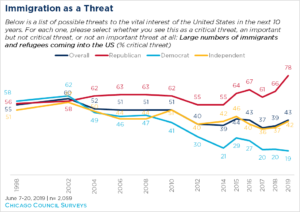
This is a graph made by the Chicago Council on Global Affairs based on a study conducted regarding the opinions on the issue of viewing immigrants as threats to the United States. Kafura, Craig. “Republicans and Democrats in Different Worlds on Immigration.” Chicago Council on Global Affairs, February 3, 2020.

The social issue of immigration is a leading social issue today, especially in the United States. My parents own a preschool in North Bergen, New Jersey, a town filled with Hispanic immigrants. They help the parents pay for the education of their children with Urban League. Many of the immigrant parents are single and have had their children at a very young age. Most of my family members are immigrants, so I know many stories of the struggles immigrants face in assimilating and trying to adapt to a new way of life. I, too, am an immigrant, so this topic is especially important to me. Immigration is a significant social issue because of the concern of closing boarders and illegal immigrants trying to cross them. Immigration is another intense topic since, according to the Chicago Council on Global Affairs, most Republicans view immigrants and refugees as a threat to the United States, whereas Democrats believe in continuing to embrace immigration as part of the nation’s history by being less controlling regarding border security. There are many statistics that would benefit my project if I were to base it on this social issue, especially since I am looking to analyze the claims made by Republicans and Democrats, including a statistic made by the Chicago Council on Global Affairs: 45% of Americans claim that limiting the amount of immigrants coming to the United States makes the country “safer.”[3] The belief that immigrants are “dangerous” and are “criminals” are occupying many people’s minds, and it is important to look past single stories that we may have heard of immigration and to educate ourselves on the bigger picture as well as on details and specifics.

This is a graph of data collected by a study conducted by Desert Cove Recovery concerning the impact stability of family members have on children. Cove, Desert. “How Family Structure Relates to Substance Abuse.” Desert Cove Recovery, March 27, 2015.

A third social issue I would like to explore is mental illness. Recently, my church called The Most Blessed Sacrament in Franklin Lakes, New Jersey was burned down by a mentally unstable young man. This arsonist committed a horrible crime, but I sympathize with him. This event impacted me immensely since I have grown up in this church, and to see it in rubble has me destroyed. It also touched me in a way that my eyes have been opened to a world where people are fighting battles on their own that no one else is aware of. Mental illness is a major social issue and if I were to base my project on it, I would focus on how family structure impacts the mental health of a person. A preliminary study conducted by the US National Library of Medicine National Institutes of Health shows that there is a connection between family structure and the levels of behavioral issues in children. They studied how single parents affected the upbringing of a child, and they also collected data on the rates of trauma and hospitalization. One statistic they established is that 71% of children “reported either a parent or a sibling with a psychiatric disorder.” [4] This is an alarming number which makes mental illness an even more urgent cause to worry about. If a child does not have a solid support system in his or her home, the child tends to keep to him/herself and may become anxious, depressed, or develop more advanced conditions of mental illness.


[1] “Abortion Debate.” Wikipedia. Wikimedia Foundation, February 10, 2020. https://en.wikipedia.org/wiki/Abortion_debate.

[2] Leonhardt, David. “Why Abortion Is Not Like Other Issues.” The New York Times, July 13, 2013. https://www.nytimes.com/2013/07/14/sunday-review/why-abortion-is-not-like-other-issues.html.

[3] Kafura, Craig. “Republicans and Democrats in Different Worlds on Immigration.” Chicago Council on Global Affairs, February 3, 2020. https://www.thechicagocouncil.org/publication/lcc/republicans-and-democrats-different-worlds-immigration.

[4] Behere, Aniruddh Prakash, Pravesh Basnet, and Pamela Campbell. “Effects of Family Structure on Mental Health of Children: A Preliminary Study.” Indian journal of psychological medicine. Medknow Publications & Media Pvt Ltd, 2017. https://www.ncbi.nlm.nih.gov/pmc/articles/PMC5559994/.

Although society is a place for individuals to come together, it often poses as a foundation for many social issues to progress.  Despite having come a long way in certain regards, many still suffer negative experiences on a daily basis. There are complex issues that affect individuals; however, three of the most overarching social issues experienced today are economic inequality, gender inequality, and racial inequality.  Without solving these three issues, society may never be able to rise above its own constraints.

This image is a mural that was done to advocate for the end of gun violence. It serves as a reminder to remain united. (Footwear News)

Economic inequality is indicative of a failing financial and economic system.  Beginning at a young age, most individuals dream of acquiring wealth and a secure financial status.  Despite the high frequency of the dream, it is accomplished by very few. The economic disparity between individuals is seen on a routinely basis, and it is especially magnified in today’s climate.  I want to choose this issue because it affects every part of the community, and it is so easily seen within the community. I also want to choose this because it is a crucial matter that prevents individuals from moving upward in society.  In fact, “People in the lower rungs of the economic ladder may experience diminished economic opportunity and mobility in the face of rising inequality.”^1   There are billionaires such as Jeff Bezos while there are children in impoverished cities who are unable to attend school or know where their next meals are coming from.  With the increasing use of social media, one is able to see the widening gap between social classes: influencers typically impact younger generations and allow for the gap to deepen.  For example, using companies such as Amazon only adds to the inequality experienced by millions. In order to conduct deeper research, the two aspects I would like to focus on is education to see how financially disadvantaged individuals are even more disadvantaged because of society’s opportunities being set against them.  I would also like to focus on the rapid wealth that the rich are emassing, “The wealth gap between America’s richest and poorer families more than doubled from 1989 to 2016.”^2   I can include some historical context to compare whether the gap has widened or narrowed over time as well as analyzing the factors in that contributed to the issue.  Statistics are readily available that can help me research this issue.


This graph depicts the widening disparity between economic classes. (Pew Research Center)


While progress has been made towards gender equality, society is a long way from attaining equality.  Women are inherently disadvantaged compared to men in society. Still, however, genders apart from women experience discrimination in more oppressive forms.  This issue widely affects the community because as more people gain the confidence to live life as authentic as possible, more oppressions seep into their lives, especially for those who do not identify as being male or female, i.e. those a part of the LGBTQ+ community.  There has been increasing violence in the transgender community. I want to choose this topic because of the different sectors that succumb to this issue. Gender inequality can be seen in workplaces, cultures, and daily norms. Because of its presence in different sectors, a specific aspect, such as I the gender inequality faced on a daily basis, would have to be focused on so that the research conducted can be deeper.  For example, “Women are 47% more likely to suffer severe injuries in car crashes because safety features are designed for men.”^3   Statistics such as these can help with researching the topic because it is interesting to see the different parts of society that favor and cater to men compared to the other genders.  Because gender inequality has been an issue throughout history, a historical element could be incorporated where the project could explore the areas in which equality has increased as well as areas that still lack equality.  For example, women gained voting rights in 1920; however, it is 2020 and transgender individuals cannot serve in the military. Inequality should decrease, not remain stagnant or regress.


This image depicts President Obama on ‘Equal Pay Day’. He signed executive actions to close a compensation gender gap that was in favor of men. Photo was taken on Tuesday, April 8, 2014. (Center for American Progress)


Perhaps one of the most complex, overarching social issues is the racial inequality of minority groups within the nation.  Personally, I grew up in a diverse neighborhood with classmates who came from backgrounds from all over the world. Although I am part of the majority race in this country, I want to choose this social issue because of its presence in so many other societal issues and parts of society, such as school/education, law enforcement, and job opportunities.  To avoid superficial research, I want to focus on racial inequality in the law and the legal system, police brutality being the focal point. In 2015, “Racial minorities made up about 37.4 percent of the general population in the US and 46.6 percent of armed and unarmed victims, but they made up 62.7 percent of unarmed people killed by police.”^4   Police brutality largely affects racial minorities, Black individuals in particular.  In addition, Black people are more likely to be arrested for drugs despite them not being more likely to sell or actually use them.^5   These prejudices are not newly-established as they have been existing for centuries.  The same practices have been done and will continue to be done unless there is change.  The historical background in which I would like to include in the framework for my research, in particular, is the Civil Rights Movement in the 1940s-1960s and compare those events with the events happening today.  Despite times changing, many of the same mentalities and injustices are exhibited present-day. In this case, statistics will show an overwhelming similarity in racial inequality.


This graph depicts the disproportionate killings of black people by police officers in 2012. (Vox)


Though these three social issues are significant in today’s society, there are many others that possess equal importance and just as much urgency to rectify.


Bibliography

(Image 1)   George-Parkin, Hilary. “Why Companies Need to Get Comfortable With Taking a Stand on Social Issues.” Footwear News. Footwear News, February 6, 2019.

(Image 3)   Glynn, Sarah Jane. “Explaining the Gender Wage Gap.” Center for American Progress, May 19, 2014.

(Image 2) ^1 and ^2   Horowitz, Juliana Menasce, Ruth Igielnik, and Rakesh Kochhar. “Trends in U.S. Income and Wealth Inequality.” Pew Research Center’s Social & Demographic Trends Project, January 19, 2020.

(Image 4) ^4 and ^5   Lopez. “There Are Huge Racial Disparities in How US Police Use Force.” Vox. Vox, November 14, 2018.

^3   Whiting, Kate. “7 Surprising and Outrageous Stats about Gender Inequality.” World Economic Forum, March 8, 2019.


css.php