The Existence of Sweatshops: Hundreds of Years Later
Though I have heard of sweatshops before I visited the Tenement Museum, my understanding of them after the visit was so much more in-depth. I was amazed to hear how families of eight would live in the small apartments, with kids still sleeping on the floor of what would be their work area or garment sweatshop.

https://www.tenement.org/
The difference between sweatshops now compared to the 1800s is the size and location. As briefly mentioned earlier, they were usually just one room with a few workers. Their wives would occasionally bring them food, and as discussed at the museum, they were at least able to see their kids since they were working from home. However, nowadays, sweatshops are in cafeteria-like large rooms with as many workers packed in as possible. Very rarely will workers get a lunch break, and they do not see their families during the day. Conditions have changed mainly because as prominent retailers and department stores have emerged, they all want one thing: the most profit. And unfortunately, that means their factory workers, get the short end of the stick. However, in American sweatshop factories, conditions are not as bad as they are in international ones. Internationally, child labor is still happening at extremely young ages, and women that are pregnant must continue working as well. The website, “The World Counts” posted the statistic that “250 million children between 5 and 14 are forced to work in sweatshops in developing countries. The pay? Sometimes less than 20 cents per day or about one cent per hour.”
What is most disturbing is that these major companies know what they are doing. According to an article on WWD, in 2016, “more than $65,000 in civil penalties were levied against repeat or willful violators. The factories that violated laws regulating minimum wage, overtime and record-keeping made clothes for retailers including Ross Stores, T.J. Maxx, Forever 21, Bealls, Charlotte Russe, Burlington, Windsor, Nordstrom, Macy’s and Dillard’s.” (1) The keyword in this quote being repeat and willful.
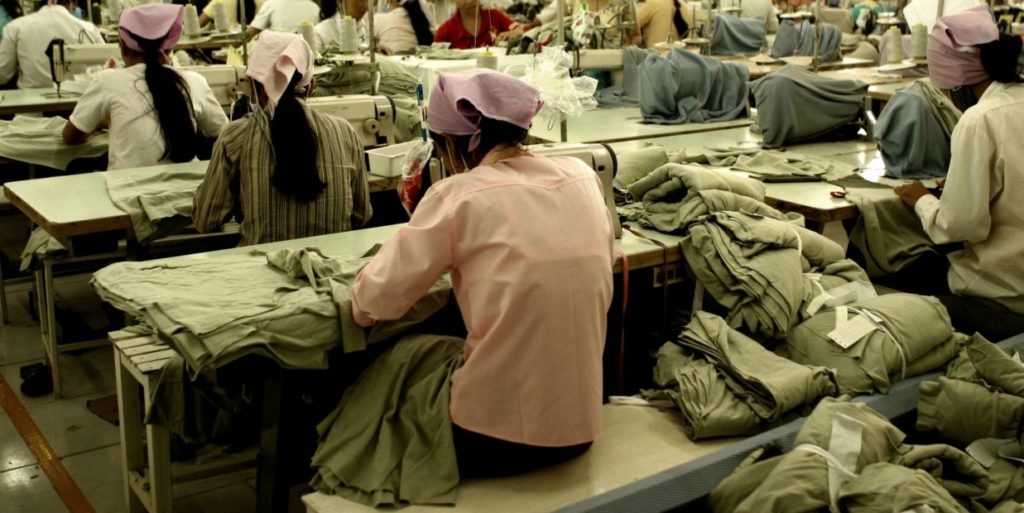
The link between sweatshop work and immigration is that when immigrants come to the United States, they are not necessarily aware of all the rules and regulations, therefore, they are seen as easy targets. More specifically, they are not necessarily aware of wage requirements, “mandatory” working conditions, and other important factors that should be normally enforced by employers. Therefore, when they hear of a job opportunity in the U.S., they would rather take it than being left unemployed.
Though sweatshops, for the most part, have horrendous conditions and pay their workers unfairly, there are minor benefits for immigrants and other workers. First, as mentioned earlier, they provide more jobs and do not necessarily require any identification or paperwork to be hired. Second, as we saw in the Tenement Museum, immigrants were able to connect with others from their culture and help each other from getting homesick and not feel as lonely. Additionally, “The World Counts” did report that if workers’ rights are being properly followed, then it may benefit poor countries. They mention Honduras, where the average sweatshop “worker earns 13 US dollars per day, which is a decent wage considering that 44 percent of the country’s population lives on less than 2 dollars per day.” (2) While this wage would not really work to the United States’ federal standards, news sites have reported that it is somewhat beneficial to poorer countries. Overall, this comes down to ensuring that all people are treated like people and are given a fair chance for a good quality of life.
References:
- “Sweatshops Persist in U.S. Garment Industry.” WWD. WWD, December 5, 2016. https://wwd.com/business-news/government-trade/sweatshops-persist-in-u-s-garment-industry-10716742/.
- The World Counts. Accessed February 17, 2020. https://www.theworldcounts.com/challenges/people-and-poverty/slavery-and-sweatshops/sweatshop-workers-conditions.

