Day: April 22, 2020

The Individual

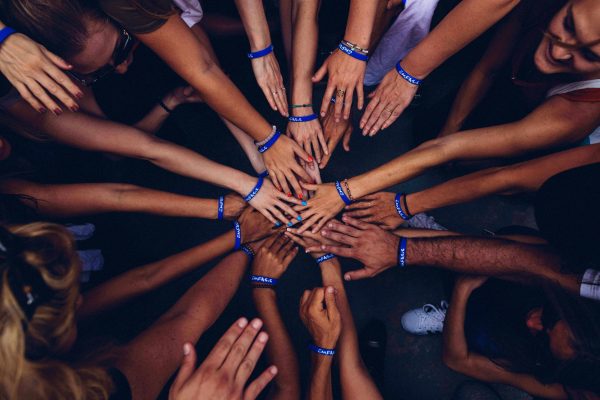
With the human population reaching an all-time high of 7.8 billion, individual efforts have never felt more meaningless. However, the founding fathers of America disagree. After all, why did the fathers include the right of free speech as the first amendment in the Bill of Rights, if they believed that individual opinion made no difference? Individual opinions and actions DO make a difference. They can even prompt changes at the local and national levels in a process that can be broken down into four steps. First, an individual must identify a problem and then proceed to act toward solving the problem. These individual actions can vary from joining an organization that supports the cause to raising awareness on social media. As awareness rises, local institutions will join the movement and attempt to implement the suggested solution on a small scale. Eventually, local institutions will grow and band together to make a united appeal for action at the national level. This process of change is currently taking place for the healthcare of the United States.

Every individual in this crowd stepped up to make a difference. https://sanquentinnews.com/50-years-martin-luther-king-jr-peace/

First off, it is important to highlight why the current healthcare system needs fixing. The problem with the health care system of the United States is that it is based on the ‘cooperation’ of different policies, which decreases the effectiveness of the care delivered and hikes costs. To clarify, Americans can receive health insurance from their jobs, personal expenses, the Affordable Care Act, Medicare, and Medicaid. This leaves out around 28 million people that were still uninsured as of 2018 according to the census taken that year because the United States is the only developed country without mandatory health insurance (1). Overall, the United States uses up 17.7 percent of the Gross Domestic Product (G.D.P.) to maintain this system which is more than any other developed country. In essence, the healthcare system of the United States is in dire need of change.

First, an individual must identify that Medicare must be fixed and then act accordingly. https://masspeaceaction.org/event/fix-it-healthcare-at-the-tipping-point/

In order for healthcare to improve, action/change must start at the individual level. Individuals that identify the troubled healthcare system must first conduct a small study concerning the proposed policies and the parties that proposed them. One example of these proposed policies is single-payer healthcare, which describes a method of financing healthcare by taking a portion of everybody’s income instead of premiums to provide universal healthcare and wide coverage. Another fact that individuals should keep in mind is that often several plans will be combined tp better suit the needs of the people. Technically, both Britain and Canada have single-payer systems that cover all, but Canada relies on private companies to deliver care while Britain delivers the care and regulates drug costs. This miniature study should help individuals make informed decisions when voting for candidates that propose different healthcare plans. Furthermore, understanding the different policies will aid individuals to publicize accurate information on social media platforms and will enable them to spot misinformation. Moreover, individuals can choose to join organizations that advocate for their ideal medicare system and write encouraging letters to representatives. Currently, the biggest supporter of single-payer healthcare is Bernie Sander, and individuals can support his campaign on his website (2). In brief, individuals should start their attempts to fixing healthcare by conducting a study and then proceeding to act in support of the policy they prefer.

There is a variety of medicare financing systems including single-payer healthcare. https://www.who.int/health-topics/health-financing#tab=tab_1

As more individuals move to action, local institutions respond to the increasing interest according to the resources available to them. In other words, colleges could conduct surveys or studies on the effectiveness of single-payer healthcare and the public demand for this system. Furthermore, colleges can offer occasional seminars that explain the current system and the alternative systems available. While conducting these seminars, colleges should not choose a system but spread accurate information about all the systems to enable college students to make their own informed decisions about the best fix for healthcare. Colleges could also allow student clubs that keep their members posted about the latest developments concerning healthcare and organize various events to raise donations for hospitals that provide services to the uninsured and needy. Unfortunately, local businesses might struggle to participate in fixing healthcare. One solution for this is for employers to include a detailed explanation of healthcare alongside the insurance coverage they normally provide to their employees. While the response of local institutions may vary, eventually the demand will drive proposals onto the national stage.

Join a club! Student clubs keep their members posted about the latest developments concerning healthcare and organize various events to raise donations for hospitals that provide services to the uninsured and needy. Uhttps://www.wblibrary.org/BookClub.png/image_view_fullscreen

Arguably, the last step towards reform can be the most challenging one as officials debate various plans competing for adoption. As the debates begin, the government must make sure that the public is aware of the nature of the plans being discussed. A perfect example of a healthcare debate can be found in a unique article titled “Universal New York Health Care: A Single-Payer Strategy Linking Cost Control and Universal Access” by Doctor Dan E. Beauchamp and Professor Ronald L. They review three different proposals to improve the Healthcare system of the United States. The three proposals discussed were the Physicians for a National Health model, Enthoven and Kronick’s sponsor-based competitive model, and the Universal New York Health Care model. Enthoven and Kronick’s proposal relies on cost-competitive employment-based insurance and provides subsidized insurance for the unemployed. On the other hand, the proposal of the Physicians for a National Health Program is based on the Canadian plan and replaces private health insurance with a tax-based system led by the federal government. After introducing these two major proposals, Doctor Dan E. Beauchamp and Professor Ronald L. Rouse shifted focus to the Universal New York Health Care proposal or UNY-Care9 that takes aspects from the aforementioned two systems and is their personal favorite. The UNY-Care9 retains the system of private and public insurance. However, the private insurance system will be restructured to aid in the fight against medical inflation and reduce paperwork costs by adopting a one-card system of membership between providers and payers. This will result in health care benefits becoming more uniform for all American citizens. Furthermore, the government will pay insurance companies with founds from a one-payer financing structure. Personally, UNY-Care9 seems to be the perfect plan for introducing single-payer healthcare to the United States as it keeps the existing private insurers while introducing the many benefits of single-payer healthcare. Nevertheless, all three of the aforementioned proposals are valid and the authors of the article do an excellent job of explaining them to the reader. This is achieved by clearly explaining the basis on which each system is constructed and the financing system that each proposal will rely on (3). Overall the last step of the change process takes place on the national stage and the government must be transparent with its citizens concerning the policies being discussed.

Officials will debate various plans until one is signed into law. https://www.uspresidentialelectionnews.com/2017/01/trump-drives-agenda-as-115th-congress-seated/

While it is important to celebrate the passing of legislation aimed at improving the current healthcare system, it is more essential to remember that the achievement would not be possible without the action of individuals nationwide. In other words, what is truly commendable is the courage and effort of individuals who decided to band together to fix a broken system. Furthermore, help that local institutions provide to a movement in the form of research or information is worth of honorable mention as well. Of course, movements differ in their progression through the three steps, but these steps are a reminder of what matters most, in the long run, the individual.


Footnotes:

1.US Census Bureau. “Health Insurance Coverage in the United States: 2018.” The United States Census Bureau, November 8, 2019. https://www.census.gov/library/publications/2019/demo/p60-267.html.

2.https://berniesanders.com/issues/medicare-for-all/

3.Beauchamp, Dan E., PhD. and Ronald L. Rouse M.P.A. “Universal New York Health Care: A Single-Payer Strategy Linking Cost Control and Universal Access.” The New England Journal of Medicine 323, no. 10 (Sep 06, 1990): 640-644. doi:http://dx.doi.org.library2.ramapo.edu:2048/10.1056/NEJM199009063231005. http://library.ramapo.edu:2048/login?url=https://search-proquest-com.library2.ramapo.edu:2443/docview/1983427945?accountid=13420.

Harm to LGBTQ+ Just Trying to Serve their Country

Legislation and discriminatory practices that justify hate and persecution. The bans on transgender and LGBT individuals contribute to a sense of enduring discrimination, fear, and harassment for all minority individuals in the military. The stress LGBTQ+ face harms the military because it’s service members are harmed. These bans also do not support inclusiveness. It separates LGBTQ+ and prevents acceptance and toleration of all people in the military.

Healthcare

One study found a dramatic difference in health issues for LGBTQ+ and non-LGBTQ+ individuals in civilians. Due to DADT being repealed only recently, some are looking to non-service members to predict the differences in health care needs. “Studies of LGBT civilians from the general population indicate that there are important health differences between LGBT civilians and non-LGBT civilians. In civilian studies, LGBT individuals consistently show increased stress and psychological vulnerability when compared to their nonLGBT peers Specifically, LGBT civilians have higher rates of depression, anxiety, posttraumatic stress disorder, and substance use and abuse compared to non-LGBT individuals.”2  That being said, “When it comes to health, men are the weaker sex.” 3 One study found “Black, Hispanic, and other/multiple race veterans reported much worse health than White veterans.” 4 Factors in life, in biology, differences in socially accepted behavior and discrimination all affect the health of everyone in America. By arguing that LGBTQ+ members are more at risk for certain diseases seems weak compared to this evidence. Saying White men shouldn’t serve because they are at higher risk to “become alcoholics, or to have bladder cancer.”5 seems like a ridiculous notion to many. Every military service member can have multiple health issues, just because they are different does not mean that they will cost the military a dramatic amount of money. There are also plenty of studies done that have evidence that shows LGBTQ+ individuals have no extreme differences in medical health. This shows that whatever differences may exist are not so great that it would cause an extensive gap between LGBTQ+ and non-LGBTQ+

Unit Cohesion

As for unit cohesion, one study found that when there is acceptance within LGBTQ+ groups there are positive results and unit trust. When there is harassment, however, it “was negatively associated with social
cohesion”(Goldbach). Instead of changing negative attitudes toward LGBTQ+, many leaders, legislators, and civilians decided LGBTQ+ individuals had no place in the military. At a glance, one can think this is a logical conclusion and that bans have a function. But, now let’s talk about women. Women have always been in the military, but in different roles than men. They were nurses, prostitutes, and washerwomen until world war 1 when women were allowed to fight.  In World War 2, there was such a need for service members, the united states allowed women to actually enlist by 1943. Women, African Americans, LGBTQ+ individuals, and any other minority in the military were just as crucial to the war efforts as their white male peers.

Conclusion

Due to the vast amount of data against the justification of LGBTQ+ bans in the military, all legislation supporting said bans should be repealed. It causes harm to the LGBTQ+ community, minorities, and the military. There is no reason LGBTQ+ individuals should be restricted and the bans cause more harm than anything.

1 Goldbach, Jeremy T., and Carl Andrew Castro. “Lesbian, Gay, Bisexual, and Transgender (LGBT) Service Members: Life After Don’t Ask, Don’t Tell.” Current Psychiatry Reports, 2016. https://doi.org/ 10.1007/s11920-016-0695-0.

2/ 4 Harvard Health Publishing. “Mars vs. Venus: The Gender Gap in Health.” Harvard Health.  Accessed April 14, 2020. https://www.health.harvard.edu/newsletter_article/mars-vs-venus-the-gender-gap-in-health

3 Sheehan, Connor M, Robert A Hummer, Brenda L Moore, Kimberly R Huyser, and John Sibley Butler. “Duty, Honor, Country, Disparity: Race/Ethnic Differences in Health and Disability among Male Veterans.” Population research and policy review. U.S. National Library of Medicine, December 2015. https://www.ncbi.nlm.nih.gov/pmc/articles/PMC4714796/.

You should care about the topic about immigration because without immigrants, our nation would not be the nation it is today. Immigrants from all over the world have built our country from the bottom up. Diversity makes America what it is. Hispanics, a minority group that is soon growing to become a larger group of peoples in the United States, have attributed to the success and growth of our nation. 

To settle the dispute of placing stricter border restrictions, more action on the national level would have to be taken in order to make a grand difference. However, an individual, you, have the right to vote and every vote counts. It is imperative to educate yourself on Hispanic history and to be aware of the trials faced by them throughout time. Being educated on this background will help you when the time comes to vote for the next governor, president, or any government official. It is essential to listen carefully to their campaigns and to also analyze if what they are proposing could really be done. It is important to analyze if they are trustworthy and educated people themselves before making the choice of voting for them. You can also help increase public awareness of the different resources that are available, especially regarding the second social issue meshed into the large spectrum of Hispanic immigration, that being the discrimination against Hispanic immigrants. Technology has many pros and cons, such as social media, since it can be used for beneficial purposes but it can also do lots of damage. However, in this case, you should most certainly take advantage of social media to help raise awareness about various situations, moments in history, and events that have arisen that need widespread attention in order for the spurring social issue to be solved. Additionally, partake in volunteering at organizations that support the Hispanic community! Hispanics are more vulnerable to various harms than whites. Moreover, be conscious of labels and appropriate names of Hispanics racial groups. Be careful with stereotypes, especially regarding who you assume to be an illegal immigrant or not. Last but certainly not least, be more accepting of your own background and heritage if you are Hispanic. There is strength in numbers, and the Hispanic community is growing by the day. The Hispanic community is one who deserves to be treated with human dignity and decency, just as every other racial group deserves to be.

https://i.pinimg.com/originals/1b/9a/b0/1b9ab018d873362d7a14aea468a27144.png
One example of how Latino and Hispanic students unite is by forming an alliance in their schools.

On the local level, in our very own university, we celebrate diversity through clubs and organizations. However, even our university can take action in trying to better welcome Hispanic immigrants. As a college, we can create lounges that are designated for the Hispanic community. I know there is one by the fish bowl that is designated for the LGBTQ+ community. We can even establish clubs that are divided further to appreciate specific Hispanic groups, such as Cubans, Puerto Ricans, and so on. More events such as seminars and fiestas can be held to appreciate and celebrate the Hispanic culture. To better support the Hispanic immigrant community, we can create an office that works specifically with immigrants as well as counseling services that can serve as a safe-haven and solution for any mental health issues Hispanic immigrants may deal with due to bullying and other forms of persecution. We should found an anti-bullying pledge or contract that we are all made to sign and agree to the terms, accepting the punishments if it is violated.

Nationally, we can try to increase quotas for the different countries to welcome Hispanics. We need more acceptance regarding the ability to hold political positions as well. To try to reach a happy medium between Democrats and Republicans on the topic of placing stricter border regulations, a huge national debate should be held where this is discussed. Policies and papers should be altered to ease the process for the Hispanics, and having translators available would additionally help since that can describe more clearly how the immigration process works to them. Making sure the immigrants are updated on their status and on the status of refugee camps and if they need to be deported is equally as important since there are many stories where they travel by foot and spend fifteen years at a camp and are forced to be deported back to their home countries, having to restart their lives and form new connections.

There are millions of Hispanic organizations that help these causes such as The Committee for Hispanic Families and Children (CHFC) that was founded to advocate for Hispanics and to aid in improving their quality of life. The Congressional Hispanic Caucus Institute (CHCI), with their vision of an educated Hispanic community that actively, locally, and federally participates in taking action, aims to create the Hispanic leaders of the future. The Mexican American Legal Defense and Educational Fund protects and promotes the Latinos’ civil rights, and the National Association of Latino Elected and Appointed Officials (NALEO) empowers Hispanics to participate fully in American politics. These are only to name a few of the countless organizations that show love and support to the Hispanic immigrant community.[1]

https://lam-network.com/wp-content/uploads/2014/06/co-hosts_1024x512.jpg
Here are more examples of local and national Hispanic organizations.

Bibliography:

[1] “Latino Organizations You Need to Know.” Diversity Best Practices, 11 Sept. 2014, www.diversitybestpractices.com/news-articles/21-latino-organizations-you-need-know.

In a society that constantly changes and adapts to evolving circumstances, it is important to be aware of recent events and conscious of how to handle different matters pertaining to urgent topics.  Immigration is an increasingly popular topic for debate, and people find themselves being on either the pro-immigration stance or the anti-immigration side.  This is a problem: people should not be pinned against other human beings.  People should care about immigration because it is the foundation that formed many nations, especially the United States.  The U.S. is able to thrive on its diversity and offer so many options in so many different sectors of society as a direct result of immigration’s influences (i.e. job opportunities, education possibilities, language variation, cuisine, etc.).  People should care and want to know more about their surroundings, where they live/come from, and current events.  Many immigrant families encounter barriers that prevent them from completely immersing themselves in American culture.  Most of all, people should care about this matter because most people encounter immigrants (and know them personally) if they are not immigrants themselves.  To effect change in the way people perceive immigration and act towards it, alterations need to be made on three levels of society: the individual level, the local level (for our purpose, the RCNJ level), and the national level.


This image portrays getting from Point A to Point B, as an immigrant must embark on a journey, and every social movement has a beginning point and a destination point (Forbes/Getty).

Individual Level

The first step in becoming an advocate of any social issue is becoming educated on the topic and being open-minded about all factors it involves.  Because people often base their opinions on what is depicted across the media, there are common misconceptions spread about immigrants and their backgrounds.  People can combat this by using trustworthy sources as well as becoming advocates for immigrants and the immigration process.  People can attend rallies/protests, attend marches, and sign petitions to raise awareness of the topic and to recruit others to start thinking in the same open-minded ways.  Although most movements are most effective at the national level, movements such as #MeToo begin on the individual level; once an individual speaks their truth and takes a stand, others feel empowered to do the same.  It takes on a domino effect: once a single individual takes action, others will feel empowered enough to follow in their footsteps.  Media can be a significant contributor in this, as those who feel passionately and strongly about the matter will likely reach out and try to make a difference in the way others see immigration.


Local/RCNJ Level

Above the individual level is the local level; Ramapo holds a significant amount of power in spreading awareness and acceptance throughout campus.  The school can offer courses and bring attention to immigration as well as its history in America.  While Ramapo does provide and advocate for diversity and activities celebrating different cultures, international students add a large portion of the diversity and new perspectives that are seen on campus, even though they may not necessarily be immigrants.  Colleges and universities have their own policies about accepting undocumented immigrants, so to make a difference, Ramapo can accept a wide range of immigrants no matter what their backgrounds may be (^1).  The students involved in the DREAM Act, referred to as Dreamers, are eligible to receive in-state tuition, and New Jersey and New York are both among two of the nineteen states to offer this opportunity, which is beneficial since Ramapo is in New Jersey and is close in proximity to New York (^2).  Despite the DREAM Act being a national bill, it allows colleges and universities to be an active part in undocumented students’ journeys.


National Level

Because of the complexity of immigration, the most action can be taken at the national level.  First, the US Immigrant Rights Movement is a nonviolent social movement that aims to protect immigrants from discrimination while also paving the way for undocumented immigrants to become citizens (^3).  This movement tries to grant immigrants opportunities with matters such as jobs and education and is integral in trying to give them a more fair chance in life (^4).  This social movement holds marches across different cities and states, which allows for them to raise more awareness.  All of its missions and goals can be found on their website.  While it is typical for volunteers of this movement to be of Latino descent, anyone who advocates for freedom can take action and be an ally in the movement.  Additionally, in recent years, immigration has become a hot topic for debate with lawmakers often disputing between being more strict or more lenient on immigrants, particularly those who are undocumented.  To effect change, the government can begin to become more consistent in how they manage and approach immigration matters.  These varying perspectives cause inconsistencies when passing legislation, which only makes it more difficult since regulations are changed and modified each time a new president and political party assumes office (the most recent modification being that President Trump has suspended immigration into the United States due to the coronavirus pandemic).  It would make it easier on citizens and government if media and legislation was spreading the same information, not conflicting or contradicting news.  We may be able to accomplish a trickle-down effect also, however, only if the national government is able to come to a mutual understanding in how to treat such matters.


This image depicts a narrative of immigrants moving into the United States (Forbes).

Acceptance and advocacy of immigrants and the immigration process can be fostered at the individual level, through the local level, and all the way up to the national level.  If individuals are more tolerant and accepting, then more people will be granted opportunities.  The more people work together, the more efficient and advanced society will continue to become, so it is important to take a stand for what one believes in and see that through all the way to the national level by participating in rallies, voicing opinions, and always being civil.


______________________________________________

Bibliography

(Image 1 and Image 2) Semotiuk, Andy J. “What Do Immigrants Want And How Do They Get It?” Forbes. Forbes Magazine, January 30, 2020.

(^1 and ^2) “The Dream Act, DACA, and Other Policies Designed to Protect Dreamers.” American Immigration Council, September 3, 2019.

(^3 and ^4) “The US Immigrant Rights Movement (2004-Ongoing).” ICNC: International Center on Nonviolence Conflict, 2020.

css.php