Being an African American male in Paterson is a blessing and a curse. A blessing because Paterson has a rich history of being a contributor to the United States. Being one of the most densely populated cities in New Jersey and being known as the “Silk City” due to its large contribution of silk during the 19th Century. Paterson is a home to many cultures and races and is continuing to grow. However, the curse of living in Paterson is the image the world has of Paterson. Paterson is constantly stereotyped as being a bad place to live as people feel “nothing good comes from Paterson”. Education is mediocre, streets are dirty, and the crime rate is high. Overall Paterson is one of the lowest places to live in New Jersey. When people learn that I am from Paterson, they stereotype me as being uneducated and low class. When people lay eyes on me, they think I am intimidating and uninterested. They think this because when you look at my face, my facial expression shows a person who doesn’t care about what is going on. I don’t smile or converse and I stay to myself. That there bring the labels disrespectful and ignorant to my image and once that gets placed on you, there is no escaping that. But none of that is true about me. As a person, I am really just introverted on initial meetings. When I am around new people, I am quiet and reserved as I try to get a feel of my surroundings and the people in it. But the biggest thing that people always get wrong about me is that I am ignorant and disrespectful. Adults who know me as a person, know that I am anything but disrespectful. Everything I have accomplished in life people assume that I don’t try because of my laid back personality. But I work for everything I earned. I was my high school graduating class valedictorian, that there should speak about my work ethic. Nigerian author Chimamanda Ngozi Adichie states in her TED talk, “the problem with stereotypes is not that they are untrue but that they are incomplete.” This is so true because people in Jersey associate Paterson with crime and ignorance. Yes, Paterson has this but Paterson holds many opportunities for us to take advantage of. But because we’re so used to being stereotyped for not receiving high quality education or proper care and concern about our safety from adult figures, we look down on ourselves and just give up before we can even begin. To paraphrase what Adichie states, “but to insist on only these negative stories is to flatten my experience and to overlook the many stories that form me,” and that’s what people in Paterson do. Which is sad to say because I know a lot of people with the potential to do great things. But that’s the community I live in and I acknowledge that. So in return I take it upon myself to achieve their dreams for them. To show people in the world that the Paterson community can produce someone worthy enough to be seen as something more. But most importantly, I feel it’s my job to show people in Paterson that with the right opportunities and proper motivation,we can be something in life. Anyone living in the harsh conditions of Paterson has a chance in this world. Being born and raised as a African American male, that is what I feel is my place in the Paterson community.
Works Cited
“City of Paterson, New Jersey.” Paterson Vista Park / City of Paterson, New Jersey. Accessed
In July of 2015, I had a panic attack that changed my whole life. It altered everything I thought I knew about myself, and for a while, I felt lost and completely alone. When I was later diagnosed with generalized anxiety disorder, I did not think that it made me much different, if any different, from anyone else. Yet my “friends” and even teachers seemed to think so.
The phrase “mental illness” or “mental disorder” comes with such a negative connotation to it, yet millions of people in the United States have faced it. According to Mental Health First Aid USA, “…almost half of the adults (46.4 percent) will experience a mental illness during their lifetime.”^1 However, because of the stigma around the topic and lack of affordability of care, “only 41 percent of the people who had a mental health disorder in the past year received professional health care or other services.”^2
The stigma associated with mental health is related to what Nigerian author Chimamanda Ngozi Adichie describes as a “single story.” In her TED Talk, “The Danger of a Single Story,” Adichie describes how growing up she would read books, yet she would have a hard time connecting with the characters because none of them looked like her. This illustrated the single-story narrative, that would only portray or present one type of character to the audience. Overall, Adichie depicts how only discussing one individual’s experience or one individual’s truth can be perilous, because by doing so, one is creating a stereotype.
As Adichie faced stereotypes because of her race, I faced stereotypes because of my disorder. I was assumed to be an “attention-seeker” or someone that was “weird.” When applying to my first job at an ice cream shop at fifteen, I disclosed my disorder because I was homeschooled at the time and I thought that explaining that to my potential employer would be beneficial, because I was raised that “honesty is the best policy,” right? However, as soon as the word “anxiety” came out, I never heard from them again. And that hurt. That was when I realized, that if I were to embrace my disorder, I would have to deal with people’s negative assumptions. Assumptions that had no evidential support whatever.
Fast forward to about five years later, I was able to become Mental Health First Aid certified in March 2019 at Ramapo College. I have also been able to help be there for others through their mental health struggles which are a pretty empowering feeling in and of itself. But don’t get me wrong. I have had help along the way. I will never forget one of the most prominent people that helped me in the earlier period of my recovery. A family friend who gave me my first job at the web development he worked at. Unlike the first job I applied for, he gave me the opportunity BECAUSE I shared my story. He was one of the first people that were able to relate to me because of his own mental health struggles. He struggled with severe anxiety at night and at the time so did I so he would check in to see if I was okay and at least eventually fall asleep. He had three children of his own so the checking-in part was fairly natural to him.
Taken in early 2017, my family friend and I.
Unfortunately, over the years his mental health illness considered spiraling and he pushed everyone out of his life, even his family. In early June of 2019, I discovered through a GoFundMe post for his family, that my dear family friend, had succumbed to his illness and took his own life. I was in utter shock for days, and all those feelings of confusion and fright that I experienced with my first panic attack flowed back. However, I knew I had to be strong. If not for just myself, but my friends and family. The stigma of suicide is saddening in and of itself, as it is seen by many as selfish or weak, but they are only seeing a single side of it and not the deep pain that the individual is facing.
Thus, I have made it my life goal to work towards diminishing the single-story reaction that has fueled the stigma of mental health. Because lending an ear does not take a million dollars, it takes understanding and a few minutes.
Footnotes: 1 “5 Surprising Mental Health Statistics,” Mental Health First Aid, February 6, 2019, https://www.mentalhealthfirstaid.org/2019/02/5-surprising-mental-health-statistics/) 2 Ibid.
Resources: “5 Surprising Mental Health Statistics.” Mental Health First Aid, February 6, 2019. https://www.mentalhealthfirstaid.org/2019/02/5-surprising-mental-health-statistics/.
Chimamanda Ngozi Adichie tells her single story through her TED talk and how she was not as everyone had thought; Adichie was an African attending University in America and her roommate, for example, expected her to have tribal music and not know how to use a stove because media portrays Africans so poorly. As she continues to present, Adichie explains that everyone can have their own single story and there are many that are not about catastrophes and still just s important. Adichie’s story was one of people believing she was less than she actually was; my single story makes me more generic than I am. People look at me and see a white, blonde, female with blue eyes. I am middle class and my parents have been together for twenty-seven years and people know that. I was a varsity athlete for four years and everyone assumed I was popular and not the smartest. While yes, I do fit a definition of white girl as I dress a certain way, wear scrunchies, and carry my hydroflask around, I am more than people think.
This image shows the generic “white girl starter pack” in which society assumes all white girls own these items but reality can fall far from this.
I have been in honors classes my whole life, including college currently, and care a lot about my education. I also wasn’t that popular and actually had no real friends for a while. I had attending therapy in high school and felt very alone. People also can’t see in their single story of me that I am a type 1 diabetic. Being a diabetic has changed my life and alters certain situations for me that a lot of people will never know about. For this assignment, I asked my friends what they first thought of me and I do fit their single story of me in many ways but there are many other details that impact who I am. I am by no means less than what people see me but I am less generic- to them I am a basic white girl, while in reality, I am deeper.
While people may not see the real me, but rather the single story of me that they have created, I cannot blame them as I too see people as their single story. Moving into my dorm, the first semester of freshman year here at Ramapo College, I had a single story of my roommate already laid out in my head. My roommate and I had met once prior to moving in and all I got from her was that she was too nice; she said no to nothing, she was open to everything, and she was spoiled her whole life. I was aware that she lived in a gated community in Kinnelon, New Jersey, a rather rich area. She told me about her huge house and how she had traveled the world when we first met and for some reason that bothered me. In my mind, I had a single story of her: a rich, spoiled girl who was used to getting whatever she had wanted. While moving in, her mother took complete control and I had no say in where I wanted my bed or dressers because it was her way or no way. They began hanging paintings all over our dorm, quite expensive ones actually, while I attempted to put up my printed photos of my friends. I saw my roommate as materialistic. As we began living together, I will admit that for a long time I only saw her as this single story that I had formed but in reality she was much more. My roommate is a very smart person; she came into college with over forty college credits from AP classes in high school. She is also super friendly and not materialistic at all but rather she can be very down to earth. We all question why everyone sees us in one light but we too are to blame as we see others in one way as well. The world will always have judgement but we as individuals need to dig a little deeper to discover the truth. Single stories are single for a reason; they maintain one plot with no depth or truth.
Adichie, Chimamanda Ngozi, “The Danger of a Single Story,” October 7, 2009. TED video,
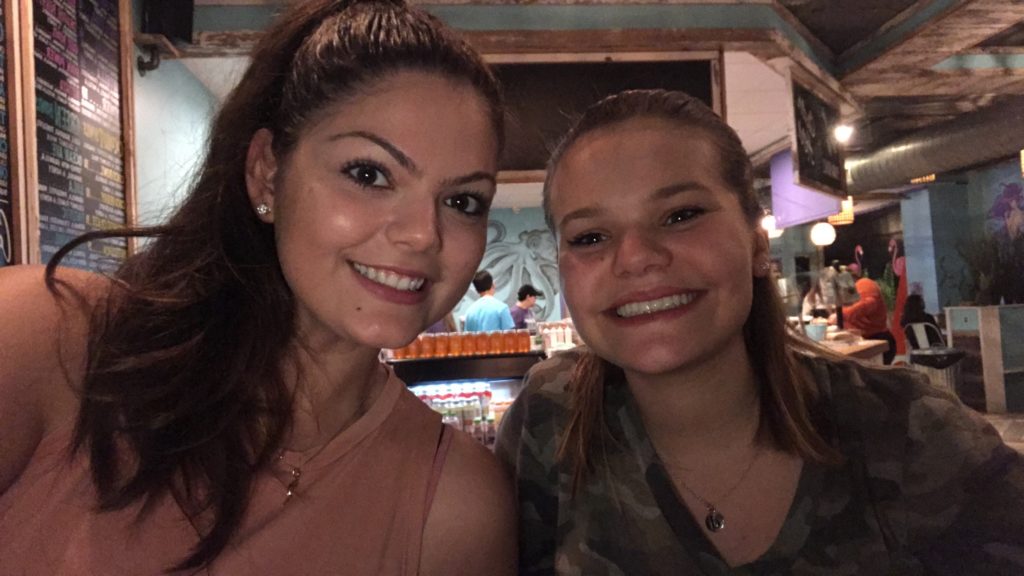
This is a picture of my best friend and me. We have been friends since we were both four years old.
Nigerian author Chimamanda Ngozi Adichie tells the narrative of the dangers evoked by telling one version of a multiversion story. She acknowledges that people often have notions of stereotypes which unintentionally pass judgement, and she enlightens her audience that one story is not definitive for all. Introspectively, Adichie elicits the realization that not a day passes by where I do not think of the blessings I have been granted along with the life I have been given. Considering the hardships many generations of families face in the United States alone, my parents endured sacrifices to prevent my sister and I from having to, although that is not the end result for many. Despite common associations and misconceptions, single stories are more than economic status, education level, and physical appearance. One of my best friends appears to be just like me: we are both nineteen-year-old college students who love to relax and spend time with friends and our large Italian families. Her single story, however, sets her apart from the large majority of individuals our age. The beginning of her single story began when she was fifteen years old. One day in 2015, I went to the mall with my best friend, and that night she went to sleep without knowing her life would be forever altered the following day. An emergency surgery revealed a tumor to be in one of her intestines. The severity of her condition was unknown, but she was diagnosed with Peutz-Jeghers Syndrome (PJS), a rare genetic disease that drastically increases her risk of getting cancer while causing her to get tumors throughout her body. Her family worked diligently to find the best doctors and treatments, only to discover that her disease is incurable. Not many people are affected by this disease and even less are aware of its existence. At that point, despite the unclear future she faced, her family and friends believed the hardest days to be behind them. The sickness from within did not match the person from outside: she does not match the stereotypical descriptions of being sickly, frail, and weak. She defies the odds and is a strong, courageous young woman who does not allow for her setbacks to be her downfalls.
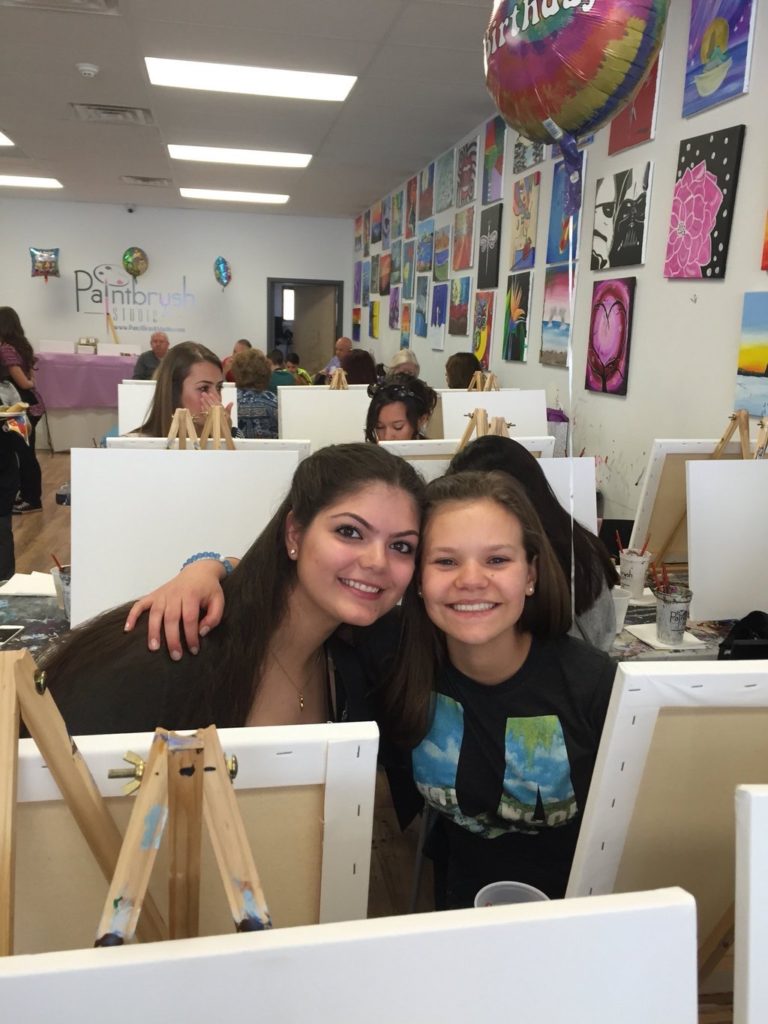
This image is from my friend’s sixteenth birthday; it was just a year after her diagnosis of PJS.
Although her progress has been consistent, events took a turn for the worse in December 2019. She told me that she had been diagnosed with breast cancer, and I was left heartbroken once again. This “single story” affects me on a personal level because no one ever expects for a loved one to experience it. By looking at her, she seems to be completely normal and healthy; one would never guess that my friend standing at five feet tall is one of the strongest people I have ever known. The relationships she has with people are genuine, and she touches the hearts of everyone she comes across. She witholds the information of her sickness and disease, never divulging to a soul of the battles she is attempting to overcome. Her rare disease and now cancer battle have allowed her to build strong relationships between herself and her supporters. She has builta strong foundation by herself. It takes a strong individual to overcome what she is experiencing, but it takes an even stronger soul to not allow her weaknesses to define her character. Adichie points out that, “the consequence of the single story is this: it robs people of dignity. It makes our recognition of our equal humanity difficult. It emphasizes how we are different rather than how we are similar.”1 The single story of an ill person is written so that they look weak, they have no hair, and they are disabled physically, mentally, and emotionally. The single story portrays their differences and identifies them in society to be dependent on others. Considering this, Adichie also states, “So that is how to create a single story. Show a people as one thing, as only one thing, over and over again, and that is what they become.”2 When surveying the power relationships between herself and those surrounding her, one can only blame society for spreading this misconception. By depicting sick individuals to be visually different, people begin to perceive them as different beings who do not possess similar qualities. Going against this, the relationships my friend has built between herself and her friends, however, disprove the single story of sickness: she is strong, physically and mentally able, and so unbelievably genuine, courageous, and independent.
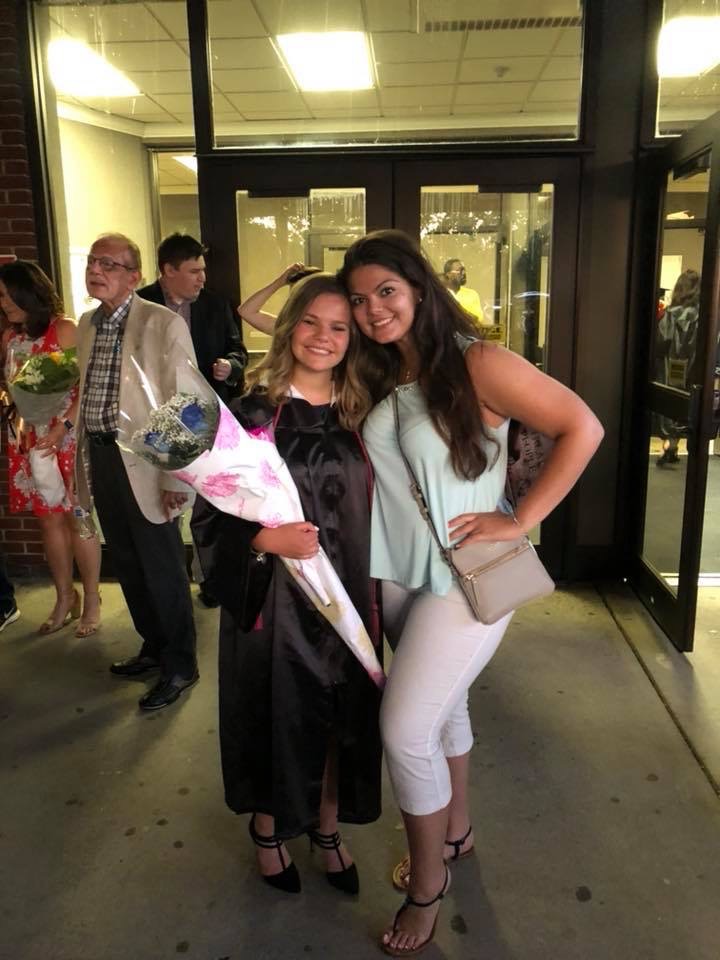
This photo was taken at my best friend’s high school graduation. Despite not going to the same high school and now college, we remain close.
There is power in numbers, and with that comes strength. In honor of my friend, her family founded a foundation for people with rare genetic diseases a number of years ago. Through this foundation, they have come in contact with people from all over the world, some even having the same rare disease as my best friend. Her family has helped so many other families deal with their hardships. I first realized their impact just a few years ago; every year, they host a benefit dinner to raise awareness for those with life-threatening diseases. It is an occasion to give back to those in need, but it is an emotionally heavy event. While her family speaks, time halts for everyone in the room. My best friend’s family has granted a voice to those who feel alone and hopeless that their quality of life has drastically declined. The more that this foundation expands and the more that their message flourishes, the more people and victims are reaching out to share their stories. Her family has connected people from all over the globe. People are navigating their voices to be heard and to be related to, and it is a beautiful community to be a part of. The power relationships formed as a result of my best friend are solid and irreplaceable as no one could possibly fathom or relate to what they are enduring. I learned from my best friend that disease does not have a face, and it does not know a single story. As stated in Adichie’s talk, “The single story creates stereotypes, and the problem with stereotypes is not that they are untrue, but that they are incomplete. They make one story become the only story.”3 Looking at my friend, no one would know that her body is fighting her. Our bond and friendship have only grown in the last several years, and it is still due to what we share in common, but it is now the result of being there for someone who still puts everyone above herself. The powerful friendship dynamic we share is a direct result of the amazingly strong individual she has become, and I admire her for it. I admire her for keeping her head held high in the midst of what is undoubtedly the darkest time of her and her family’s lives. I observed the power of multiple narratives, and I have witnessed how they brought unity among people who may have lost hope and faith along the way. Just like Chimamanda Adichie faced assumptions about her culture and origins, people could assume that my friend is handicapped because of her condition. Judging an entire population based on a small fragment of knowledge denies people of their own narratives. Culture and sickness do not have definitive looks. There is diversity in every person, and power thrives within that diversity. “Power is the ability not just to tell the story of another person, but to make it the definitive story of that person.”4 One narrative portrays one voice, but when multiple people express their stories, the power that is evoked is one-of-a-kind, and I have faith that one day, these voices will be able to transform society to look at people with broader minds and bigger hearts.
This image is of my best friend at her foundation’s event last year. The image portrays her positivity and free-spirited soul.