The opening of the Museum of Modern Art (MoMA) in New York City was at the end of the 1920s. Scholars often note that the 1920s was a progressive era, and the museum helped with it being progressive. The museum’s origins were diverse because it was hiring racial and gender minorities, which would be considered unheard of during that era. Women and people from different backgrounds working at the museum helped cause the museum’s success. The museum’s original collection had a decent amount of contemporary art that was donated to, or purchased by, the museum. Art enthusiasts considered these paintings as new and revolutionary compared to typical art styles at the time. The MoMA currently sits as one of the most popular museums in New York and for art in general due to its success during the 1920s.
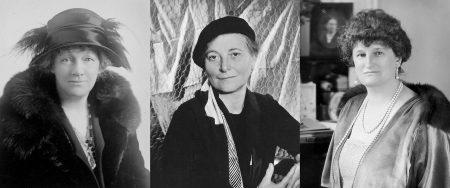
The original idea for the MoMA was in 1928 by three important women: Abby Aldrich Rockefeller, Lillie P. Bliss, and Mary Quinn Sullivan, known collectively as “The Ladies”, who came up with the idea for the MoMA over lunch, as the story goes. On March 7, 1928, Lillie and Aldrich were at a social gathering in Jerusalem where apparently they came up with the idea.1 They wanted a place where they could display the trendiest and newest art at that time, namely contemporary art. Abby Rockefeller wrote about why she wanted the museum in the first place, “I began to think of women whom I knew in New York City, who cared deeply for beauty and who bought pictures, women who would be willing, and had faith enough, to help start a museum of contemporary art.”2 She wanted a place that she and other women would be able to experience and enjoy the arts. The Ladies were daughters and wives of some of America’s wealthiest families living in New York, with Abby being the daughter-in-law of John D. Rockefeller. “The Ladies” were able to pool together their resources along with inviting investors and succeeded in opening the MoMA on November 7, 1929. The founding director of the MoMA, Alfred H. Barr Jr. set a goal for the museum to be “the greatest museum of modern art in the world” by helping everyone, and not only art experts, to enjoy art by understanding it.3
The MoMA had a decently sized Board of Trustees that helped it during its first couple of years. Three major trustees who helped the MoMA during this time were A. Conger Goodyear, Paul J. Sachs, and Josephine Boardman Crane. A. Conger Goodyear was a railroad and lumber tycoonist who also was the MoMA’s first president. Goodyear had previous museum experience from working at the Buffalo Art Museum from 1912-1928. While working there at that time, he played fast and loose with the museum’s money to acquire artwork that the museum might not have acquired otherwise. His actions sparked some controversy among other trustees, which resulted in Conger being voted out of the Buffalo AKG Art Museum’s Board of Trustees.4 Aldrich Rockefeller wanted Conger to be president of MoMA due to his accomplishments at the Buffalo AKG Art Museum and his ability to acquire paintings that the MoMA probably could not. Paul J. Sachs was a professor at Harvard who helped finance the MoMA in its early years. As the Board was searching for a director of the museum, Sachs was the one to recommend one of his former students, Alfred H. Barr Jr. Sachs also donated to the museum some of his drawings from his early career. Josephine Boardman Crane helped the museum by donated her Russian art collection and also offered fiscal aid. Shortly before the grand opening of the MoMA, the Stock Market crash had just hit the world. But with the help of multiple trustees, the mere idea of the MoMA was not lost to the trash bin. Since all of the trustees came from rich families, they were able to provide help to the MoMA during this trying time.
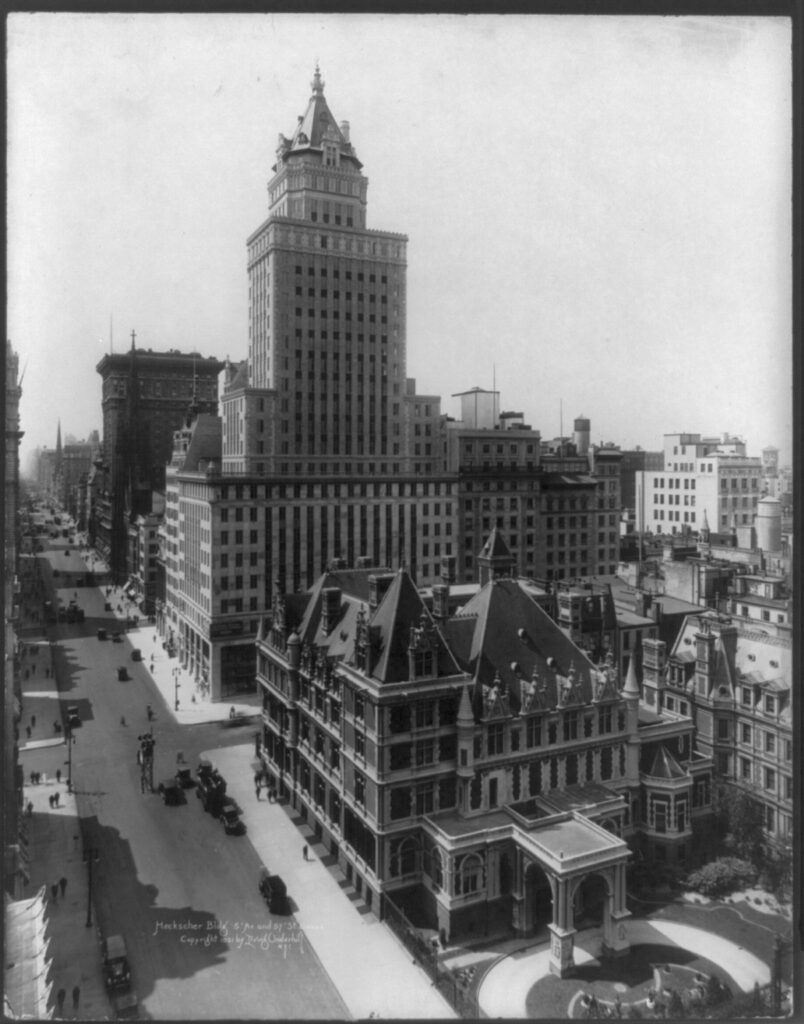
The MoMA originally opened at a different location from where it currently stands. When the MoMA opened, it was located at the Heckscher Building on 730 Fifth Avenue, not on 11 West 53rd Street, which is two streets away from the Heckscher Building. The Heckscher Building was home to the MoMA for 3 years, until 1932 when they moved to a different building. The MoMA was located in the Heckscher Building for multiple reasons. The Heckscher Building was one of the very few skyscrapers (it would not be considered a skyscraper by today’s standards) in New York City and it had the reputation of being “The Tower of Trade.” Other famous establishments also were renting floors on the Heckscher Building, so the moniker had precedence. The fact that the Heckscher Building could be easily seen from anywhere in New York City, along with its prestigious reputation, made the location perfect for the MoMA.
The opening of the MoMA was not all sunshine and rainbows because John D. Rockefeller Jr. did not like Modern art. John D. Rockefeller Jr. was the son of John D. Rockefeller and husband to Aldrich Rockefeller. Although John D. Rockefeller Jr. did like art and was an art collector who helped fund the Cloisters—a museum designed to collect Medieval Art—John D. Rockefeller Jr. simply disliked Modern Art. Even though Aldrich Rockefeller was the founder of MoMA and played a very important role in it, John D. Rockefeller Jr. chose not to support the MoMA in its initial years. Although John D. Rockefeller Jr. disliked Modern Art and avoided it the best he could, he did not try to prevent his wife from acquiring pieces of Modern Art and yet he never paid for them.5 John D. Rockefeller Jr. was a Baptist, and in the 1920s Baptists preferred not to deal with secular art like Modern Art of the era. John D. Rockefeller Jr. was a conservative, and conservatives often disliked Modern Art from that era because it was challenging traditional norms. Though John D. Rockefeller Jr. did donate to the MoMA, it was not until later in the 1940’s. And due to his funding, the MoMA was then moved to its modern location where it is still standing today.
The original MoMA gallery contained paintings by Vincent van Gogh, Georges Seurat, Paul Cézanne, and Paul Gauguin. When the MoMA was created, it was not able to afford the purchase of any artwork; so instead, they received donations of artwork. Alfred H. Barr wanted the MoMA to display newer pieces instead of older, which was difficult since most of the MoMA’s collections were already over one hundred years old. Alfred H. Barr got rid of the older paintings by stating “a torpedo moving through time, its nose the ever advancing present, its tail the ever receding past of 50 to 100 years ago.”6 Alfred H. Barr was a Harvard professor who also loved contemporary art. During his time at Harvard, he helped to run the Harvard Society of Contemporary Art. In July, 1929, he was interviewed for the position of founding director, and on August 12, 1929, was accepted for the position.7 As its director, Barr sent Anson Goodyear—Anson being a member of the Board of Trustees—to travel to Europe to collect six paintings by van Gogh, Seurat, Cezanne and Gauguin, whose exhibition was very successful for both Barr and the MoMA.8
Themes of the 1920s
The 1920s was an era that challenged the old traditional norms from the previous era, the Victorian era. The Victorian era held strict social and gendered norms that favored traditionalism and did not like feminism. After the conclusion of the First World War, America challenged Victorian thought by consuming the works of modernist philosophers. It sparked such ideas as the New Women, a rise of secular culture, pluralism, and an expansion of new ways of thinking. The MoMA embodied the rise of modernism in America by connecting many of these themes to the MoMA in some way.
Vincent van Gogh, Georges Seurat, Paul Cézanne and Paul Gauguin were deliberately chosen to be the MoMA’s first exhibit. The reason was because all four of these painters were impressionist painters who also helped revolutionize the art world. Impressionism as a form of art is described as capturing the sense of time passing by with the changing of lighting, where the subject is often something found in the modern world such as a building, a crowd of people, a pier, or a park. Impressionism came about from the rejection of a previous form of art, which was supposed to be the accepted standard for art: Neoclassicism and Romanticism. Both forms of art are very similar to each other, in that they are typically still images of important historical events and subjects. The difference between these two forms of art lie in their treatments of the subjects. Neoclassicism is a rigid form of art based on the Greco-Roman form of art and favors historical scenes. Romanticism is a similar form but focuses on nature and the subject’s emotions. Impressionism is a rejection of those forms, just as the 1920s was a rejection of the Victorian values and norms. These painters all influenced the discipline of impressionism. And because the MoMA chose to display these painters’ works as its first exhibits, it showed everyone that they were going to revolutionize the enjoyment of art and what a museum should display in their exhibits.
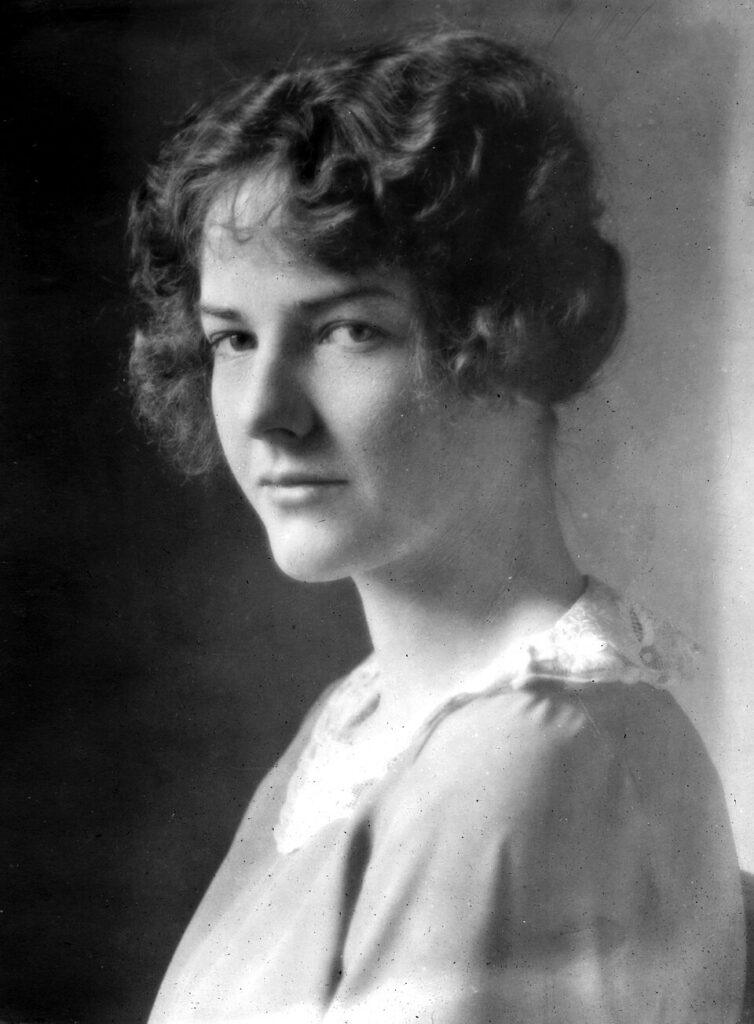
Abby Rockefeller was a very important component in the creation of the MoMA. Out of the three founding women, Abby Rockefeller created, actively participated in, and did the most amount of work for the MoMA. Unlike most other women during that era who may later step out of the spotlight after creating a museum or let go of that idea, Abby was different. Abby was a member of the Board of Trustees and also was the MoMA’s treasurer. Due to her work in the MoMA, she gained new titles and responsibilities throughout her years. When she worked at the MoMA, she was often a negotiator between Barr and Goodyear due to their disagreements. Elsewhere in Abby’s life, she was a women’s suffragist and helped women with their economic and social disadvantages. She was a member and chairwoman of the Young Women’s Christian Association for twenty years, and donated large amounts of money to them.9 She used her privileged status to help underprivileged women to have better lives and advocated for women’s progress. These traits the Abby presented are similar to historian Lynn Dumenil’s interpretation of the New Women.10 The New Women challenges traditional gender norms established in the Victorian age. Common people who challenged these notions of normalcy were known as flappers and women suffragists. It is the same to say that Abby Rockefeller is associated with the New Women due to her challenging of traditional gender norms of the 1920s.
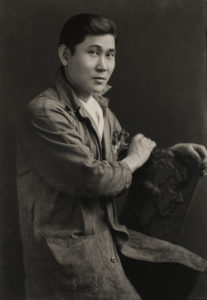
The MoMA did not just hire white people but was a diverse place of employment. Though technically hired in the early 30s, Soichi Sunami, a Japanese-American photographer, showed that the MoMA embraced the ideals of modernism and pluralism founded in the 1920s. Soichi Sunami was a photographer who was a member of the Seattle Art Club, participated in multiple exhibits, and studied under painter John Sloan.11 Soichi Sunami was the living embodiment of the MoMA’s focus on diversity of the 1920s. In the 1920s, many groups of people experienced a cultural and economic boom. Japanese Americans were one of those groups, due to their tight-knit families, their focus on education, along with their support of each other out of poverty. Soichi was born in Japan but lived in New York City for a long time. His talent caused him to be recognized, with Aldrich Rockefeller asking him to work at the MoMA in 1930 due to his successful career.12 This caused him to have a very successful forty-year long career working at the MoMA.
Conclusion
The MoMA was one of the last events that occurred at the end of the 1920s. It was a radical idea that came about due to the climate of the 20s. The MoMA’s existence challenged the traditional Victorian social norms by predominantly displaying impressionist art, by the founders of the MoMA being all women, and by hiring diverse people. These decisions caused the MoMA to be the embodiment of the themes of the 1920s. Since these themes were entrenched in the MoMA’s identity, they fueled the success of the MoMA in the late 1920s early 1930s and to become the very successful museum as we know it today.
- Kate Walbert, “Lillie P. Bliss, ” in Inventing the Modern: Untold Stories of the Women Who Shaped The Museum of Modern Art, ed. Ann Temkin and Romy Sliver-Kohn, (New York: The Museum of Modern Art, 2024) 64 ↩︎
- Abby Aldrich Rockefeller, “MoMA through Time,” MoMA, accessed Apr 21, 2026, https://www.moma.org/interactives/moma_through_time/1920/three-women-have-a-vision/. ↩︎
- “The Museum of Modern Art history,” MoMA, accessed April 21, 2026, https://www.moma.org/about/mission-statement/history#:~:text=In%20the%20late%201920s%2C%20three,Its%20founding%20director%2C%20Alfred%20H. ↩︎
- “A. Conger Goodyear” Buffalo AKG Art Museum, accessed April 30, 2026, https://buffaloakg.org/person/conger-goodyear ↩︎
- David Rockefeller, interviewed by Sharon Zane, transcript, January 17 1991, The Museum Of Modern Art Oral History Program. https://buffaloakg.org/person/conger-goodyear ↩︎
- Alfred H. Barr Jr. “Time” MoMA, accessed on April 21, 2026, https://www.moma.org/interactives/moma_through_time/1920/starting-a-collection-from-scratch/ ↩︎
- Sybil Gordon Kantor, Alfred H. Barr, Jr., and the Intellectual Origins of the Museum of Modern Art, (Cambridge: MIT Press, 2002) 211. ↩︎
- Kantor, Origins of MoMA 190-214. ↩︎
- “Abby Aldrich Rockefeller, 1874-1948,” Rockefeller Archive Center, accessed on March 31, 2026. https://rockarch.org/resources/about-the-rockefellers/abby-aldrich-rockefeller/
↩︎ - Lynn Dumenil, Modern Temper: American Culture and Society in the 1920s, (New York: Hill and Wang, 1995), 99. ↩︎
- Kathy Muir, “Soichi Sunami,” Seattle Camera Club, accessed April 30, 2026, https://www.seattlecameraclub.com/soichi_sunami.html ↩︎
- Muir, “Soichi Sunami,” Seattle Camera Club, accessed April 30, 2026, ↩︎
Bibliography and Suggested Resources
“A. Conger Goodyear.” Buffalo AKG Art Museum. accessed April 30, 2026.
“Abby Aldrich Rockefeller, 1874-1948.” Rockefeller Archive Center. accessed on March 31, 2026.
Barr, Alfred H. Jr. “MoMA through Time.” Museum of Modern Art . accessed on April 21, 2026.
Dumenil, Lynn. Modern Temper: American Culture and Society in the 1920s. (New York: Hill and Wang. 1995)
Kantor, Sybil Gordon. Alfred H. Barr, Jr., and the Intellectual Origins of the Museum of Modern Art. (Cambridge: MIT Press, 2002)
Muir, Kathy. “Soichi Sunami.” Seattle Camera Club. accessed April 30, 2026.
Rockefeller, Abby Aldrich. “MoMA through Time.” Museum of Modern Art. accessed Apr 21, 2026.
Rockefeller, David. interviewed by Sharon Zane, transcript, January 17 1991, The Museum Of Modern Art Oral History Program.
“The Museum of Modern Art history.” Museum of Modern Art. accessed April 21, 2026.
Walbert, Kate. “Lillie P. Bliss. ” in Inventing the Modern: Untold Stories of the Women Who Shaped The Museum of Modern Art. ed. Ann Temkin and Romy Sliver-Kohn. (New York: The Museum of Modern Art. 2024)

Josh Pelar is a History student at Ramapo College of New Jersey.
