
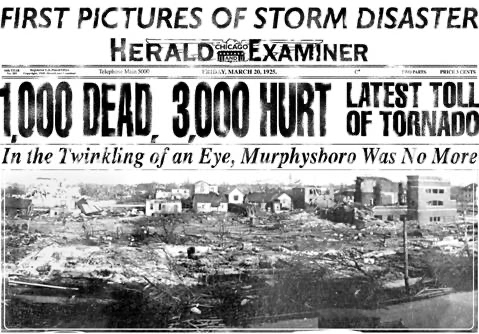
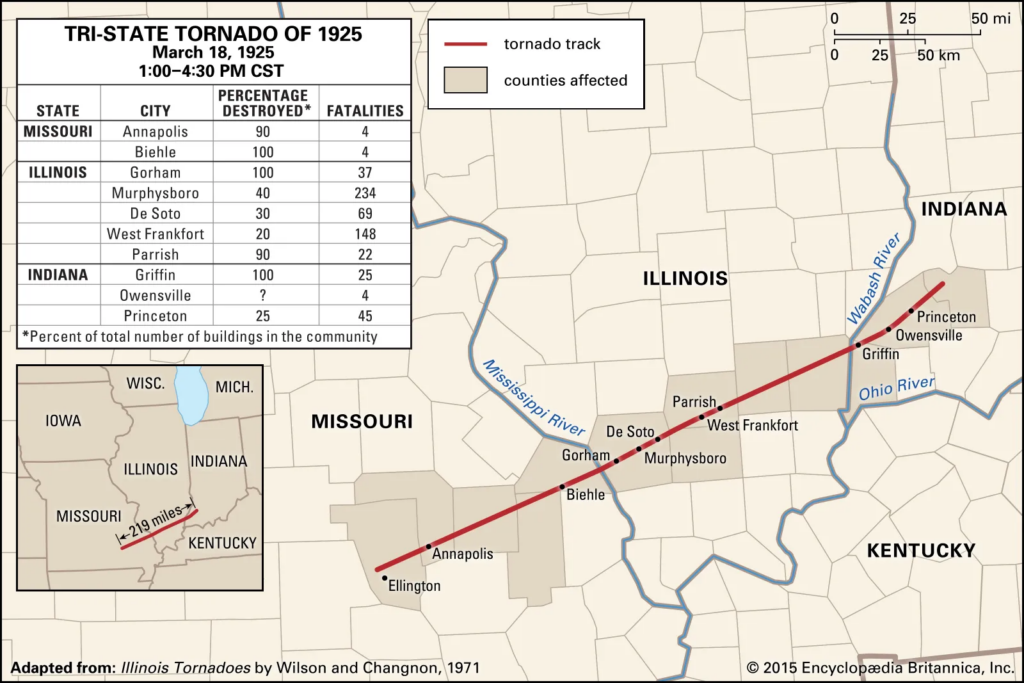
The 1925 Tri-State Tornado outbreak lasted from March 17-18 1925, and it is one of the deadliest tornado outbreaks in recorded history. It was given its name because it traveled across three different states, that being Missouri, Illinois, and Indiana. The distance being 219-mile-long (352 km). The reason why it’s considered to be the deadliest tornado is because at least 751 men, women, and children died and 2,2298 were injured. While we can consider the Tri-State Tornado to be a natural disaster, to fully understand this catastrophic event, we should place it in the broader context of the 1920s. The 1920s was a decade that’s often associated with economic growth, flappers, the jazz era, technological advances, and lots of cultural change. The tornado revealed a lot of strengths and weaknesses of what society was like during the twenties, rapidly modernizing but still very vulnerable to natural disasters.
The 1920s: A Time of Unpredictability
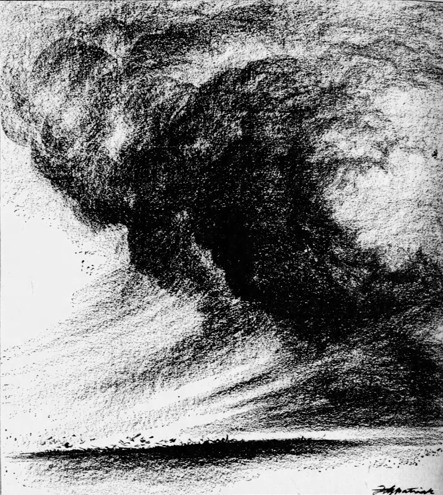
The 1920s, also known as the “Roaring Twenties,” was a time of significant economic expansion, especially in urban areas. New technologies such as automobiles, radios, and telephones changed the way people lived their everyday lives. Lynn Dumenil, who wrote the book The Modern Temper: American Culture and Society in the 1920s, describes the decade as a time when Americans embraced “speed, efficiency, and innovation” in ways that significantly transformed both work and leisure.1 However, the progress in some areas was not the same as the progress in other areas. Rural communities, especially in the Midwest and South, often fell behind cities in infrastructure, communication, and access to emergency services. This uneven development is very important when understanding the devastation of the Tri-State Tornado. While cities were becoming more modern, there were a lot of smaller towns that still relied on older systems of communication. Weather forecasting in 1925 was also very limited. The U.S. National Weather Service did not issue tornado warnings at the time, partly because officials feared causing panic. As a result, lots of different towns and communities in the tornado’s path had little to no warning before the storm struck. Additionally, the cultural atmosphere of the 1920s focused more on modernization and human experience rather than nature. Scientific progress and industrial growth gave many Americans confidence that technology could solve most problems. Yet, disasters such as the Tri-State Tornado challenged this belief. As Lynn Dumneil said, modernity created both optimism and anxiety, as Americans confronted forces they could not fully control in the 1920s.2 The tornado showed everyone in the midwest that nature is still just as powerful and unpredictable despite the technological advancements we make.
The Tornado and its Path
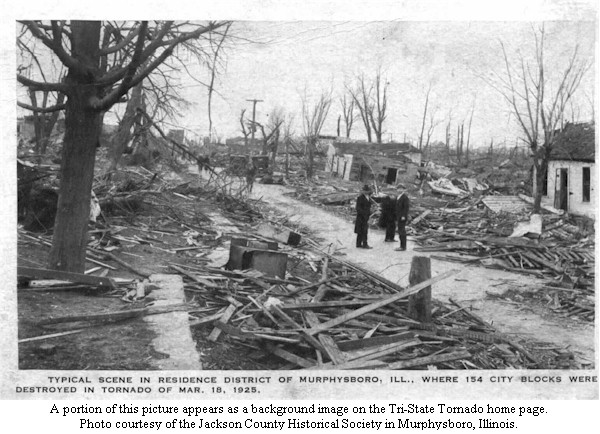
The Tri-State Tornado began in southeastern Missouri and moved through southern Illinois and into southwestern Indiana. It traveled at speeds estimated to exceed 60 miles per hour. This gave residents absolutely zero time to prepare for the tornado.3 Entire towns were destroyed within minutes, whether or not people were ready. One of the towns that was hit pretty hard by the tornado was Murphysboro, Illinois, where over 200 people were tragically killed. Contemporary newspaper accounts described scenes of total devastation. In the article “The Murphysboro Tornado” by W.O. Blanchard states “The description of the tornado’s approach by eye-witnesses varied with the position of the observer, the time of the observation and his mental state at the time. The rapid approach of such a huge death-dealing phenomenon provides conditions hardly conducive to calm and careful observation.”4 Many newspapers and primary accounts highlight the suddenness and intensity of the disaster. Eyewitnesses often struggled to describe what they saw due to how traumatic the event was. Statements from many survivors include: “A tornado is a unique kind of horror, with the ability to conjure up apocalyptic and downright bizarre scenes. Your house might be flattened, whilst your neighbor’s is untouched. The person you’re sitting next to might die, and you live.” and “From the time you realize a tornado is going to hit, you’re living with the absolute certainty that every second might be your last. When the outer bands reach you, you’re in almost complete darkness and your house is being soaked in torrential rain and hammered with debris. And when it strikes with a defining roar, there’s nothing to do but hold on and wait, and hope you come out alive.”5 What the people saw reflected the terrifying and unfamiliar nature of tornadoes for many people at the time, especially given the limited time noticed before the disaster struck.
News Coverage and Reactions
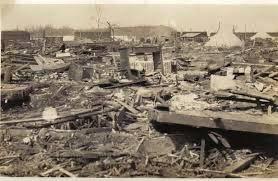
Newspaper articles from 1925 provide insight into how people experienced and understood the disaster. Newspapers across the country very quickly started to report on the destruction, often emphasizing the scale of the tragedy. Eyewitness News had this to say about the event “In total, 695 people lost their lives. The town of Griffin, among others, was destroyed but rebuilt. A Main Street building is believed to have survived the tornado. The school, destroyed, but later rebuilt as well. What’s left of that school still stands today, along with memories of the town’s resilient spirit,”6 the high death toll, countless injuries, and widespread damage were proof of how deadly and traumatizing the tornado was. Relief efforts also reveal a lot of information about this era. Organizations such as the American Red Cross played a huge role in providing aid for those affected. After the tornado, the Tri-State region demonstrated remarkable strength and compassion. Survivors, victims’ families, and affected communities showed resilience as they endured, grieved, and began to rebuild. Rescue workers and neighboring communities provided essential food, temporary housing, and medicine to support recovery efforts.7 There were also lots of volunteers who distributed food, clothing, and medical supplies, showing the importance of national relief organizations in times of crisis. Local governments, churches, and civic groups also participated in relief efforts. In many cases, communities relied heavily on volunteer labor rather than formal emergency systems. This reliance reflects the limited role of the federal government in disaster response during the 1920s. Unlike today, there was no centralized agency equivalent to modern emergency management organizations. Personal letters and survivor testimonies further illustrate the impact the disaster had on those living in the area. Many accounts describe families searching for missing relatives or attempting to rebuild their homes with limited resources. These sources remind us that beyond the statistics, the tornado caused profound personal loss.
Has Modernity Caused Problems in the Long Run?
The Tri-State Tornado also shows us how much people contradicted themselves in the twenties. On one hand, the decade was characterized by technological progress and optimism. On the other hand, the disaster exposed the limits of that progress. As Dumenil explains, modernity in the 1920s often created “a sense of both excitement and unease,” as Americans navigated rapid change.8 The Tri-State Tornado tells us what Dumenil meant by “a sense of unease”. For example, while railroads and telegraphs allowed news of the disaster to spread quickly, it didn’t help with preventing the disaster from happening. Similarly, advances in engineering had not yet led to tornado-resistant buildings. Many structures in the affected areas were poorly constructed and unable to withstand extreme winds. Another important factor was the absence of a coordinated national response. The federal government in the 1920s generally followed a policy of limited intervention in local affairs. As a result, disaster relief depended heavily on private organizations and state governments. This approach often led to uneven recovery efforts, with some communities receiving more assistance than others.
Social and Economic Impact
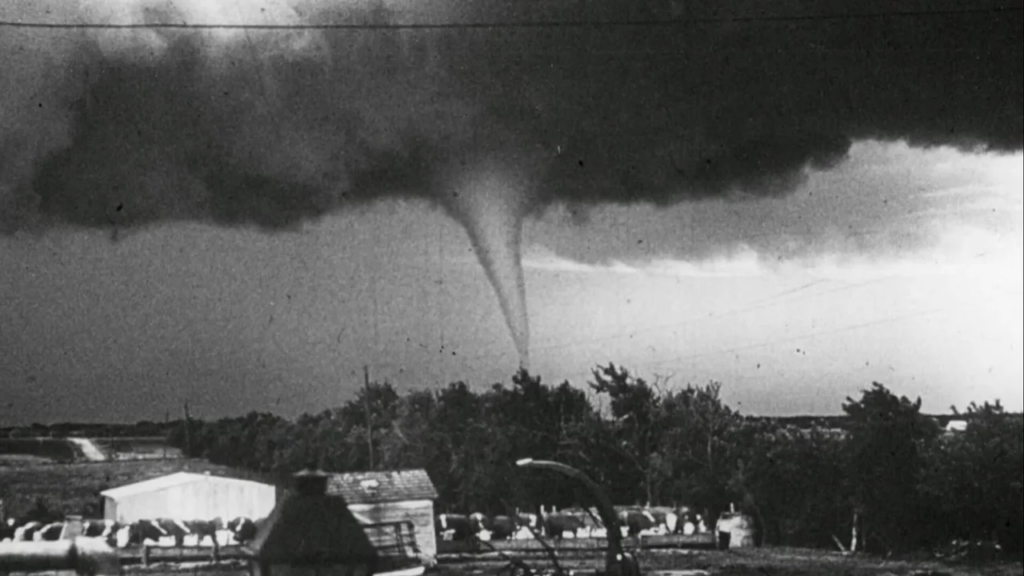
The economic impact the Tornado had on the midwest was severe, especially in smaller towns that relied heavily on agriculture and local businesses. Unfortunately, crops were destroyed, livestock killed, and infrastructures were damaged. In many cases, local towns and communities were going to be struggling for years. We can highlight areas where the economic hardships are most notable through the broader prosperity of the 1920s. During this time, America was split in two; some Americans enjoyed rising incomes and consumer goods, while others faced ongoing challenges. The tornado disproportionately affected rural populations, highlighting inequalities within American society. Many farmers were already dealing with the prices of their crops dropping during the 1920s, and this natural disaster only made their situation even worse. In the social aspect, the disaster brought communities together. Neighbors helped one another rebuild, and aid from local organizations provided support for those in need. However, recovery was very slow during this time, and many families never fully regained what they had lost during the time the tornado struck. Several communities were almost completely demolished, which required them to be rebuilt immediately, which altered the psychical and social landscape of the region.
Making a Change
One of the many long-term effects of the Tri-State Tornado was its impact on scientific research and public policy. Meteorologists began to study tornadoes more seriously than ever before. They wanted to understand a tornado’s formation and behaviors. Over time, the extensive research contributed to improved forecasting techniques that will greatly help citizens if another tornado were to attack. Although these changes were not immediate and they would take some time. The disaster did however greatly shift how we predict the weather. Eventually, the U.S. government became more willing to invest in meteorological research and warning systems. By the mid-20th century, tornado warnings became more common, significantly reducing the death tolls in future storms. This natural disaster also greatly influenced architecture and construction. People in affected areas advocated for sturdy homes and structures. Although it would take a while to build, people got to work with constructing stronger buildings that would hold up during a tornado.
Interpretations
Historians and scholars have analyzed the Tri-State Tornado from various perspectives. While some historians liked to focus on its meteorological significance, with how tense and scary the tornado was. Other historians liked to examine the social and historical context. Scholarly studies show that the high death toll was not only due to the storm being unusually fast (60-70 mph), but it also struck rural areas and residents had zero warning beforehand. These interpretations align with Lynn Dumenil’s broader arguments that the 1920s were a time of transition, where old traditions and new traditions coexisted.9
The Legacy of the Tri-State Tornado
There’s a lot of things the Tri-State Tornado can be known for, it’s the deadliest tornado of all time, and it also holds the record for the longest path length in history. It led to increased interest in tornado research and eventually contributed to the development of how we get natural disaster warnings. Over time, scientists gained a better understanding of severe weather and because of this, we can help reduce the impact future storms may have. The disaster also serves as a reminder that the rapid technological advances did not eliminate the vulnerability that was still present. Even if the twenties were filled with modernization, natural disasters were able to have devastating effects on people.
Conclusion
The Tri-State Tornado outbreak of 1925 was more than just a natural disaster; it also serves as a reflection of the broader tensions of the 1920s. While the decade is often remembered for its prosperity and innovation, the tornado revealed the limits of that progress, especially in rural areas in America. By taking a look at news and weather reports that happened during this time, and scholarly interpretations, we can see how the events fit into a larger context of the 1920s. At the end of the day, the Tri-State Tornado highlights how important it is to prepare for incoming storms and natural disasters, to properly inform citizens that something dangerous is coming, and how scientific understanding on the weather is important. It reminds us that even in times of growth and optimism, societies must remain aware of their vulnerabilities. The disaster still remains relevant today as we are still facing environmental challenges and it still holds many records to this day.
Bibliogrpahy
- Atteberry, Todd. 2025. Tracing the Scars of Hell.
- Bailey, Cody, and Isaiah Calalang. 2025. “Remembering the 1925 Tri-State Tornado.” Eyewitness News (WEHT/WTVW). March 18, 2025. https://www.tristatehomepage.com/news/local-news/posey-county/remembering-the-1925-tri-state-tornado/.
- Blanchard, W. O. “The Murphysboro Tornado.” The Scientific Monthly 23, no. 5 (1926): 434–46. http://www.jstor.org/stable/7421.
- Dumenil, Lynn. 2007. The Modern Temper : American Culture and Society in the 1920s. New York, Ny: Hill And Wang, [Ca.
- Museum, Evansville. 2025. “The Tri-State Tornado: Tragedy and Resilience | Evansville Museum of Arts, History & Science.” Emuseum.org. 2025. https://www.emuseum.org/exhibitions/the-tri-state-tornado-tragedy-and-resilience.
- US Department of Commerce, NOAA, National Weather Service. 2020. “1925 Tornado.” Weather.gov. 2020. https://www.weather.gov/pah/1925Tornado.
- Dumenil, Lynn. 2007. The Modern Temper : American Culture and Society in the 1920s. New York, Ny: Hill And Wang, [Ca.
↩︎ - Dumenil, Lynn. 2007. The Modern Temper : American Culture and Society in the 1920s. New York, Ny: Hill And Wang, [Ca. ↩︎
- US Department of Commerce, NOAA, National Weather Service. 2020. “1925 Tornado.” Weather.gov. 2020. https://www.weather.gov/pah/1925Tornado. ↩︎
- Blanchard, W. O. “The Murphysboro Tornado.” The Scientific Monthly 23, no. 5 (1926): 434–46. http://www.jstor.org/stable/7421. ↩︎
- Atteberry, Todd. 2025. Tracing the Scars of Hell.
↩︎ - Bailey, Cody, and Isaiah Calalang. 2025. “Remembering the 1925 Tri-State Tornado.” Eyewitness News (WEHT/WTVW). March 18, 2025. https://www.tristatehomepage.com/news/local-news/posey-county/remembering-the-1925-tri-state-tornado/.
↩︎ - Museum, Evansville. 2025. “The Tri-State Tornado: Tragedy and Resilience | Evansville Museum of Arts, History & Science.” Emuseum.org. 2025. https://www.emuseum.org/exhibitions/the-tri-state-tornado-tragedy-and-resilience.
↩︎ - Dumenil, Lynn. 2007. The Modern Temper : American Culture and Society in the 1920s. New York, Ny: Hill And Wang, [Ca. ↩︎
- Dumenil, Lynn. 2007. The Modern Temper : American Culture and Society in the 1920s. New York, Ny: Hill And Wang, [Ca. ↩︎
