
Overview
Professional football was nothing like it is today as the sport was actually influenced by the much more popular college football. This occurred because the working class and some middle class fans of college football wanted to engage with the sport in a more direct way, rather than read about in the newspaper. As a result, by the late 1890s hundreds of amateur teams were formed. The players were mostly working class amateurs. It was not hard to see these games as in many cases they were free to attend.1 Coenen, Craig. From The Sandlots To The Super Bowl, (2005) pg 4.
By the 1910s things had begun to change. There was now an established rivalry between the Canton Bulldogs and the Massillon Tigers that put pro football on the path to forming a national league, as it represented a blueprint for pro ball to make more serious profits. The addition of star athlete Jim Thorpe to Canton, represented that rivalries need star players. Thorpe was well beyond what the average star was, due to his versatility. This versatility was clear as he was an Olympic star athlete, baseball player, and football player. His impact was certainly felt, as attendance for the two games against Massillon went up from averaging 1,200 people to 6,250. Other rivalries in pro football formed and were successful as well. Despite this, some teams ended up with deficits by year’s end. This was because non rivalry games made little profit, teams were paying their collegiate players more, and teams were backed by sponsors that were simply trying to break even.2Coenen, Craig. From The Sandlots To The Super Bowl, (2005) pg 6, 7.
As the sport became more complicated executives were left with two main options. One they could reduce team payroll, weaken team strength, and revert to a lower semipro status. The other option was that executives could pour money into teams to improve the teams performance, and to draw larger crowds. Neither of these options were viable. As debts for teams continued to increase, executives believed that a league could improve this situation through the regulation it would bring. For example under a league format teams could control the salaries of players. Under this format the luster of a national champion would be present. The best teams from the Northeast and Midwest would match up with each under the format as well. 3 Coenen, Craig. From The Sandlots To The Super Bowl, (2005) pg 7.
Early days
By late 1919 it was becoming clear that professional football was moving in the direction of forming a league, as it was starting to take a firm hold on the public. This was seen as something that would create issues for college football. For one, the idea was floated that many promising football players would skip college and go straight to the pros. It was also thought that even if players did go to college, some would leave early to join the professional league. These concerns were financially based. They were backed by the fact that owners from the pros could offer college players inducements that in college were not available. College players for instance had to work their way through school, which did not leave them with much money, whereas a college aged player who became a star could make 500 dollars a game in pro football.4 “Professional Football Is Peril To Life of Pastime in Colleges”, The Dispatch, Nov 27, 1919, pg 12 .
Despite the concerns from the college level, pro football still decided to move forward in creating a league. Vague talk about doing this had been common for 15 years. The man who helped spearhead these efforts was Ralph Hay. Hay, the owner of the Canton Bulldogs, invited representatives from three other teams in the state to an organizational meeting at his showroom on August 20, 1920. At the meeting these men agreed upon a broad outline of a new association. After this the other team managers instructed Hay to get in touch with executives of other strong teams from the midwest and western New York. Nearly a month later a deal was ready to occur. Hay followed the advice he received, as he gathered representatives from 11 professional football teams from across Ohio, Illinois, Indiana, and New York. This meeting occurred inside of the Jordan and Hupmobile autoshop in downtown Canton Ohio. Since Hay’s office was not big enough to fit everyone, these football pioneers sat in the showroom, on the running boards and fenders of 3,000 dollar cars.5Klein, Christopher. 2014 “The Birth of the National Football League History.” History. September 4, 2014.https://www.history.com/articles/the-birth-of-the-national-football-league. 6 Peterson, Robert. Pigskin The Early Years of Pro Football, (1996) pg 68 .
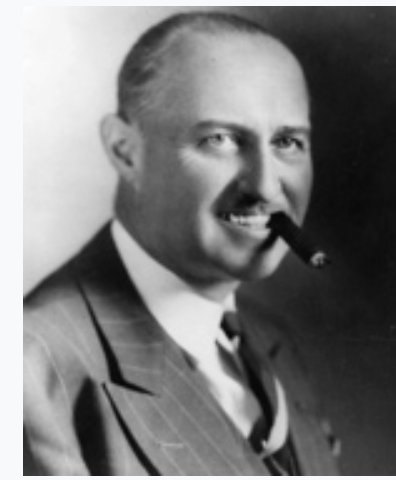
Once the Massillon Tigers withdrew due to severe financial strain , a league known as the American Football League (AFL) was formed on September 17, 1920 at this next meeting between executives. The league of course needed a president, this choice proved to be an easy one, as the team representatives unanimously picked Jim Thorpe, not for his administrative skills but because he was universally recognized, and someone who could bring instant credibility to the league. These reasons were proven correct as the selection of Thorpe garnered more media attention than the creation of the league itself. A membership fee of 100 dollars for each team was also established. Teams despite this did not come up with any money. Well known player, coach and later owner George Hallas said about the meeting “I doubt that there was a hundred bucks in the room.” 7 Peterson, Robert. Pigskin The Early Years of Pro Football, (1996) pg 69, 70 . 8 Klein, Christopher. 2014 “The Birth of the National Football League History.” History. September 4, 2014.https://www.history.com/articles/the-birth-of-the-national-football-league.
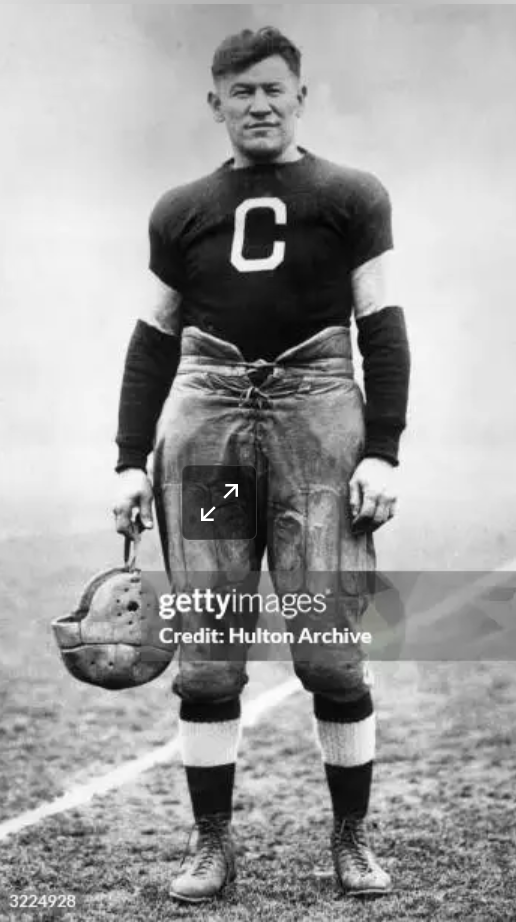
One of Thorpe’s first moves as commissioner was that he appointed a three man committee to draft a constitution and by-laws that would be adopted in 1921. As part of this constitution several major motions were approved. One of such motions was that all teams had to send A. F Ranney, the secretary of the league, a list of players they used during the 1920 season by January. The reason for this was so clubs could sign the same players for 1921, if they wished. Another motion said that all teams had to add to their letterheads “Member of the American Professional Football Association.”9 Peterson, Robert. Pigskin The Early Years of Pro Football, (1996) pg 70 .
Football in the 1920s
When the AFL was born, football on the field had some familiarities with today’s game, while many other aspects were extremely different. The field itself, like today, was 100 yards in length and had 10 yard deep endzones. However the goal posts stood on the goal line rather than on the end zone back line. This made field goals and extra points easier. Hashmarks did not exist during this infancy stage. This meant that the next play began where the last one concluded, even if it was a foot from the sideline. If a player was knocked out of bounds the ball was placed at the area inbounds where he went out. The result of this was that the teams that this happened to had to waste a play, simply to get the ball into operating territory. Passing the ball also had some differences. The passer had to throw from 5 yards behind the line of scrimmage, which greatly reduced potential deception. In addition if a pass fell incomplete in the end zone it was a touchback, and the opposing team was given the ball on their 20 yard line. Due to this the average team during the league’s first season likely passed only 5 times a game. Coaching was also extremely limited as coaches were surprisingly enough, not allowed to coach from the sidelines. As a result of this the quarterback and or team captain had to devise strategy during a game. 10 Peterson, Robert. Pigskin The Early Years of Pro Football, (1996) pg 70, 71, 73 .
Besides just different rules teams during this infancy stage had different strategies. Offensively teams were very conservative. For example unless a team was near the opponents endzone a punt was almost certain on third down. The idea behind this was that if there was a bad pass from the center or if the punter fumbled, the punter could recover the ball, thus giving the team another chance to kick on fourth down. This ideology of conservatism was so prevalent that on occasion a punt returner who caught the ball on his goal line would punt the ball right back to the other team. The general concept for this conservatism was that the opposing team would make a mistake that could be capitalized on.11 Peterson, Robert. Pigskin The Early Years of Pro Football, (1996) pg 72, 73 .
Equipment during 1920 was of course nowhere near the same quality of today. However it had improved slightly from a decade prior. The best helmet courtesy of A. G. Spalding and Brothers now had elastic webbing in its crowns to absorb blows. Some simpler headgear was so soft and pliable that a player could fold it up into his pocket. All players wore wool jerseys which absorbed sweat that for better or worse increased a players weight during a game. 12 Peterson, Robert. Pigskin The Early Years of Pro Football, (1996) pg 74 .
The Role of Walter Camp
The rise of Pro Football was supported by the founder of football at large, Walter Camp. Camp’s positive view on the sport influenced his take that the sports world needed to prepare for the sports rise. He believed that this preparation should be done through giving the sport a clear position and place in the overall sports landscape of the nation. Camp believed that once this perspective was gained, by the pro player the pro game could “grow and expand”. He then closed by saying the only way that pro football would fall would be if players stopped playing the game after college. Camp said this was unlikely as players still have their football ability when they graduate between the ages of 22 to 25.13 “PRO FOOTBALL COMING SPORT SAYS MR CAMP”, The Springfield Daily Republican, Dec 1, 1920, pg 4 .
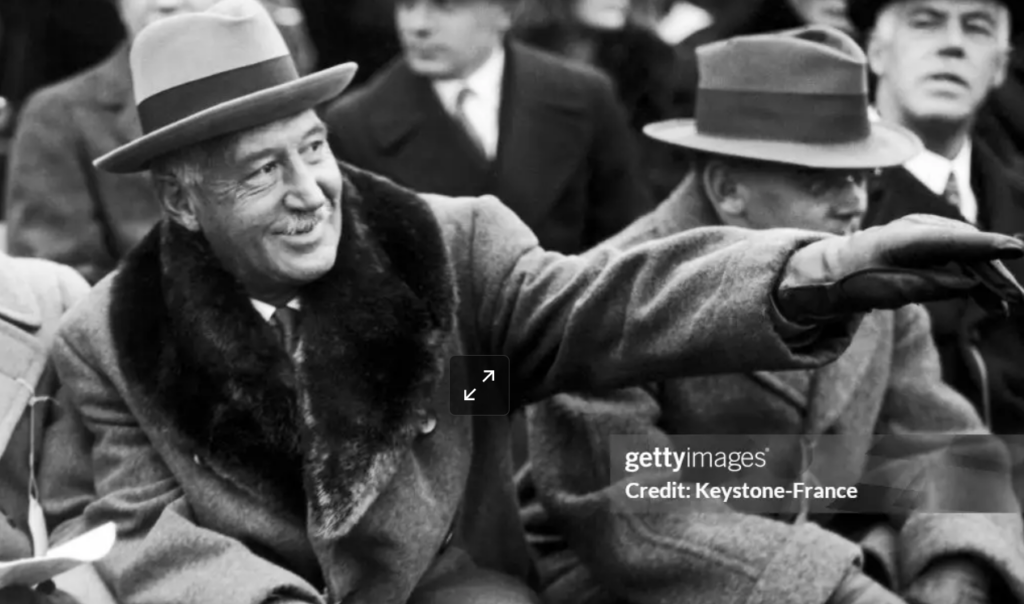
Despite Camp’s endorsement and the formation of a new league, not everything was going smoothly for pro football. For one, Jim Thorpe’s vision of having the league take its place among other big league sports was not going well. To Thorpe this meant expanding teams into larger markets such as New York. The idea’s potential unreliability became clear, when a game between Canton and Buffalo which was a trial for the concept did poorly audience wise. For one only 6,000 fans showed up to the game at the Polo Grounds in New York. These fans that were in attendance lacked enthusiasm, as there was no loud cheering. This proved to be a stark contrast to the 30,000 people that attended a Rutgers Nebraska game a few weeks later at the same stadium. Teams tried to create interest in the sport in other ways. Some of these ways included sponsoring gimmick teams, and creating circuslike off- field activities. Games that featured these additions drew profitable crowds but did not create loyal fanbases because pro football itself lacked meaning.14“PRO FOOTBALL FAILS TO GET GOING STRONG”, The Spokane Press, Dec 14, 1920, pg 7 . 15 Coenen, Craig. From The Sandlots To The Super Bowl, (2005) pg 8 .
Black Players in the league
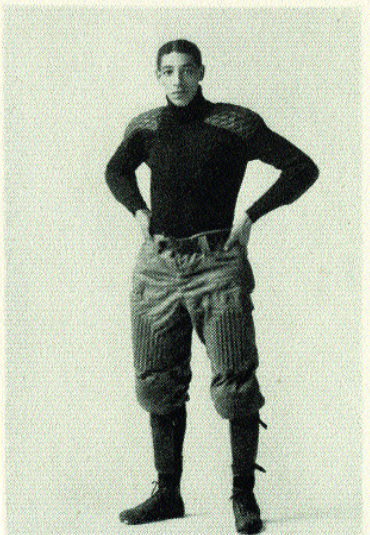
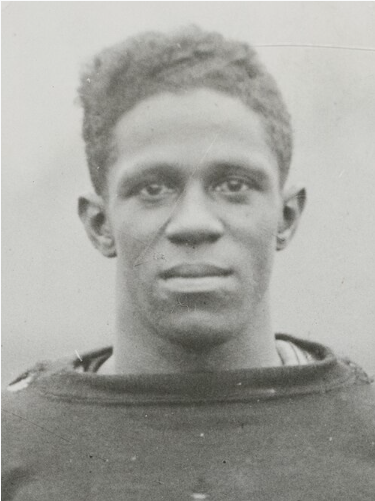
The league, despite its initial issues, was ahead of its time in a major way, black players were able to partake. Although still very different from today’s league from 1920 to 1926 there were nine African American players. In 1920 Fritz Pollard and Bobby Marshall became the first players to break the color line. He was not only a player but was a coach as well. This progress unfortunately was short lived, as after 1926 all five black players that were still in the league departed now known as the NFL since 1922. The combination of the league losing teams that season coupled with the large number of talented white players resulted in black players being the first to get axed never to return. While there were a few cases of black players in the league after this, most owners would not pay black players during the great depression. This is because they thought it would be a negative look to employ blacks while there were white players who were suffering. 16 “Black players in Professional American Football,” Wikipedia, 2021, 5/5 2026 .
The founding and the subsequent years of the NFL in some ways represent key themes of the twenties, while other aspects of this represent older themes. The theme of sports becoming more culturally prominent is one of these ways, as the NFL despite not having the same success as other sports such as Baseball and Boxing did still enjoy a limited amount of rising relevance. The struggles of the sport initially represent the old theme of young sports leagues going through growing pains. The early years of the league represented the liberalism of the twenties black players were included. However the racism of the twenties also was represented as black players by the end of the decade were essentially shut out from the league. Most broadly the founding of the NFL and the subsequent years after this represents the core theme that the twenties was dominated by businessmen from the private sector.
Historical Significance
Citations
Bibliography
“Black players in Professional American Football.” Wikipedia, The Free Encyclopedia. Last modified May 5, 2026. https://en.wikipedia.org/wiki/Black_players_in_Professional_American_Football.
Coenen, Craig. From the Sandlots to the Super Bowl: The National Football League, 1920-1967. Knoxville: University of Tennessee Press, 2005.
The Dispatch. “Professional Football Is Peril To Life of Pastime in Colleges.” November 27, 1919.
Klein, Christopher. “The Birth of the National Football League.” History.com. September 4, 2014. https://www.history.com/news/the-birth-of-the-national-football-league.
Peterson, Robert. Pigskin: The Early Years of Pro Football. New York: Oxford University Press, 1996.
The Spokane Press. “Pro Football Fails to Get Going Strong.” December 14, 1920.
The Springfield Daily Republican. “Pro Football Coming Sport Says Mr. Camp.” December 1, 1920.
- 1Coenen, Craig. From The Sandlots To The Super Bowl, (2005) pg 4
- 2Coenen, Craig. From The Sandlots To The Super Bowl, (2005) pg 6, 7
- 3Coenen, Craig. From The Sandlots To The Super Bowl, (2005) pg 7
- 4“Professional Football Is Peril To Life of Pastime in Colleges”, The Dispatch, Nov 27, 1919, pg 12
- 5Klein, Christopher. 2014 “The Birth of the National Football League History.” History. September 4, 2014.https://www.history.com/articles/the-birth-of-the-national-football-league
- 6Peterson, Robert. Pigskin The Early Years of Pro Football, (1996) pg 68
- 7Peterson, Robert. Pigskin The Early Years of Pro Football, (1996) pg 69, 70
- 8Klein, Christopher. 2014 “The Birth of the National Football League History.” History. September 4, 2014.https://www.history.com/articles/the-birth-of-the-national-football-league
- 9Peterson, Robert. Pigskin The Early Years of Pro Football, (1996) pg 70
- 10Peterson, Robert. Pigskin The Early Years of Pro Football, (1996) pg 70, 71, 73
- 11Peterson, Robert. Pigskin The Early Years of Pro Football, (1996) pg 72, 73
- 12Peterson, Robert. Pigskin The Early Years of Pro Football, (1996) pg 74
- 13“PRO FOOTBALL COMING SPORT SAYS MR CAMP”, The Springfield Daily Republican, Dec 1, 1920, pg 4
- 14“PRO FOOTBALL FAILS TO GET GOING STRONG”, The Spokane Press, Dec 14, 1920, pg 7
- 15Coenen, Craig. From The Sandlots To The Super Bowl, (2005) pg 8
- 16“Black players in Professional American Football,” Wikipedia, 2021, 5/5 2026
