
Between 1947 and 2004, the processes of documenting and analyzing American history underwent drastic changes in terms of which topics were covered, and the tone used to address different issues. This is particularly obvious in regards to the 1920s, as the decade was a transitional period in politics, culture, and social structure.
The textbook From Colony to World Power was written less than two decades after the end of the 1920s, and almost exclusively focuses on political history. In the aftermath of World War II, the isolationist and nationalist movements that grew exponentially during the 1920s were relevant to public discourse once again. This is reflected in how frequently the textbook discusses the League of Nations, and the chaos of European politics after World War I. From an educational perspective in 1947, it would have seemed exceptionally important to teach students of American history that the country had been entangled in international war once before, and had come out the other side without the economic or physical destruction that was wrought upon the old world.
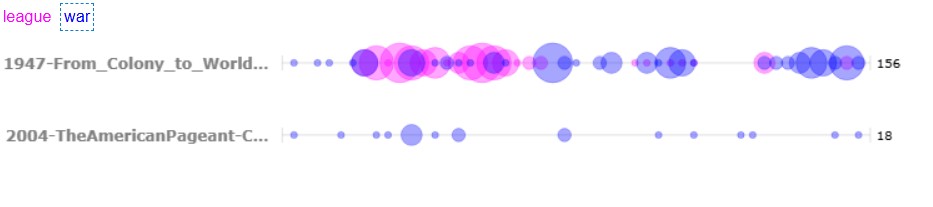
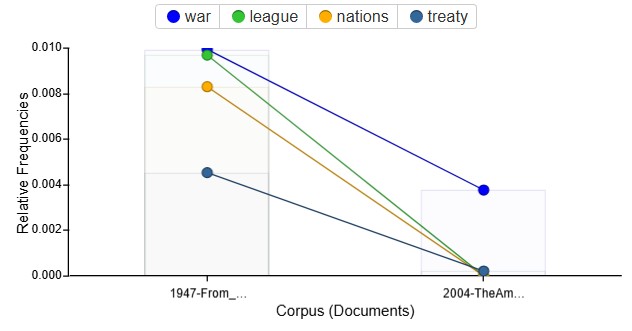
This focus on drawing a continuous historical line between World War I and World War II allows the textbook to avoid covering cultural and demographic developments during the 1920s, which were not considered important to educational narratives in 1947. It is only in a post-Civil Rights Movement world in which authors began to dedicate space to the activities of minority communities during the early 20th century. As noted by David J. Goldberg, topics such as the Harlem Renaissance and rural-urban migration are thoroughly discussed in books from the 1970s and 1990s, whereas American literature from the 1920s receives historical praise as soon as the 1930s.1
From the perspective of the 2004 edition of The American Pageant, the 1920s is a time period where the very makeup of American society was radically changed. Regardless of the geopolitical storm that was brewing in the interwar era, new patterns of migration and evolving concepts of the government’s role in the daily lives of citizens fundamentally redefined the nation’s identity. The book also covers negative aspects of this time period with more earnestness. The KKK, anti-radicalism, and religious intolerance all have their own section within the chapter on the 1920s, and are directly juxtaposed with discussions of economic prosperity.2 Also, concepts such as the rise of consumerism and the modern corporation are placed in the larger political and economic context of the decade. In the textbook from 1947 these aspects of 1920s American society are mentioned, but are not treated with as much historical significance as in 2004. These broader cultural trends had not yet been thoroughly analyzed in 1947, and in many ways were still developing.
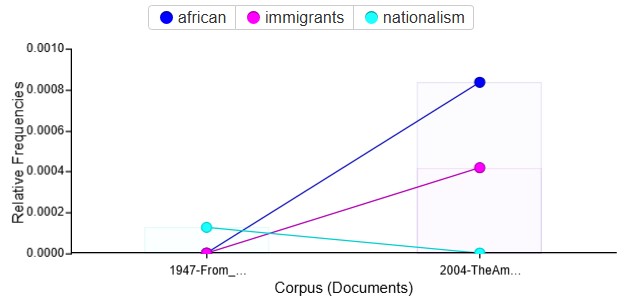
By the 21st century, historians and textbook authors had constructed a new canon of what aspects of society were integral to American history, and this new ideological framework rebalanced political and cultural topics. Goldberg notes this shifting focus to more holistic representations of the United States during the 1920s, and writes that the new framework creates “a fuller and more well-rounded portrait of a society where class, ethnic, racial, regional, political, and cultural divisions remained quite sharp.”3 As the function and focus of American history is reshaped by subsequent social climates, the significance of the 1920s will undoubtedly fluctuate accordingly in textbooks.
- David J. Goldberg, “Rethinking the 1920s: Historians and Changing Perspectives,” OAH Magazine of History 21, no. 3 (July 2007): 10. ↩︎
- Thomas A. Bailey, David Kennedy, and Lizabeth Cohen, The American Pageant (Boston: Houghton Mifflin Harcourt, 2004), 783-784. ↩︎
- Goldberg, “Rethinking the 1920s,” 7. ↩︎

A senior at Ramapo College, majoring in American Studies and minoring in Anthropology.
