
Some aspects of the murder of Bobby Franks by Nathan Leopold and Richard Loeb relate to themes brought up in chapters 4, 5, and 6 of The Modern Temper by Lynn Dumenil. These chapters discuss behavior, religion, beliefs, and psychology, all of which were huge factors behind the murder. On May 21, 1924, Leopold and Loeb carried out a murder that they had planned for months, but the motives were seemingly unclear. It was later revealed that psychology and beliefs were heavily influential to the crime, and psychology even saved them from the death sentence.
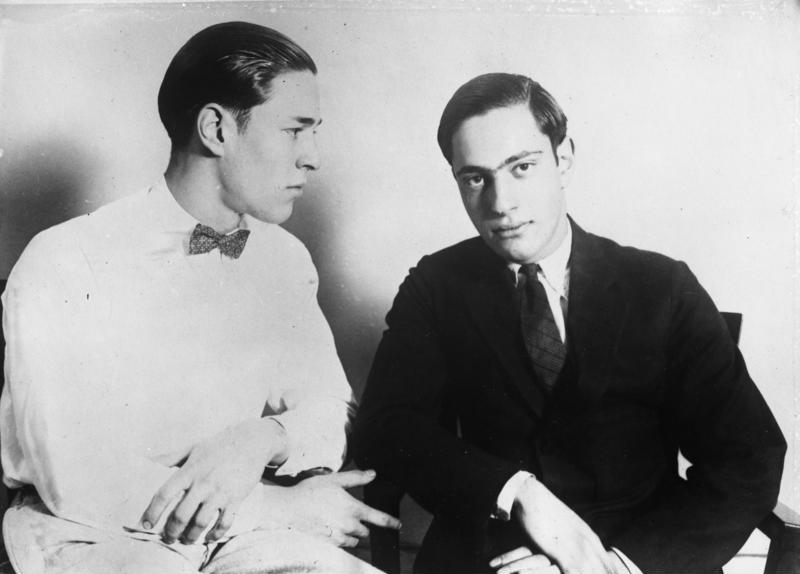
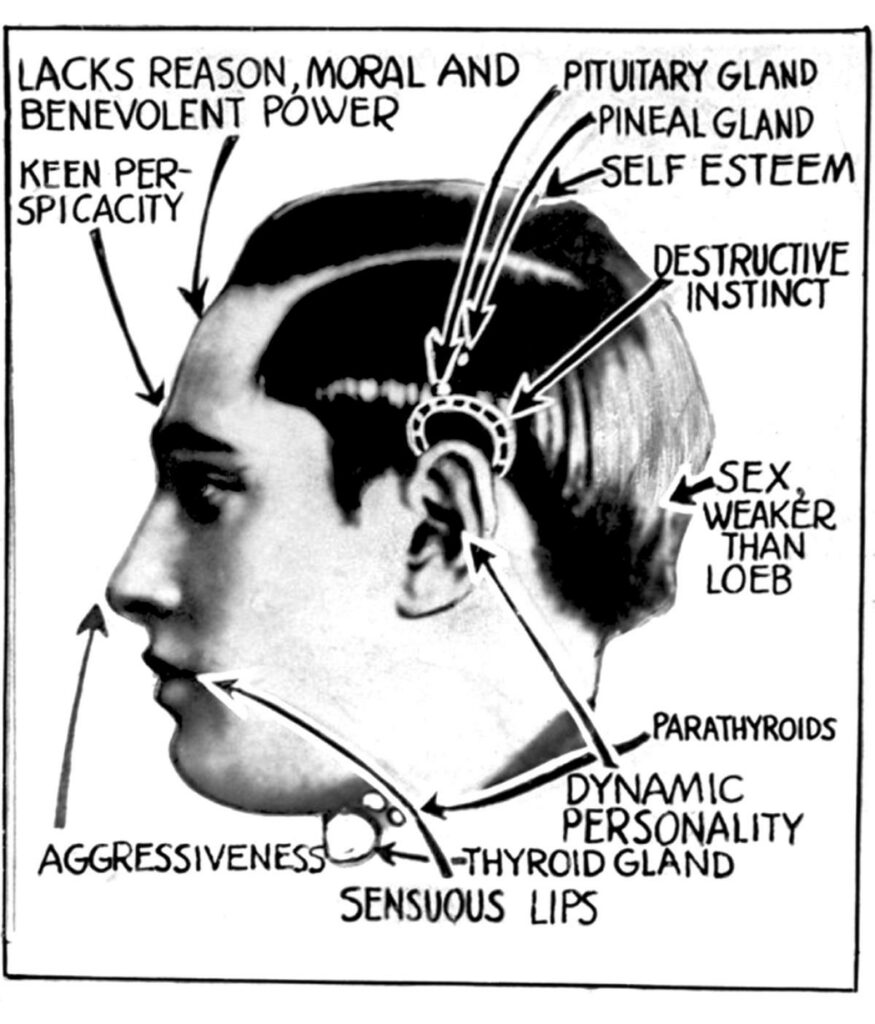
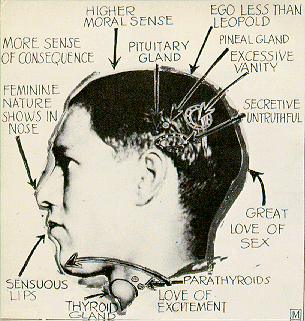
Leopold and Loeb were both considered to be mentally deranged, but not insane. This fact brought up in court would spare their lives, as it was deemed to be inhumane to hang them. John B. Watson “described humans as hollow shells, formed by their environment, who responded to external stimuli”.1 The privileged environment in which Leopold and Loeb both grew up shaped them to believe that they were superior to everyone else and the rules of society didn’t apply to them.
Dumenil discusses fiction writer Sherwood Anderson, and the ideas brought up in his work. He “fashioned dark, brooding stories dealing with marriage, morality, and individuals destroyed by success”.2 One could say that Leopold and Loeb were destroyed by success. Their families were wealthy, they attended ivy league schools, and they lived in an upscale neighborhood, all of which fed into their mindset that they were superior humans. They also did not believe human morality applied to them, so they would be able to commit the “perfect crime” without being caught and without consequences. In one of Anderson’s stories, the main character “feels that ‘he himself wanted, more than anything else, to give way to the impulses within himself’”, which in Leopold and Loeb’s cases, was destructive and violent crimes.3 They had previously committed smaller crimes such as robbery and arson for the thrill of it, but they yearned for something more serious. A premeditated murder of a random victim would fulfill that adrenaline rush that they both so desperately needed and give into that impulse to feel powerful.
Harry Emerson Fosdick “recognized that people shape religion to suit their needs”, which is what Leopold and Loeb seemed to have done.4 Although they both came from Jewish families, they picked up a different set of beliefs. They shared a belief in “the concept of the Übermensch – the superman who transcended conventional human morality – as explored by German philosopher Friedrich Nietzsche”, which is what drove them to murder.5
Dumenil also brings up the fact that in Chicago, “recent immigrants resented black encroachment in their neighborhoods and resisted with force and violence”.6 Even though Leopold and Loeb weren’t recent immigrants and Bobby Franks wasn’t black, the murder occurred in Chicago. Leopold and Loeb were responding to something with force and violence, even if that something seemed to be nothing at all. This rise in violence in their community may have encouraged or inspired the murder, or made them feel that they had to respond with something even bigger.
These new developments in psychology shaped the way that the court handled the case, and spared the lives of two severely messed up individuals. Leopold and Loeb’s case was one of the first cases to incorporate psychology into the ruling.
Sources:
Dumenil, Lynn. The Modern Temper: American culture and society in the 1920s. United States: Hill and Wang, 2024.
Scovell, Adam. “Leopold and Loeb: The Grisly ‘crime of the Century’ That Fascinated Hitchcock and Others.” BBC News, February 1, 2024. https://www.bbc.com/culture/article/20240131-leopold-and-loeb-the-grisly-crime-of-the-century-that-fascinated-hitchcock-and-others.
Featured Image: “Leopold and Loeb.” Wikipedia, March 20, 2026. https://en.wikipedia.org/wiki/Leopold_and_Loeb.
Featured Image: Linder, Douglas O. “Nathan F. Leopold, Jr. (1904 – 1971).” Famous Trials. Accessed March 27, 2026. https://famous-trials.com/leopoldandloeb/1668-leopold.
Featured Image: Lybarger, Jeremy. “Reopening the Case Files of Leopold and Loeb.” The Paris Review, 2018. https://www.theparisreview.org/blog/2018/07/26/reopening-the-case-files-of-leopold-and-loeb/.
- Lynn Dumenil (146) ↩︎
- Lynn Dumenil (153) ↩︎
- Lynn Dumenil (153) ↩︎
- Lynn Dumenil (193) ↩︎
- Adam Scovell ↩︎
- Lynn Dumenil (255) ↩︎

Ramapo College sophomore majoring in History and minoring in Museum Studies + Music Industry
