The Battle of Warsaw took place near the end of the Soviet-Polish War. The Soviets started the battle by leading an assault on the capital of Poland, Warsaw. The battle began on 12th of August, 1920 and ended on the 25th of August, 1920. The battle consisted of multiple small skirmishes in and around Warsaw, along with multiple villages around the area also being attacked. The battle was a turning point for the Polish people. Poland was able to stop the Soviet advance into their country and to destroy the Soviet Army. In the past, the Polish people and the world called the battle a miracle, since they thought the Soviets would surely have won. This thought process gave rise to its popular nickname, the “Miracle of the Vistula”. Historians now have concluded that the battle was always in Poland’s favor and was not a mere miracle. Poland had advantage because the Soviets lacked communication and cooperation during the battle.
The Battle was a part of the Soviet-Polish war. The war began in 1919 and ended in 1921. Poland before 1918 was occupied by the Russians, the Germans, and Austria Hungry for over a hundred years. At the end of World War Ⅰ, the Poles were able to gain their independence from Germany on November 11, 1918.1 During this time, the Russian were going through a Civil War, between the Bolshevik communist and anti-communist front of the Monarchists, Republicans, and other leftist movements. The Communists won the war, to then form the Soviet Union. The leader of the Soviet Union, Vladimir Lenin, wanted a more Communist Europe and wanted Germany as a Communist ally. Poland was the roadblock that stopped them.

The Soviets saw Germany as a potential ally. Germany was a very industrialized county, which would be a perfect communist ally. Lenin did not want to make an ally with the Imperialist Monarchy of Germany, but rather the working class who could overthrow their government. Lenin stated that a Communist Revolution is almost certain in Germany and if they don’t see it coming then they are fools who deserve to be overthrown.2 But this was not the only reason why the Soviets wanted Germany. Lenin believed that Germany was the key to the survival of Communism.3 Communism could only work in a society that was industrialized, and Germany was Lenin’s solution for prolonging Communism’s existence. Poland was the only thing that stood in the way of a potential German ally. In July of 1920, the Soviet General Mikhail Tukhachevsky gave the order to march into Poland. The order read,
“The time of reckoning has come. In the blood of the defeated Polish army we will drown the criminal government of Pilsudski. Turn your eyes to the West. In the West, the fate of World Revolution is being decided. Over the corpse of White Poland lies the road to World Conflagration. On our bayonets we will bring happiness and peace to the toiling masses of mankind. The hour of attack has struck! Westwards! On to Wilno, Minsk, Warsaw-Forwards!”4
He rallied his men to reclaim old Russian land and march westward to spread communism. He ordered the march of Soviets troops into the region he referred to as the “gates of Smoolensk,” which was the city of Vitebsk in modern day Belarus.5 This march began the Soviet’s advance into Poland, and is the reason for the start of the war in the view of some historians.
Some Historians like Adam Zamoyski state the war started in 1919 due to small skirmishes. With the withdrawal of the German army, Lenin created the Army of the West to reclaim Russian land on January 5th of 1919.6 The army would go west and clash with Polish irregulars for land. Due to the fact that there was no Declaration of War and that the Soviets were not facing the Army of Poland, historians did not believe the War started in 1919. Over the following years, multiple skirmishes occurred in regions like Lithuania, Belarus, and Ukraine. On April 20th, 1919, Poland sent an army to liberate Belarus from Soviet occupation.7 They were led by Józef Piłsudski, the so-called George Washington of Poland. They were successful and routed all Soviets present in the area. Afterward, other small skirmishes happened on the border of Poland and the Soviet Union. These events helped lead to the Soviet’s invasion of Poland.
In the beginning, the condition for the Polish army was not good. The Polish army had just recently begun retreating back into Poland and their spirits were not high. One report from a soldier who was a part of the Poland’s 37th Leczycz Infantry contained the following comment about the retreat: “The heat, the lack of water, the stench of rotting corpses and the forest fires are turning it into a sort of hellish torture.”8 Testimonies from Polish soldiers showed that the army’s morale while entering into battle was not high. The public, on the other hand, had not a care in the world about the impending Soviet advancement. Lord D’Abernon, a British ambassador to Poland, who witnessed the battle first hand, wrote in his diary about how amazed he was by seeing the people of Warsaw so detached from the War and them acting like the war was not happening.9 Though this did not mean the city was not prepared for the upcoming battle. Poland saw a surge of volunteers shortly before the battle began, and the Polish Socialist Party formed militias to help defend the city.10 Though not everyone was preparing for the upcoming battle, there were small groups that ensured that the battle would have been a clear Soviet victory. The military also took measures to increase its discipline; repeat offenders of desertion were executed, along with increased surveillance for spies or rats among the army.11 Poland was gearing up for battle, and tried their best to ensure they would not lose.
Days before the battle started, both sides were acting on their own assumptions rather than any real data of enemy movements. Polish aviation could not spot the Soviet army, and the Soviet aviation did not reach the front. Both Polish General Piłsudski and Soviet General Tukhachevsky needed to make major decisions for their armies before the battle began. Piłsudski assumed that Tukhachevsky would send his troops straight to Warsaw. This was not true because Tukhachevsky sent his soldiers more northwest rather than just west. Tukhachevsky had accidentally obtained Piłsudski’s plans due to finding a dead soldier still in possession of his orders, but Tukhachevsky believed it was a trick and chose to ignore it.12 It actually had everything about Piłsudski’s movements. Tukachevsky decided to head more northward to avoid meeting a massive Polish resistance in Warsaw. Piłsudski decided to plan for a counterattack in the middle right of his flank. He chose the center right flank for the counterattack due it being the only army group not to be outmaneuvered or too far away from the battle to aid.13 This single decision would be Poland’s savoir.
The battle was fought in four separate areas: the Vistula Bridgehead, The Wkra, the Wieprz, and the Prussian Frontier. The Vistula was the river right next to Poland. The Wkra line was just above Warsaw. The Wieprz line was southeast. The Prussian Frontier was also in the north. The Vistula bridgehead was commanded by General Franciszek Latinik who led the First Army. The Wkra line was commanded by General Waldyslaw Sikorski who led the 5th army. The Wieprz line was commanded by General Józef Piłsudski who led the 4th army. Lastly, the Prussian Frontier was commanded by Generals Józef Halle and Sikorski. The Prussian Frontier was a joint line with multiple generals giving orders for the line. The Vistula Bridge position was well defended; it had 46,000 infantry, 2000 cavalry, 730 machine guns, 192 artillery guns, along with a few tanks.14 The worst front to be in was the Wkra’s front. Polish General Waldyslaw Sikorski had the least amount of time to prepare for his operations because his HQ was established in Moldlin on August 10, only two days before the battle. 15
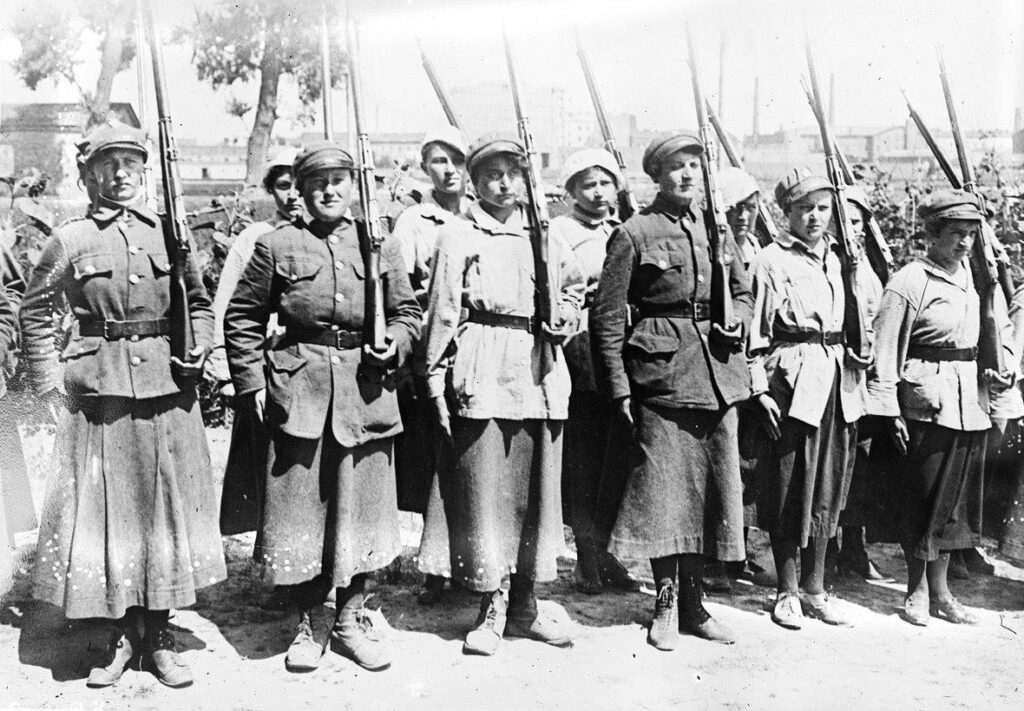
Men were not the only ones who served in the Polish Army. During the War, Poland opened its policy about volunteers from accepting only men to accepting both men and women. The volunteers were known as Ochotnicza Legia Kobiet (OLK), which translates to Voluntary Legion of Women. They consisted of women who did not want to be hospital nurses, but rathered to be soldiers defending their country.16 The OLK challenged traditional gender norms of the 1920s. Most women prior to the 1920s were seen as caretakers, pure, and motherly. The OLK were the opposite of that idea. They were a front line infantry unit who fought alongside men for the defense of Poland against Communism. They were similar to Lynn Dumenil’s views of the New Women. The New Women challenged the old ideas regarding the roles and behavior of a woman.17 The OLK wore short hair, fought alongside men in the defense of Warsaw and helped fight in other battles.18 These women helped redefine traditional notions of what it meant to be a woman in the 1920s.
The battle began on August 12 as the Soviet soldiers attacked the city of Radzymin. The Soviet’s III army 21st division invaded the city by night. Polish general Haller left the city, which caused the Radzymin to be taken by the Soviets due to fears of fighting a larger army. In the following days, Polish soldiers under Haller made multiple counterattacks to retake the city. They were aided by tanks and fought tooth and nail to reclaim their city. On August 15, the city was retaken; and on August 18 the front was cleared of Soviet presence.19 This started the beginning of the Polish counterattack.
Sikorski received orders from Haller to make a counterattack. He was ordered to head northeast, crossing the Wkra river, to conduct raids on August 14. During one of Sikorski raids,he captured the city of Ciechanow, which caused the Soviet officers to destroy their own radios. The city was also important to Polish history because it was home to princes, a castle, war with the old Teutonic order, and was the inspiration of some books.20 The morale of the Polish army was greatly boosted by reclaiming this city that was very important to its people. Sikorski also made contact with the center of the Soviet line, revealing the Soviet’s plan to take the Northeast rather than just the city. The Sikorski raid surprised the Soviet generals who then thought more raids would occur. This caused multiple flanks to be thinned out in order to support the Soviet defense against Sikorski’s raids. This distraction ultimately caused Pilsudski’s great counter attack.
Pilsudski’s attack was a huge gamble that changed the tide of the battle, and also the War. On August 16, Pilsudski advanced northwards from the Vistula; and by August 18, he encircled the Soviet Northern army.21 If Pilsudski had failed, the front would have been lost and Warsaw could have fallen. If they had succeeded, then the Battle would be won and the Soviets would lose many men. Sikorski also aided Pilsudski during this time by conducting his own attacks. Their goal was to ensure that enough of the Soviet’s attention was on the Prussian front, and to cause them to focus less on Warsaw.22 Pilsudski completed his goal on the 25th by marching his soldiers up north to the East Prussian Frontier, which divided the Soviet army in two, and many were taken as prisoners. The forward momentum of the Soviet Union was lost in a matter of days due to a risky gambit that determined the fate of Poland. Pilsudski’s risky maneuver was the reason why the battle is known as the “Miracle of the Vistula.”
A reason why the Soviets did so poorly was because they did not react in time to the Polish strategies. The Soviets attacked Polish northern cities instead of dealing with the forces pressuring the center front or the Wiepz River. Sergey Kamenev, another Soviet general, warned Tukhachevsky about the Polish not retreating to Modlin but to Warsaw, and that his attacking would endanger the southern front.23 If the Polish made a maneuver that would attack the undefended south, then the Soviet’s forces would be endangered. With the south front in danger, the entire army could be encircled and be destroyed just as Pilsudski did during his counterattack. Tukhachevsky argued back that Joseph Stalin would handle the southern flank and Sergey was overly reacting to the situation.24 Stalin did not join the Southern flank, but instead went to Crimea by order of Lenin.25 This miscommunication between leaders and generals caused no one to truly know where the Soviet positions were during the conflict. Only after the battle finished and records of the generals surfaced did the reality emerge that the Soviets had mishandled the situation.
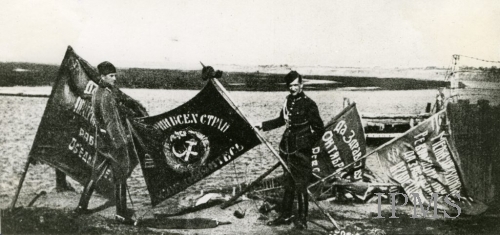
The battle was not the final nail in the coffin for the war. The war would continue for another six months after the battle. But this battle was a much needed achievement for the Polish. The battle saw huge casualties for the Soviet side. Tukhachevsky reported that he lost over 100,000 men during the battle. Tukhachevsky had tremendous difficulty trying to replace his officers that he lost.26 Due to those heavy casualties, the Polish army was able to advance into Soviet-controlled Belarus. Belarus would be incorporated into Poland after the war. The war showed that Poland was able to stand for itself and showed the imperialist nature of the Soviets. Due to the communists taking over Russia, some assumed that they would not be imperialist like the Tsarist Russia. But the war showed the world that they were wrong, and that the Soviets were imperialist like their former leaders.27 The battle also showed that communism could be defeated.
During the 1920, multiple countries such as America, Britain, and other Western countries experienced “Red Scares”. This Red Scare was a basic fear that communism would infect their politics and a communist uprising would occur from within. The Red Scare was sparked by the Bolshevik Revolution in Russia, and by the united efforts of the White army, and that foreign aid could not defeat them. The United States’ first Red Scare was directed toward reformers. They were criticized as being communist because their ideas challenged or hindered Capitalism.28 It did not matter if the reformers were actually communist or not; they were labeled as such just to hurt their ideas and reforms. During the war, the Polish Catholic Church was adamant to denounce communism and rally the masses for war.29 Beside the foreign threat of communism, there was internal pressure to save the country from communism. Most countries who had Red Scares also had these internal pressures, whether it be politicians, newspapers journalists, or the church that put pressure on communism. The battle, on the other hand, showed these countries that their fears about Communism should be tamed. Poland proved to the world that communism could not defeat a united people.
The “Miracle of the Vistula” battle was a big source of national pride. Poland proved to themselves and the World that it could defeat a powerful country like the Soviets. The battle tackled the 1920s themes of gender and Communism. The Battle determined the fate of Poland, with Pilsudski shifting the battle in favor of Poland. Due to a lack of cooperation and a large amount of infighting, the Soviets failed to achieve their goal to win the battle. Poland would rise high by beating the number one rival country in East Europe in a war, until World War Ⅱ.
- Norman Davies, White Eagle, Red Star: the Polish-Soviet War, 1919-20, (London: MacDonalds, 1972) 19. ↩︎
- Vladimir Lenin, “War and Revolution”(May 14, 1917) In Lenin Collection Works (Moscow: 1964), 398-421, accessed on March 16, 2026. On Marxists.com ↩︎
- Adam Zamoyski, Warsaw 1920: Lenin’s Failed Conquest of Europe, (London: HarperCollins, 2008), 7. ↩︎
- Zamoyski, Warsaw 1920, 53 ↩︎
- Richard M. Watts, Bitter Glory : Poland and its Fate, 1918 to 1939 (New York : Simon and Schuster, 1979), 126 ↩︎
- Zamoyski, Warsaw 1920. 8. ↩︎
- Zamoyski, Warsaw 1920. 9. ↩︎
- Zamoyski, Warsaw 1920, 67. ↩︎
- Davies, White Eagle Red Star, 188. ↩︎
- Davies, White Eagle Red Star, 193. ↩︎
- Davies, White Eagle Red Star ,193. ↩︎
- Davies, White Eagle Red Star, 197. ↩︎
- Davies, White Eagle Red Star, 197. ↩︎
- Davies, White Eagle Red Star, 200. ↩︎
- Davies, White Eagle Red Star, 201. ↩︎
- Robert M Ponichtera, “Feminists, Nationalists, and Soldiers: Women in the Fight for Polish Independence.” The International History Review 19, no. 1 (1997): 25 JSTOR ↩︎
- Lynn Dumenil. The Modern Temper, (New York: Hill and Wang, 1995), 98. ↩︎
- Ponichtera . “Feminists, Nationalists, and Soldiers”, 25. ↩︎
- Davies, White Eagle Red Star, 201. ↩︎
- Davies, White Eagle Red Star, 203. ↩︎
- Davies, White Eagle Red Star, 203. ↩︎
- Davies, White Eagle Red Star, 205. ↩︎
- Zamoyski. Warsaw 1920, 80. ↩︎
- Zamoyski. Warsaw 1920, 81. ↩︎
- Zamoyski. Warsaw 1920, 81. ↩︎
- Zamoyski, Warsaw 1920, 110. ↩︎
- Zamoyski, Warsaw 1920, 110. ↩︎
- Lynn Dumenil. The Modern Temper, 22. ↩︎
- Zamoyski. Warsaw 1920, 74. ↩︎
Bibliography and Suggested Readings
“Battle For Warsaw Ends with Retreat of Two Soviet Units Cut Off” The Republican. Mon, Aug 23, 1920. From Newspaper.com
“Battle For Warsaw Started” The Idabel News. Thu, Aug 19, 1920. From Newspaper.com
Davies, Norman. White Eagle, Red Star: the Polish-Soviet War, 1919-20. (London: MacDonalds, 1972).
Dumenil, Lynn. The Modern Temper. (New York: Hill and Wang, 1995).
“Expert French Soldiers Assisting Polish Cause” The Saginaw News. Wed, Aug 18, 1920. From Newspaper.com
Lenin Vladimir. “War and Revolution”(May 14, 1917) In Lenin Collection Works (Moscow: 1964), 398-421, accessed on March 16, 2026. On Marxists.com
“Peace Parley in on at Minsk; Battle Rages” Buffalo Courier Express. Tue, Aug 17, 1920. From Newspaper.com
“Poles Plan the Recapture of Bret-Litovsk; Battle of Warsaw Polish Victory, Not French” The Miami News. Fri, Aug 20, 1920. From Newspaper.com
“Polish Capital Gets Prepared For Siege; City in Panic’s Grip” The Buffalo Enquirer. Mon, Aug 16, 1920. From Newspaper.com
Ponichtera, Robert M. “Feminists, Nationalists, and Soldiers: Women in the Fight for Polish Independence.” The International History Review 19, no. 1 (1997). JSTOR
“Russians Only 21 Miles From Warsaw” The Caledonian-Record. Sat, Aug 14, 1920. From Newspaper.com
“Soviet Cavalry Retreat After Armies Are Divided By New Attacks of Enemy” The Oklahoman. Wed, Aug 25, 1920. From Newspaper.com
“Third Stage In Battle for Warsaw and Poland Is Begun by Red Army” Atlantic City Sunday Press the Sunday Gazette. Sun, Aug 22, 1920. From Newspaper.com
Watts, Richard M. Bitter Glory : Poland and its Fate, 1918 to 1939. (New York : Simon and Schuster, 1979)

Josh Pelar is a History student at Ramapo College of New Jersey.
