
Overview
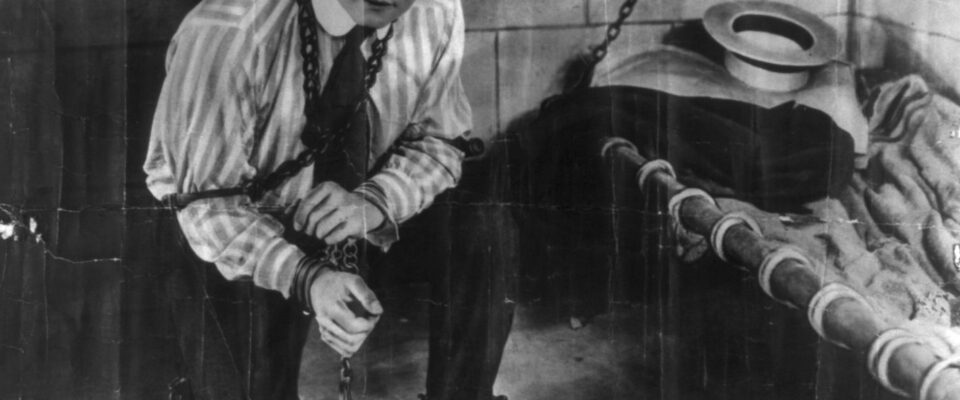
Entertainment involving performers was immensely popular in the 1920s, such as movies, theater, music, dancing, and sports. Perhaps the most famous performer was illusionist Harry Houdini. Houdini was a living legend, performing seemingly impossible death defying stunts and escape acts on a daily basis, leaving crowds speechless. Harry Houdini popularized escape acts and illusion as a form of entertainment that was distinct from magic shows, exposed frauds, and left behind a legacy many would do anything to achieve. Along with this legacy, he left behind a life of mysteries.
Harry Houdini, born Erik Weisz in Hungary, moved to the United States when he was four years old in 1878.1 His father was a rabbi and had accepted a job offering in Wisconsin and had moved there earlier than Houdini, his mother, and his 4 brothers.2 The family moved to New York 9 years later, when Houdini’s father decided he was not making enough to support his family in Wisconsin.3 From an early age, Erik, nicknamed Harry, had an immense fascination with magic, especially with “French conjurer Jean-Eugène Robert-Houdin”.4 Young Harry was so inspired by Houdin that he altered his last name to use as his own future stage name. He began his career at the age of nine in a local circus, alongside his brother, but he did not come into the public eye until his escape acts took off a few years later.5 When his father passed away in 1892, Houdini took it upon himself to provide for and support his family, and so he began touring.6 He worked his way up in the entertainment and stunt/illusion industry, and by the 1920s, Harry Houdini would have been a household name across the world.7
Houdini escaped death thousands of times, escaping from straight jackets, jail cells, and handcuffs, sometimes underwater. He made the impossible possible, embodied a new type of superhuman, and fascinated everyone who came to see him perform. There did not seem to be a single situation that he couldn’t overcome. That was, until late October 1926, when Harry Houdini finally met his match. He “so often had seemed to thousands to be cheating the very jaws of death” but this time, he was unsuccessful.8 The chain of events leading up to his death were perhaps more mysterious than his actual death.

Prior to the main series of events leading up to his death, Houdini nearly severed his foot in his water torture cell trick in Albany on October 11, 1926, but emerged with just a fractured ankle.9 He visited the hospital several times, first to confirm it was fractured, then for treatments.10 He was advised to take time off from shows to allow his ankle to heal and avoid making it worse or causing permanent damage.11 Like many other instances, he ignored this advice, and continued his shows. The continuing of these performances didn’t allow his body to heal his ankle and left his body and immune system significantly weakened.12 This lowered immunity made him highly susceptible to further infections and diseases. Even if he had been in good health, it was still not likely Houdini would have been able to survive the events that were to come. Contrary to popular belief, he did not actually die in his Chinese Water Torture Cell. This false cause of death was introduced in the 1953 movie titled Houdini, in which Houdini died within this cell.13 The truth about his death is much more complex than this Hollywood depiction of drowning.
October 22: The Punch
Harry Houdini was scheduled to perform a show at the Princess Theater in Montreal on the evening of October 22, 1926. He was preparing and relaxing before the show in his dressing room, when a group of students came to visit him. One of the McGill University students, J. Gordon Whitehead, asked if it was true that he could “withstand hard blows without injury” to the abdomen.14 Houdini often boasted about the strength of his abdomen, and was very proud of it. Without warning, Whitehead punched Houdini as hard as he could in his stomach, reportedly multiple times, leaving him bent over in pain.15 Houdini tried to ignore the pain, as he had a show that evening, and one of the physically and mentally strongest men in the world could not show weakness to his fans. Houdini proceeded to perform the show in its entirety, despite suffering stomach cramps and pain throughout it.
October 23 & 24: severe pain and show
The next morning, Houdini boarded a train from Montreal to Detroit, where he had a show on the night of the 24th. By the time he had arrived, the pain had significantly worsened. After he got settled in his dressing room, a local physician was called due to growing concern and declining condition. After laying his hand on Houdini’s stomach, he diagnosed him with appendicitis.16 At some point his appendix ruptured, releasing toxins into his abdominal cavity, requiring emergency surgery.17 Houdini decided to push through the pain, despite needing emergency surgery, and gave his final performance of his life on October 24, 1926, at the Garrick Theater in Detroit, Michigan.18 Some spectators described this performance as “disappointing”, as Houdini had made several mistakes.19 After discovering that Houdini was performing with a ruptured appendix, fans “realized that Houdini had given his life to perform for his admirers right up to the last minute”.20 After finishing the 2.5 hour long show, the pain became more severe and unbearable, but surgery would not be performed until the following afternoon.21 Apparently, instead of undergoing emergency surgery, Houdini decided to call his doctor back in New York to get a second opinion, a decision that would soon turn out to be deadly.22

October 25: 1st surgery, October 28: 2nd surgery
On October 25, Harry Houdini underwent an operation to remove his appendix at Grace Hospital.23 When his abdomen was opened up, it was discovered that it was filled with pus and severely infected.24 Because the surgery was so delayed to work around the show schedule, the toxins from his ruptured appendix had already seeped into his bloodstream, resulting in full body poisoning and sepsis.25
Dr. Arnold Van de Laar, a surgeon in Amsterdam, explains “at first, the pus can be contained by the surrounding intestines, but in the next stage the appendix dies off locally and bursts. Feces and intestinal gases are then released into the abdominal cavity. The patient experiences a sudden increase in the pain in the lower right of the abdomen, which then spreads throughout the whole abdomen and becomes so severe that it is no longer possible to say exactly where it is coming from. This is the stage of life-threatening peritonitis”, which is exactly what Houdini experienced.26
On October 28, Houdini had to undergo a second surgery to rinse out his abdomen from any remaining pus in an attempt to further remove and contain toxins, but the efforts to save his life came too late.27 The toxins had already poisoned his entire body, which was essentially a death sentence. The next three days would have been filled with hopelessness knowing there was nothing else that could be done to save him, and it was only a matter of time until his body gave up.
October 31: Houdini’s death
Harry Houdini met his unfortunate demise on the afternoon of October 31, 1926. After being in Grace Hospital for about a week, “Houdini whispered to his brother, Theo, ‘I’m tired of fighting…guess this is going to get me’”.28 Aware that he had very little time left, he took one last look at his wife before closing his eyes and leaving this world at 1:26 pm.29 Despite escaping every impossible situation, he could not escape his death. Houdini passed away alongside two people who had an immense impact on his life and career. His official cause of death was listed as “diffuse peritonitis streptococcal”, a severe abdominal infection caused by his ruptured appendix.30 This would have been an agonizingly slow and painful way to go, especially knowing that there was nothing else anyone could do to save him.
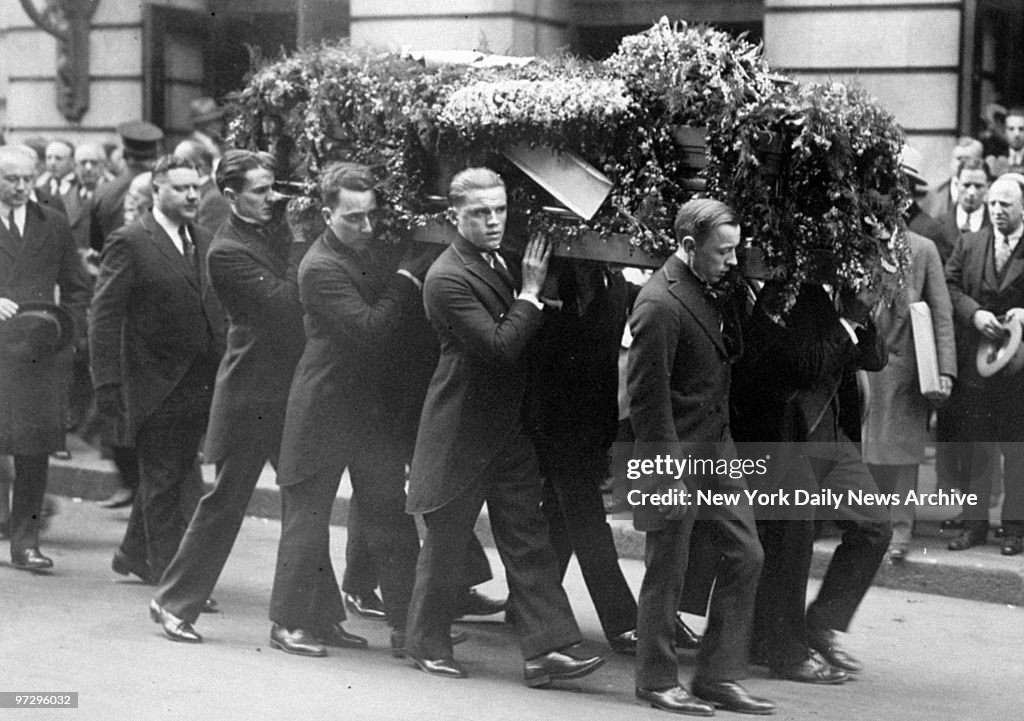
Even though the punch to Houdini’s stomach did occur a little over a week before his death, some doctors do not believe it had any correlation to his death, while others believe it directly caused it, so it became a topic of debate.31 It is unknown if he was suffering from appendicitis prior to the punch and it just made the pain more severe, if the punch ruptured an already inflamed appendix, or if it had caused the appendicitis.
Significance
Aside from his career of performing illusions and stunts, Houdini dedicated a major part of the last years of his life to debunking fraudulent spiritualists and mediums. Spiritualism, the practice of attempting to make contact with the dead, was at an all time high following the end of World War I, with distraught grieving family members attempting to contact deceased loved ones. Houdini reportedly “had little patience for anyone who claimed to be in possession of supernatural powers”, and denied claims that he had supernatural powers that assisted him and allowed him to perform these escape tricks.32 It was thought that towards the end of his life, Houdini “seemed to find more satisfaction in his successful exposure of imposture and fraud” than in his performances, supported by the fact that he “offered a $10,000 reward to any psychic who could present “physical phenomena” that could not be explained rationally”.33 He even went as far as to testify “before Congress in support of legislation that would have criminalized fortune-telling for hire and ‘any person pretending to … unite the separated’ in the District of Columbia”, or in other words, make it illegal to profit off fortune telling in Washington, DC.34 His whole thought process behind this was that he was keeping “mediums” and “spiritualists” from trying to make a profit off grieving people. There was even talk for a time where people were speculating that angry spiritualists had a role in his death, some of which took credit for killing him.35 To these spiritualists, Houdini was a direct threat to their careers, so having a role in his demise would have been an accomplishment. While he believed it was fake, Houdini was not so much against people practicing these kinds of things as he was people claiming it was real and doing it for money. These practices targeted vulnerable people, which he felt was immoral. Houdini’s death allowed these spiritualists, whether or not they were fraudulent, to continue their practices for a personal profit.
Ironically, for 10 years after his death, his wife attempted to contact him through a seance on the anniversary of his passing. He had apparently told her that if there was a way for the dead to communicate with the living, he would do all that he could to reach her after he had died.36 His wife, Bess, hosted annual seances every single year for 10 years hoping that one time he would come through. After the 10th seance, Bess stated “‘Houdini did not come through. … I do not believe that Houdini can come back to me, or to anyone”, putting an end to the hosted seances.37 Although Bess stopped, people still perform Halloween seances in an attempt to contact Harry Houdini from beyond to this day.

Chapter 2 of The Modern Temper by Lynn Dumenil, titled “Work and Consumption”, discusses the aspects of society in the 1920s that allowed Houdini to become so popular. The 1920s was a decade that “embrace[d] leisure, consumption, and self expression”.38 This rise in popularity of leisure activities expanded Houdini’s audience into both the upper and middle class of the United States. People had more extra money to spend on things that they enjoyed, which for many was going and watching performances.39 Without this societal change, Houdini’s career would not have become nearly as successful as it did.
Harry Houdini was one of the most iconic and remembered performers of the 1920s. His role in the entertainment industry defined a new type of entertainment and performance. Additionally, his career showed the immense role that entertainment had in society, the grief that came after WWII, and the popularity of leisure activities during the 1920s. He had immense talent and ‘“a wondrous power that he never understood”, as well as a passion for debunking fraudulent spiritual practices.40 Other people had done stunts and escape acts, but not to the level that he did. He was doing hundreds of shows a year, sometimes performing multiple times a day, all across the world. He gained immense fame from these impossible escapes and became a household name and an entertainment, illusionist, and escape icon for the next century.
Citations
- Andrews, Evan. “10 Things You May Not Know About Harry Houdini.” History.com, May 27, 2025. https://www.history.com/articles/10-things-you-may-not-know-about-harry-houdini.
- Cox, John. The biggest myth, March 23, 2012. https://www.wildabouthoudini.com/2012/03/biggest-houdini-myth.html.
- “Did Houdini Really Die After Being Sucker Punched?” Yale University Press, October 21, 2025. https://yalebooks.yale.edu/2020/03/11/did-houdini-really-die-after-being-sucker-punched/
- Dumenil, Lynn. The modern temper: American culture and society in the 1920s. United States: Hill and Wang, 1995
- Greene, Bryan. “For Harry Houdini, Séances and Spiritualism Were Just an Illusion.” Smithsonian Magazine, October 28, 2021. https://www.smithsonianmag.com/history/for-harry-houdini-seances-and-spiritualism-were-just-an-illusion-180978944/.
- “Harry Houdini (1874-1926).” PBS. Accessed March 10, 2026. https://www.pbs.org/wgbh/americanexperience/features/houdini-biography/.
- Featured Image: Harry Houdini (1874–1926), Stone walls and chains do not make a prison — for Houdini. n.d. Wikimedia Commons. https://commons.wikimedia.org/wiki/File:Harry_Houdini.jpg.
- “Harry Houdini: An Inventory of His Papers at the Harry Ransom Center.” Harry Ransom Center. Accessed March 10, 2026. https://norman.hrc.utexas.edu/fasearch/findingAid.cfm?eadID=01275.
- “Houdini in Detroit.” Michiganology, September 3, 2021. https://michiganology.org/stories/stories/.
- “Houdini’s Magic.” The Wilson Quarterly (1976-) 11, no. 1 (1987): 40–40. http://www.jstor.org/stable/45266473.
- “On This Day”, 2010. https://archive.nytimes.com/www.nytimes.com/learning/general/onthisday/bday/0324.html.
- Featured Image: Thurston, John H, photographer. Houdini jumps from Harvard Bridge, Boston, Massachusetts / John H. Thurston, stereopticons. Boston Massachusetts, 1908. Photograph. https://www.loc.gov/item/2015650990/.
- Featured Image: Final Houdini seance in 1936. [from a Photo Taken in 1936] Photograph. https://www.loc.gov/item/2010646059/.
- Featured Image: Schmidt, George. Casket of Harry Houdini being carried to hearse. March 2, 2010. Getty Images. https://www.gettyimages.com/detail/news-photo/casket-of-harry-houdini-being-carried-to-hearse-news-photo/97296027.
- “Our Point of View.” Scientific American 136, no. 1 (1927): 12–12. http://www.jstor.org/stable/24976961.
- Van de Laar, Arnold. “The Death of an Escape Artist: Harry Houdini – the History Reader.” The History Reader, May 29, 2025. https://www.thehistoryreader.com/historical-figures/death-escape-artist-harry-houdini-appendicitis-surgery/.
- Featured Image: Your appendix is a small, tube-shaped organ that sticks out from your cecum. It’s located in the lower right side of your abdomen. Cleveland Clinic. Accessed March 11, 2026. https://my.clevelandclinic.org/health/body/appendix.
- Evan Andrews ↩︎
- “Harry Houdini (1874-1926)” ↩︎
- “Harry Houdini (1874-1926)” ↩︎
- Evan Andrews ↩︎
- “Harry Houdini (1874-1926)”, Evan Andrews ↩︎
- “Harry Houdini (1874-1926)” ↩︎
- Evan Andrews ↩︎
- “On This Day” ↩︎
- “On This Day” ↩︎
- “On This Day” ↩︎
- “On This Day” ↩︎
- “On This Day” ↩︎
- John Cox ↩︎
- “On This Day”, “Did Houdini Really Die After Being Sucker Punched?” ↩︎
- Evan Andrews ↩︎
- Arnold Van de Laar ↩︎
- Arnold Van de Laar ↩︎
- “Harry Houdini: An Inventory of His Papers at the Harry Ransom Center.” ↩︎
- Arnold Van de Laar ↩︎
- Arnold Van de Laar ↩︎
- “On This Day” ↩︎
- “Did Houdini Really Die After Being Sucker Punched?” ↩︎
- “On This Day”, “Houdini in Detroit.” ↩︎
- Arnold Van de Laar ↩︎
- “Houdini in Detroit.” ↩︎
- Arnold Van de Laar ↩︎
- Arnold Van de Laar ↩︎
- “Houdini in Detroit.” ↩︎
- “Houdini in Detroit.” ↩︎
- “Houdini in Detroit.” ↩︎
- “On This Day”, Arnold Van de Laar ↩︎
- “Houdini’s Magic”, Evan Andrews ↩︎
- “Our Point of View”, Evan Andrews ↩︎
- Bryan Greene ↩︎
- “Did Houdini Really Die After Being Sucker Punched?” ↩︎
- Bryan Greene ↩︎
- Bryan Greene ↩︎
- Lynn Dumenil ↩︎
- Lynn Dumenil ↩︎
- “Houdini’s Magic” ↩︎
More Resources
Great Escapes By Joan Higbee https://www.loc.gov/loc/lcib/970224/houdini.html
Harry Houdini: An Inventory of His Papers at the Harry Ransom Center https://norman.hrc.utexas.edu/fasearch/pdf/01275.pdf
The Life and Afterlife of Harry Houdini by Joe Posnanski
The Life and Many Deaths of Harry Houdini by Ruth Brandon

Ramapo College sophomore majoring in History and minoring in Museum Studies + Music Industry

