
Fritz Lang’s 1927 hit film Metropolis serves as a shocking cinematic experience that also relates to the cultural shifts Lynn Dumenil outlines in the first three chapters of The Modern Temper. The film captures the same fears people faced in the 1920s regarding the centralization of power, the dehumanization of labor, and the changing role of women. All of these things defined the American experience during this era.
In the first chapter of The Modern Temper, Dumenil discusses how the power shifted in the 1920s. It wasn’t just about the government anymore; the decade saw a massive shift toward corporate dominance and “cult of efficiency” (Dumenil 24). Metropolis interprets this through the character John Fredersen, who is the cold-hearted “Master of Metropolis.” He sits in a giant tower and runs the whole city like a private business. He doesn’t care about the citizens; he cares that the “machine” keeps running. This is exactly what Dumenil means when she says the 1920s became obsessed with business power over human needs (Dumenil 24).
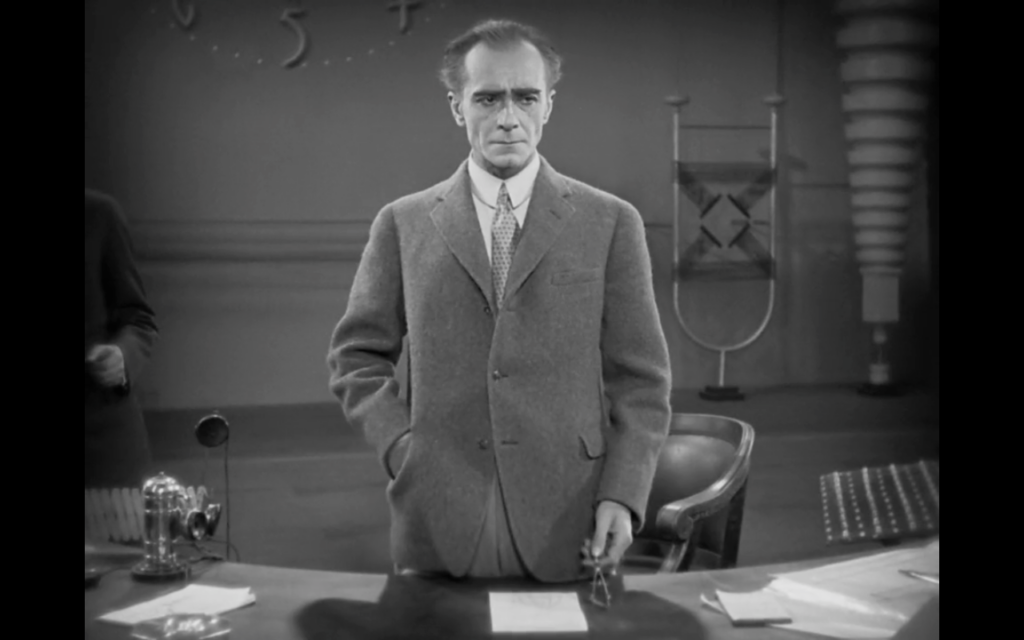
Joh Frederson, who is the creator and ruler of Metropolis, is shown in his office overlooking the city.
Chapter two of The Modern Temper is all about how work changed. Before the 20s, we had many great inventors such as Thomas Edison, Marie Curie, and the Wright Brothers; people took pride in making things. By the 1920s, Fordism, founded by Henry Ford, was a model of mass production and consumption. However, Fordism introduced tedious and dreary working systems. Dunemil says this made people feel like they were “losing their souls.” (Dumneil 56). If you take a closer look at the workers featured in Metropolis, they literally walk in lines like robots. They don’t even look like people anymore; they just look like parts of a machine. The silent film proves exactly what Dumenil was talking about: a world where “progress” and big factories make life easier for the rich and powerful but turn the workers into monotone robots.
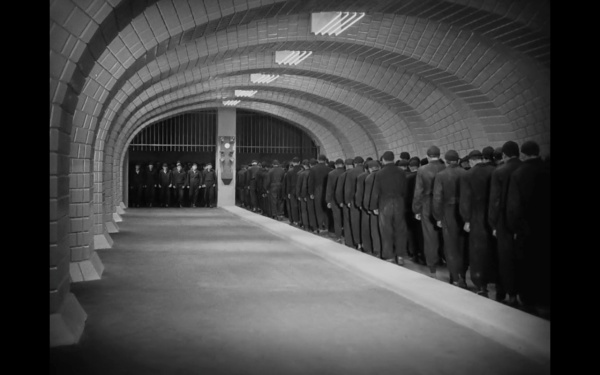
The film opens with workers in their uniform, walking in sync with their heads down.
Chapter three discusses the “New Woman.” In the 1920s, women were starting to dress differently, go out more, and protest for their freedom. Flappers were a big thing in the 1920s, and they challenged traditional gender roles by frequenting jazz clubs. While it was great that this new change was happening, this scared a lot of traditional people who didn’t like that women left the house, worked, and broke their chains of domesticity. They also saw flappers as “rebellious” or “unladylike.” Metropolis showcases this fear through the girl Maria. The soul of Maria is transferred to a female robot. There are two versions of her shown throughout the film: the real Maria and robot Maria. The real Maria is a compassionate, nurturing woman who inspires hope among the workers. The robot version of her, or “False Maria,” is seductive, wild, and wears darker makeup to contrast with the real Maria. I believe Fritz Lang was showcasing the same fear Dumenil wrote about: the fear that if women got too “modern” or “independent,” society would fall apart (Dumenil 141).
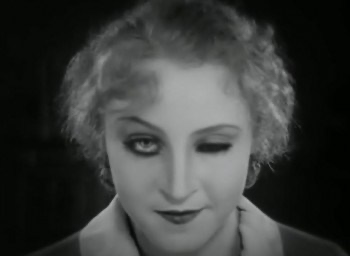
Robot Maria with darker makeup around her eyes.
Dumenil’s main point in the 1920s was fighting between old traditions and new, scary technology. Metropolis was just all that put into a movie. Even though the film featured cool gadgets and robots, people were terrified of being replaced by machines or losing their identity.
