
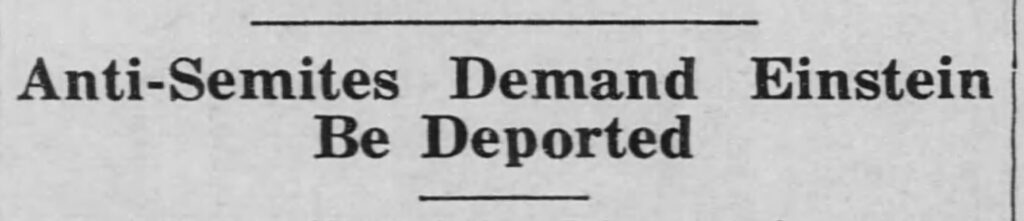
Albert Einstein’s reception of the 1922 Nobel Prize in Physics, and particularly this event’s recognition in the United States, draws many parallels to Lynn Dumenil’s discussion of competing public and private power in The Modern Temper. Although he made concerted efforts throughout his life to steer clear of the political realm, Einstein himself could be classified as a radical, progressive reformer within the world of science. From this perspective, the global prestige bestowed upon him by the Nobel Committee represents a distinct moment where the public interests of the academic community won out over the traditionalism of private institutions. As Dumenil notes in reference to the socially and politically oriented aspects of progressivism, reformers did not frequently witness mainstream success or recognition in the 1920s. Discouraged by private industries’ overall growth, and bonding with government interests during World War I, the liberal approach of passing legislation targeting social welfare causes was largely abandoned during the decade. Radical reformers were even more ostracized, due to heightened anti-communist and isolationist attitudes throughout the United States.1 The xenophobia of this trend directly impacted how Einstein’s blossoming fame was received by both academic and non-academic sectors of the American public.
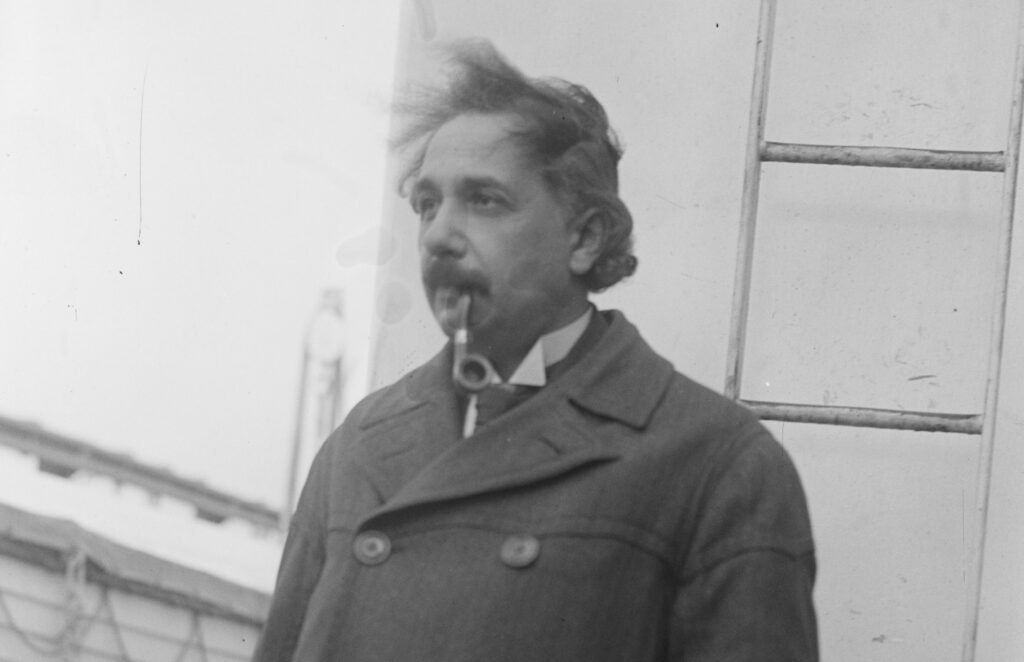
Even though the theory of relativity was not considered proven by the scientific community at the time of the 1922 Nobel Prize, it was the theory which catapulted the name “Albert Einstein” into headlines and conversations across the world. Considering that it quite literally uprooted the principles by which humanity had come to understand the universe, relativity did not serve to further the professionalization of science as an industry, and Einstein himself was deemed a subversive figure. His mainstream reputation was further weakened by biases against his German heritage and Jewish upbringing. In the social environment of the United States during the 1920s, Einstein became perhaps the first celebrity scientist, not for awards such as the Nobel Prize, but for his comical persona, outlandish appearance, and unbelievable theories. Just as Dumenil characterizes famous athletes of the time as “consumption idols,”2 Einstein’s popularity did not stem from growing public acceptance of a scientific revolution, but rather from the increased scope of the entertainment market.
Both the competing forces of public and private power, and the role of celebrities in developing popular consumer culture place Albert Einstein’s Nobel Prize squarely within the dichotomy of the 1920s. While his more commonly accepted theories were impactful enough to earn global recognition by a prestigious academic organization, his seemingly ludicrous perspective on fundamental principles of space and time caused him to be depicted as a mere caricature of a scientist by the media of the decade. Thus the 1920s can be identified as a time where science and technology paved the way for reshaping humanity’s understanding of the world, while longstanding social norms and a general resistance to change kept a skeptical eye upon anyone considered overtly revolutionary. Albert Einstein may have never burnt a president’s speech outside of the White House like Alice Paul, and certain was never jailed and executed for a crime he may not have committed such as in the case of Sacco and Vanzetti, but his fame and radicalism nonetheless highlight the underlying cultural arc of the 1920s.

A senior at Ramapo College, majoring in American Studies and minoring in Anthropology.
