
When I think of the 1920s, one of my first thoughts is how much art is centered around that time period. Chicago is a musical that comes to mind, showing the darker side of the time through women who tend to become famous for being on trial for murdering their lovers, in a similar manner to how Al Capone was famous to the public. Singin’ in the Rain is another musical with a drastically different tone from Chicago, shining a brighter spotlight on the Jazz Age considering it’s a tribute to film during a critical stage of its evolution. There’s also this webcomic-turned-indie show called Lackadaisy that I don’t know much about, but is a thriller mystery set in the 1920s with anthropomorphic cats as characters.
That’s not to mention things created during the Jazz Age, such as The Great Gatsby, which is a commentary on not only the American Dream, but also the state of the world where the rich party, and the poor suffer. All this to say that when looking back on the 1920s through the lens of pop culture, the era feels glamorized. It’s the perfect setting for crime, parties, and art, but there is definitely more under the surface that not many people, especially nowadays, discuss within the art they create about the time period, such as racism.
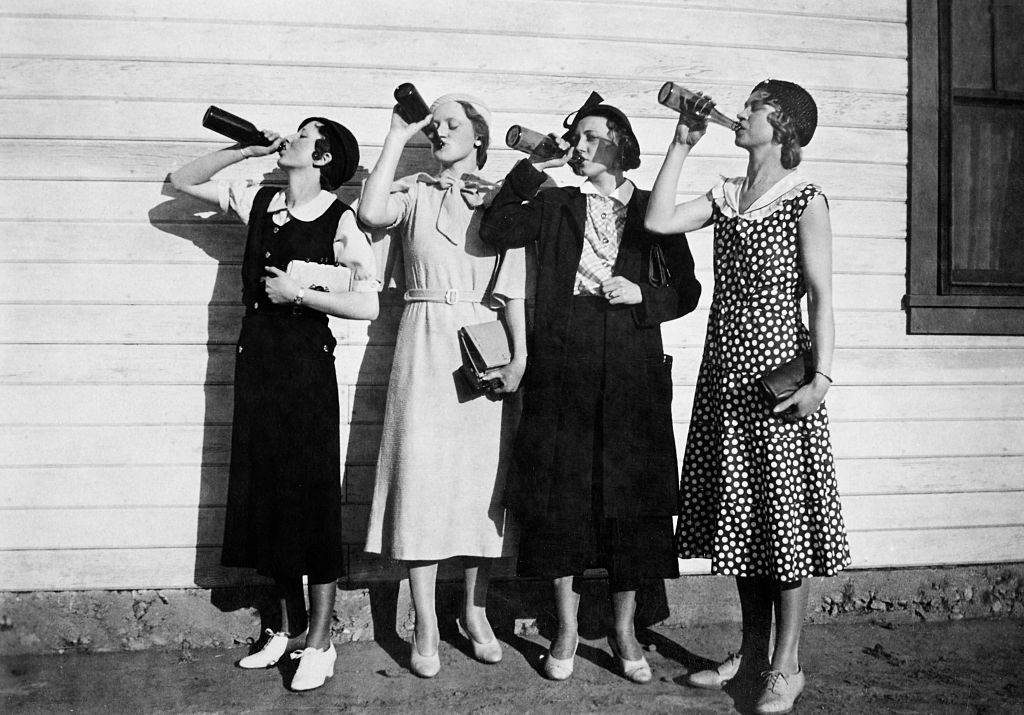
When looking up “the 1920s” in Google, I found a bunch of images of people celebrating and living their lives on the surface. One image I found was a bunch of women in a car waving American flags. There were also women protesting for the right to vote, and men protesting the right to have alcohol. Within these search results are also several images of flappers, women who defied the societal norms of the time and dressed in knee-height dresses with low necklines.1 However, as I continued to scroll, I noticed there weren’t as many images of black people than there are of white people. Even then, they were mostly musicians playing for the entertainment of white people.
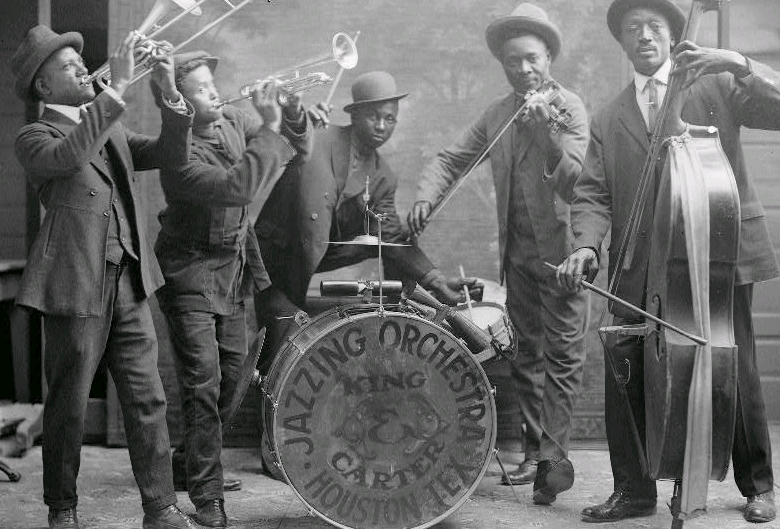
Now that I have images in my mind from the 1920s, I feel my impressions are the same. They do feel weaker, considering I claimed the era was glamorized for parties and there’s various images of people partying, but I also understand that these images are one part of a whole era. I’d need more sources, such as books and scholarly articles about the 1920s, to truly know if my initial impressions were correct. There’s also the fact that I got these images from Google, which grows more untrustworthy the more artificial intelligence is integrated into everyday life. With the push of a button, anyone can generate an artificial image of what the 1920s looks like, which makes me skeptical on which images are real, and which are fake. Although it is important to check the source of where these images are coming from through reverse image searches and checking where it was posted, it can be difficult to tell at times with how realistic generative AI has gotten in imitating photo and video footage. Overall, I feel my impression about the 1920s being glamorized still stands.
Citations
1 History.com Editors. 2018. “Flappers – 1920s, Definition & Dress | History.” History. A&E Television Networks. March 6, 2018. https://www.history.com/articles/flappers.

Eryn is a Ramapo College sophomore majoring in History and minoring in Museum Studies.
