
Introduction
On December 5th, 1928, Colombian laborers and their families gathered at Ciénaga’s train station to negotiate the terms of their strike against the United Fruit Company with the Governor of Magdelena. Just before midnight, the Colombian military opened fire on the crowd as the government declared a state of siege in the banana zone. This atrocity, ending the morning of December 6th, is known as the Banana Massacre.1
The Popularity of Bananas
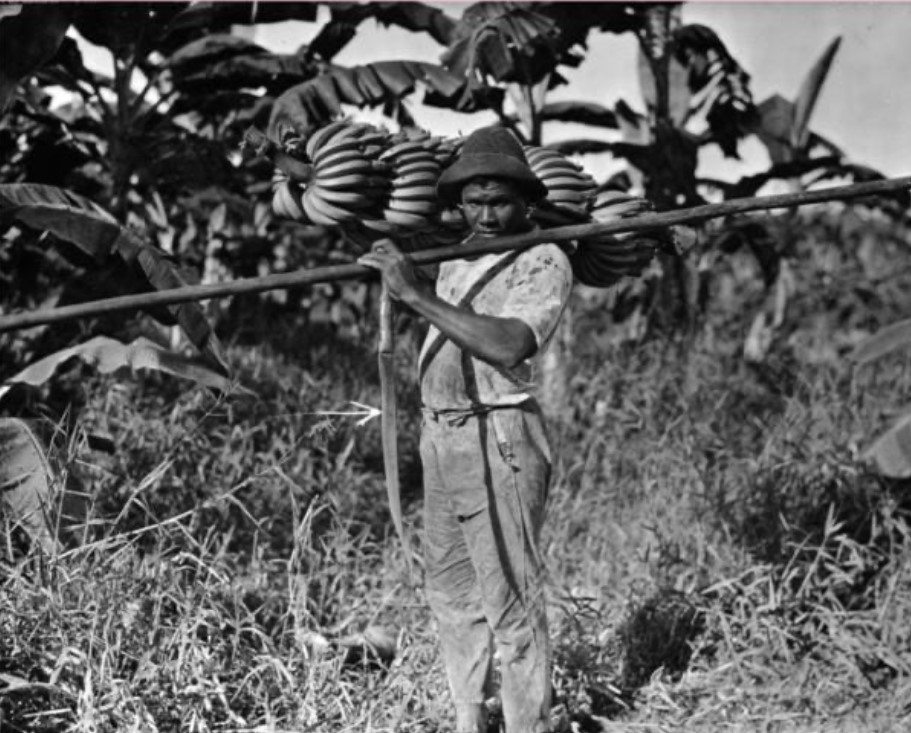
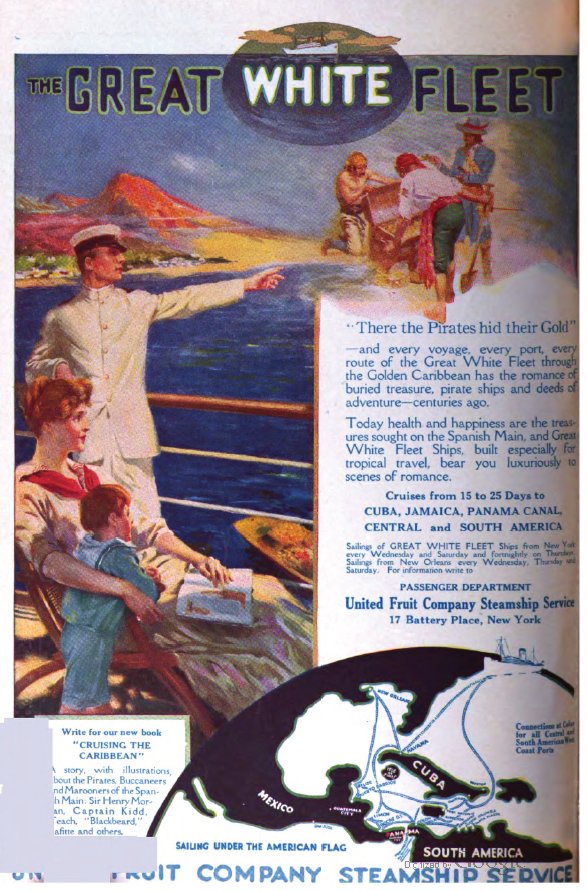
The 1920s was an era known for excessive consumer culture fueled by increased advertising and affordable goods. The banana offers a case in point – it grew in popularity in the 1920s due to the United Fruit Company’s vigorous advertising campaign. The company began advertising bananas in 1917 when they already had established plantations in Central and South American countries. They used the “logic” form of advertising to sell the exotic fruit, having scientists promote the nutritional value of bananas, and saw banana sales increase. Advertising in America would change forever when Edward Bernays began targeting people’s emotions instead of logic. With this new mode of advertising proving to be highly successful, the U.F.C. launched the “Great White Fleet” cruiser that brought Americans to tour United Fruit’s plantations in Latin America while also transporting bananas. This endeavor would prove to be very successful in increasing the banana market.2
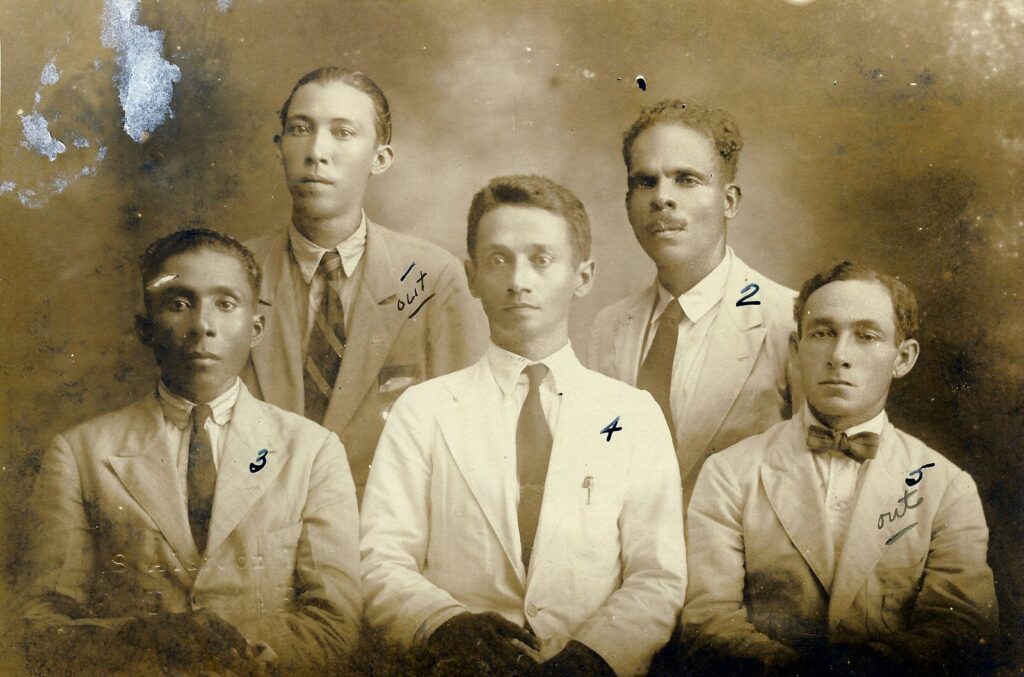
Visitors saw a theatrically created plantation that appeared to be a humane and peaceful place. In reality, U.F.C. plantations were corrupt, and the laborers were subjected to terrible work conditions.3 The United Fruit Company did not value their workers; laborers were only regarded as replaceable cogs in their machines. For this reason, there are few photos of the actual workers who labored at the UFC’s plantations. Indeed, most photos from the UFC during this era are of cars, the bananas themselves, and infrastructure.4 This makes the photo of the strike organizers particularly rare. The image was not meant to be available to the general public, as its primary purpose was to inform the operations of the management and security forces. 5
The Strike
Colombia was home to several United Fruit plantations, where banana workers were subjected to long hours and low pay. Raul Eduardo Mahecha, a Partido Socialista Revolucionário (PSR) representative, led the strike that preceded the massacre.6 With the support of fellow PSR members Ignacio Torres Giraldo and Maria Cano, Mahecha led a lecture tour of the Banana Zone discussing labor rights. This inspired significant support for reform, with the plantation workers’ concerns regarding the contract system, their work hours, and the abuses they and their families were subjected to by their supervisors. For example, a worker named Aristides Lopez Rokano stated: “We worked from six in the morning until eleven and then from one in the afternoon until six…The contractor paid the salary and reserved up to thirty percent for himself.” At the same time, the wives and daughters of the workers suffered sexual violence at the hands of the UFC employees. Inspired by the words of Mahecha, workers gathered on October 6, 1928, to discuss these frustrations, and unionist Erasmo Coronel proposed the idea of a strike. The workers created nine demands for better working conditions, citing parts of the Colombian Constitution to support these demands.7 In this way, these efforts were less an act of communism and more an attempt to modernize labor relations in Colombia. Their demands included receiving real money payments and transitioning to a six-day work week. 8
The Massacre
American corporate interference in international relations would not have been possible before World War I when there was more suspicion of corporate power. However, by the 1920s, the American public idealized corporations and businessmen, as Americans largely viewed them as instrumental parts of the war effort.9 The American government in the 1920s supported corporations like the United Fruit Company to expand their markets and acquire raw materials by applying economic, diplomatic, and military pressure. This was particularly common in Latin America. The pressure could be subtle or indirect. However, in Nicaragua, Guatemala, Haiti, Honduras, and Santo Domingo, the U.S. government took bold action to protect corporations’ interests by sending troops.10
The United Fruit Company thus leveraged its power in the United States government to ensure that the strike in Colombia was brought to what would be a bloody end. Considering that the strikers’ demands would have resulted in higher operation costs for the company, the U.F.C. utilized its ties with the United States government to have the Marine Corps threaten to invade Colombia if the Colombian government did not protect the company’s interests and end the strike.11 In this way, the Banana Massacre was the direct result of American military threats and pressure against the Colombian government.

The strike gained national attention in the United States, although it conveniently ignored the terrible conditions that led to the strike. Prominent newspapers like the New York Times focused on how the strike threatened Americans in Colombia, as opposed to what this strike and the actions of the U.F.C. had meant for Colombians. For example, the Times published a map entitled “Region Affected by Colombia Strike” on December 6, 1928, after the massacre had been committed. Instead of using this visualization of the Banana Zone as an opportunity to highlight the crimes committed by the Colombian military on the strikers, the map’s caption highlights how the strike was endangering the “lives and property of Americans.”12 This demonstrates how the strike was viewed as a harmful hindrance to the small number of Americans located in and exploiting the Banana Zone. This is a testament to the successful efforts to cover up the massacre in American media.
The strike lasted two months, and on December 5th, the Governor of Magdalena summoned the strikers to Ciénaga to settle the strike. Strikers gathered in the thousands, and at the same time, the government issued Decree Number 1 that ordered the military, led by Carlos Cortes Vargas, to open fire on the unarmed strikers and their families.13 It is estimated that anywhere from 50 to 2,000 people were killed in Ciénaga’s train station that night.14 Despite this, by daybreak, only nine bodies were left behind. Some strikers theorized that the nine bodies were symbolic of the nine demands of the strikers. The Colombian military did not end there, with officers killing over 1,000 strikers. Laborers responded by destroying several of United Fruit’s buildings.15

Liberal politician Jorge Eliecer Gaitan brought significant attention to the disastrous conduct of the military during the massacre in Colombia. Union leader Ignacio Tores Giraldo quipped that Gaitan “concluded the investigation” on the massacre less than a day after it had been committed. One primary issue Gaitan raised regarding the massacre was that it was pre-planned, indicating that there would be little chance for the strikers to protect themselves. Furthermore, those who were only injured after the military opened fire were killed by officers with bayonets, and the dead bodies were thrown into the sea so they could not be found and identified afterward. While committing this atrocity, the drunken military officers, including Cortes Vargas, sexually violated the women in Cienaga. The overarching qualm Gaitan held was that the army acted not in the interest of Colombia but of the United States. The press widely spread Gaitan’s allegations and only increased the disapproval of this massacre.17
The Legacy of the Banana Massacre
In January 1929, 600 strikers were detained and charged with criminal offenses in military courts. Of these 600, 31 were sentenced to prison, ranging from 2-25 years. All of the sentenced were freed in 9 months, after the advocacy of Jorge Eliecer Gaitan during a parliamentary debate. The former strikers only continued their activism, with one of the freed individuals, Alberto Castrillon, announcing his run for the presidency as the PSR party candidate on the symbolic date of December 6, 1929. At the same time, Cortes Vargas and the Minister of War Ignacio Rengifo were demoted from their positions, indicating the decline of the Conservative elite in Colombian politics.18 Therefore, although the massage successfully crushed the strike, it had the reverse effect in the long term. It offered Colombian workers and unionists a story and martyrs to further their movement and contributed to the end of the conservative hegemony. However, the polarization between Liberals and Conservatives that resulted from this massacre is considered to be the cause of La Violencia, a bloody civil war in Colombia that lasted from 1948-1958.19
The Banana Massacre was further ingrained into Colombian culture as it was featured in Gabriel Garcia Marquez’s 1967 Nobel Prize-winning novel 100 Years of Solitude. In this pillar of magical realism, Marquez describes the presence of an American banana company in the fictional Colombian town of Macondo, which exploited and destroyed the town’s resources and people. The people responded with a general strike, culminating in the military executing an apocalyptic massacre against the strikers who had gathered in a train station. Garcia Marquez has explained that this scene was directly inspired by the Banana Massacre, which was prominent in his memory of Colombian history.20
This atrocity continues to be a point of contention in Colombia, as, in 2017, right-wing Representative Maria Fernanda Cabal claimed that the massacre was a communist myth that was blown out of proportion in order to support communist operations.21 In this way, the rhetoric of a communist threat persists in modern-day discussions of the Banana Massacre.
Significance to the 1920s
Justifying such violence and anti-union activity required fear-mongering, with the most effective tool being the apparent threat of the spread of communism. The strike in Colombia did occur in alliance with the Colombian Communist Party, which helped mobilize the poor and small business owners to support the strikers and their demands.22 Prior to the massacre, from 1919 to 1920, the United States was the site of a Red Scare, the successful result of the Bolshevik Revolution in what became the Soviet Union. During the Red Scare, the American public feared that communism would create a revolution in the United States. Due to this, significant hysteria spread throughout the United States, with people like organized laborers under intense scrutiny.23 For this reason, corporations that suppressed strikes were viewed as safeguards against communism.24 This was not coincidental, as corporations, with the help of the press, made it seem as though all strikes were part of a larger communist plot.25 Furthermore, companies like the United Fruit Company hired public relations firms to ensure that bloody stories like the Banana Massacre did not reach the American public.26

The language of a communist threat also pervaded government correspondence regarding the massacre. According to a telegram sent from the American Vice Consul in Santa Marta Lawrence Cotie to the Secretary of State at the time, Frank Billings Kellogg, on December 9, 1928, the Colombian military was “actively engaged in clearing the district of the Communists.”28 What is meant by “clearing” is not precisely clear, but one could conjecture that it is about detaining or even killing those suspected to be communist. In this way, it is clear that the apparent threat of communism was key to military operations in the Banana Zone.
The role of the Red Scare and censorship looked rather different on the Colombian side of this atrocity. The Colombian government also feared a communist revolution, resulting in the passage of Decree 707, which gave the police significant powers to repress those suspected to be communist in 1927. Similarly, in 1928, the government introduced and passed projects aimed at attacking suspected communists. However, this did very little to prevent the growth of the opposition to the conservative government. Thus the campaign against the “Red Menace” was largely unsuccessful and criticized by many domestically and internationally.29
Despite the predominantly conservative regime that seemed to dominate Colombia’s politics in the 1920s, propaganda against them proliferated before and during the strike. For example, the Diario de Córdoba was best known for ridiculing army officers. Mahecha utilized his printing machine to have La Nacion and La Prensa publish pieces supporting the strike. This rhetoric spread to the opposition press in Bogota. The propaganda leaflets were read aloud to the largely illiterate crowds. The government was slightly more successful in censoring the press in the Banana Zone from the date of the massacre until the end of the state of siege on March 14, 1929. Outside of the Banana Zone, however, newspapers continued to criticize the actions of the government.30
Citations
Footnotes
- “Colombia: A Photograph We Were Not Supposed To See,” Visualizing the Americas, accessed March 31, 2025, https://visualizingtheamericas.utm.utoronto.ca/1928-massacre-1. ↩︎
- Lindsey Morey, “Blood For Bananas: United Fruit’s Central American Empire,” Roots of Contemporary Issues, 2014, https://history.wsu.edu/rci/sample-research-project/. ↩︎
- Morey, “Blood For Bananas.” ↩︎
- Kevin Coleman, “The Photos That We Don’t Get to See: Sovereignties, Archives, and the 1928 Massacre of Banana Workers in Colombia,” essay, in Making the Empire Work: Labor and United States Imperialism (New York, NY: New York University Press, 2015), 104–34, https://kevincoleman.org/wp-content/uploads/2021/05/Coleman_The-Photos-We-Dont-Get-to-See_Sovereignties-Archives-and-the-1928-Massacre-of-Banana-Workers-in-Colombia.pdf, 106. ↩︎
- Coleman, “The Photos That We Don’t Get to See,” 108. ↩︎
- “Colombia: A Photograph We Were Not Supposed To See.” ↩︎
- Coleman, “The Photos That We Don’t Get to See,” 110-111. ↩︎
- Mariana Ramirez Cabal, “The Dark Side of Bananas: Imperialism, Non-State Actors, and Power,” Harvard International Review, June 9, 2023, https://hir.harvard.edu/the-dark-side-of-bananas-imperialism-non-state-actors-and-power/. ↩︎
- Dumenil, The Modern Temper, 31-32. ↩︎
- Dumenil, The Modern Temper, 36. ↩︎
- Ramirez Cabal, “The Dark Side of Bananas: Imperialism, Non-State Actors, and Power.” ↩︎
- Coleman, “The Photos That We Don’t Get to See,” 109. ↩︎
- “Colombia: A Photograph We Were Not Supposed To See.” ↩︎
- Aviva Chomsky, “Globalization, Labor, and Violence in Colombia’s Banana Zone,” International Labor and Working-Class History, no. 72 (2007): 901–115, https://www.jstor.org/stable/27673094, 95. ↩︎
- “Colombia: A Photograph We Were Not Supposed To See.” ↩︎
- After the Military Opened Fire on the Striking Workers in Ciénaga, the Workers Destroyed Several of the UFC’s Buildings, Including the Engineers’ Quarters in Sevilla., Kevin Coleman (The United Fruit Company Photograph Collection, Harvard University, 1928), https://kevincoleman.org/wp-content/uploads/2021/05/Coleman_The-Photos-We-Dont-Get-to-See_Sovereignties-Archives-and-the-1928-Massacre-of-Banana-Workers-in-Colombia.pdf. ↩︎
- Eduardo Posada-Carbó, “Fiction as History: The Bananeras and Gabriel García Márquez’s One Hundred Years of Solitude,” Journal of Latin American Studies 30, no. 2 (May 1998): 395–414, https://www.jstor.org/stable/158531, 404-405. ↩︎
- Posada-Carbó, “Fiction as History,” 403 ↩︎
- Adriaan Alsema, “One of Colombia’s Worst Massacres in History a Communist Myth: Opposition Senator,” Colombia News, November 30, 2017, https://colombiareports.com/amp/one-colombias-worst-massacres-history-communist-myth-opposition-senator/. ↩︎
- Posada-Carbó, “Fiction as History,” 395-396. ↩︎
- Alsema, “One of Colombia’s Worst Massacres in History a Communist Myth.” ↩︎
- Chomsky, “Globalization, Labor, and Violence in Colombia’s Banana Zone,” 95. ↩︎
- Dumenil, The Modern Temper, 218. ↩︎
- Dumenil, The Modern Temper, 32. ↩︎
- Dumenil, The Modern Temper, 220. ↩︎
- Dumenil, The Modern Temper, 31. ↩︎
- Coleman, “The Photos We Don’t Get to See.” ↩︎
- Kevin Coleman, “The Photos We Don’t Get to See,” Kevin Coleman, June 23, 2021, https://kevincoleman.org/the-1928-massacre-of-banana-workers/. ↩︎
- Posada-Carbó, “Fiction as History,” 403-404. ↩︎
- Posada-Carbó, “Fiction as History,” 402-403. ↩︎
Bibliography
1916 Advertisement for the United Fruit Company Steamship Line, Wikimedia Commons (Scribner’s Magazine, February 1, 1916), https://commons.wikimedia.org/wiki/File:United_Fruit_Ad_1916.jpg.
After the military opened fire on the striking workers in Ciénaga, the workers destroyed several of the UFC’s buildings, including the engineers’ quarters in Sevilla. Kevin Coleman. The United Fruit Company Photograph Collection, Harvard University, 1928. https://kevincoleman.org/wp-content/uploads/2021/05/Coleman_The-Photos-We-Dont-Get-to-See_Sovereignties-Archives-and-the-1928-Massacre-of-Banana-Workers-in-Colombia.pdf.
Alsema, Adriaan. “One of Colombia’s Worst Massacres in History a Communist Myth: Opposition Senator.” Colombia News, November 30, 2017. https://colombiareports.com/amp/one-colombias-worst-massacres-history-communist-myth-opposition-senator/.
Chomsky, Aviva. “Globalization, Labor, and Violence in Colombia’s Banana Zone.” International Labor and Working-Class History, no. 72 (2007): 901–115. https://doi.org/www.jstor.org/stable/27673094.
Coleman, Kevin. “The Photos That We Don’t Get to See: Sovereignties, Archives, and the 1928 Massacre of Banana Workers in Colombia.” Essay. In Making the Empire Work: Labor and United States Imperialism, 104–34. New York, NY: New York University Press, 2015. https://kevincoleman.org/wp-content/uploads/2021/05/Coleman_The-Photos-We-Dont-Get-to-See_Sovereignties-Archives-and-the-1928-Massacre-of-Banana-Workers-in-Colombia.pdf.
Coleman, Kevin. “The Photos We Don’t Get to See.” Kevin Coleman, June 23, 2021. https://kevincoleman.org/the-1928-massacre-of-banana-workers/.
“Colombia: A Photograph We Were Not Supposed To See.” Visualizing the Americas. Accessed March 31, 2025. https://visualizingtheamericas.utm.utoronto.ca/1928-massacre-1.
Comisaría de la United Fruit Company en Ciénaga, 1928. 1928. Wikimedia Commons. https://commons.wikimedia.org/wiki/File:Comisariato_cienaga.jpg.
Handling bananas, backing the bunch, Colombia, 1924. ReVista. Baker Library Historical Collections, Harvard Business School, 1924. https://revista.drclas.harvard.edu/making-a-difference-repatriating-photographs-revista/.
Morey, Lindsey. “Blood For Bananas: United Fruit’s Central American Empire.” Roots of Contemporary Issues, 2014. https://history.wsu.edu/rci/sample-research-project/.
Posada-Carbó, Eduardo. “Fiction as History: The Bananeras and Gabriel García Márquez’s One Hundred Years of Solitude.” Journal of Latin American Studies 30, no. 2 (May 1998): 395–414. https://www.jstor.org/stable/158531.
Ramirez Cabal, Mariana. “The Dark Side of Bananas: Imperialism, Non-State Actors, and Power.” Harvard International Review, June 9, 2023. https://hir.harvard.edu/the-dark-side-of-bananas-imperialism-non-state-actors-and-power/.
Unknown. Banana Massacre Photo. 1928. Wikimedia Commons. https://commons.wikimedia.org/wiki/File:Banana_massacre_photo.png.

Stefanie Viera is a 3rd year History and Humanities & Global Studies double major who is taking the Discovering Digital History course in the spring of 2025. She currently work at the Jane Addams Papers Project as an Editorial Assistant.

This article is awesome! Used it for my history fair project!