
In 1894, Baron Pierre de Coubertin held the Olympic Organization Congress in Paris, France. This congress laid the foundation for the modern Olympic Games. Two years later, Athens would host the athletic competition; a tradition was born. Every four years, the world would gather together to celebrate global friendship and international cooperation through the lens of athletic competition.1 However, the modern iteration of the Olympic Games was limited to summer sports. It would take nearly thirty years for winter sports to gain enough popularity and credibility to inspire the creation of their own dedicated international athletic competition under the Olympic banner.2
Overview
The Origin of Winter Sports Competition
Winter sports have existed in some capacity for centuries across the Northern Hemisphere. Speed skating developed in the Netherlands in the thirteenth century, and there are records of cross-country skiing being used as a method of transportation in the ice- and snow-covered countries of Scandinavia for at least 6,000 years.3 However, it was not until the nineteenth century that the more popular and recognizable winter sports developed. Figure skating, while having origins dating back to ancient times, came about in nineteenth-century England. The European Alps officially created alpine skiing around the same time. In the same century, the first ice hockey game was also recorded in Canada in 1875.4 With the growing popularity of winter athletics, the predecessor to the Winter Olympics held its first competition. In 1901, the first Nordic Games occurred in Stockholm, Sweden. The winter sports competition was hosted by the Swedish Central Association for the Promotion of Sports. This athletic competition was not only a celebration of winter sports but also of Nordic culture. Instant global attention was brought to the region, especially Sweden, and to the fledgling world of winter sports. These games would occur in the years 1905, 1909, 1913, 1917, 1922, and 1926, always in the month of February and usually hosted in Sweden.5
An Olympic Future for Winter Sports
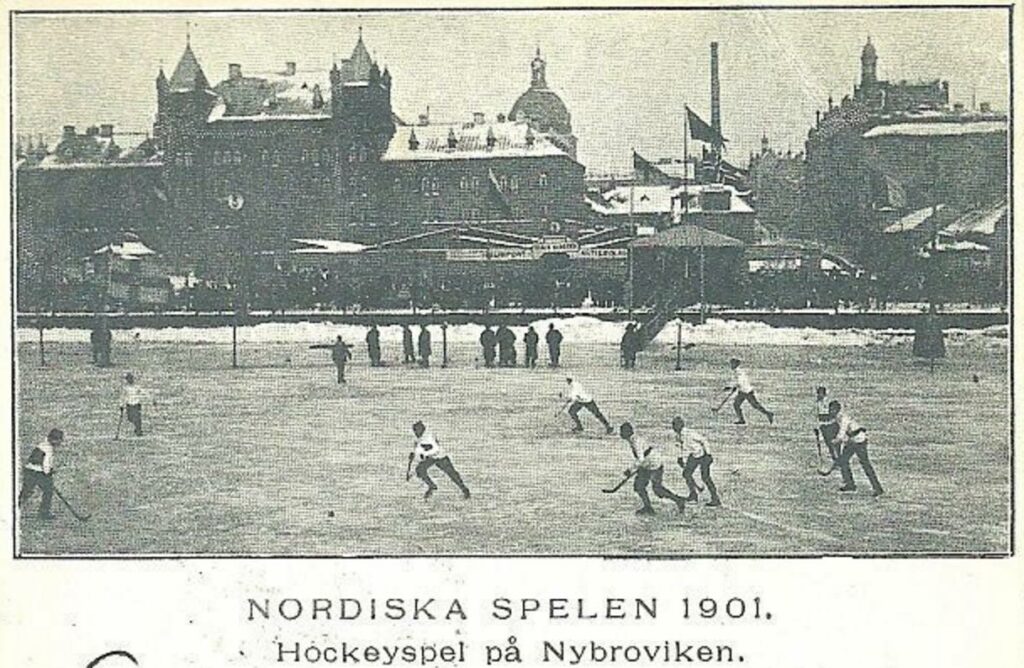
on_the_Nybroviken__1901___Antique_Bandy.
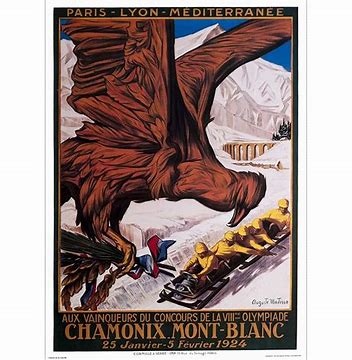
Even though there was not a dedicated winter sports competition under the Olympic name until 1924, two traditional winter sports made appearances at the Summer Games. At the 1908 London Games, figure skating made its Olympic debut. Both male and female athletes competed in the sport, with all three classes of medals—gold, silver, and bronze—being awarded to the top competitors. Following its London debut, figure skating took a twelve-year hiatus from Olympic competition, returning to the list of athletic events for the 1920 Games in Antwerp, Belgium. Once again, both male and female contestants participated in the sport, with all three classes of medals being awarded. Figure skating was not the only winter sport to make an appearance at the Antwerp Games. Ice hockey joined the sports roster for the first time, though the competition was limited to male athletes only. The top three teams from the competition were awarded medals.6
Following the success of ice hockey and figure skating at the Antwerp Games and taking inspiration from the Nordic Games, France’s Marquis de Polignac came up with the idea for a winter sports competition under the Olympic banner. He presented his idea to the International Olympic Committee at their 1921 biannual meeting in Lausanne, Switzerland. However, there was immediate pushback from the Nordic countries. Norway even stated that they would not participate in a winter sports competition created by the IOC.
Despite the concern from Nordic countries, the International Olympic Committee ultimately decided to accept Polignac’s proposal. Because France was hosting the next Olympic Games, the country would be allowed to hold a Winter Sports Week several months prior to the start of the Paris Games. The following year IOC, with the help of sports federations like the International Ski Congress, started to prepare for this new athletic competition.7
The Winter Sports Week of the VIII Olympiad
Between January 25, 1924, and February 5, 1924, 260 athletes from 16 countries gathered in Chamonix, France, for the first Winter Sports Week.
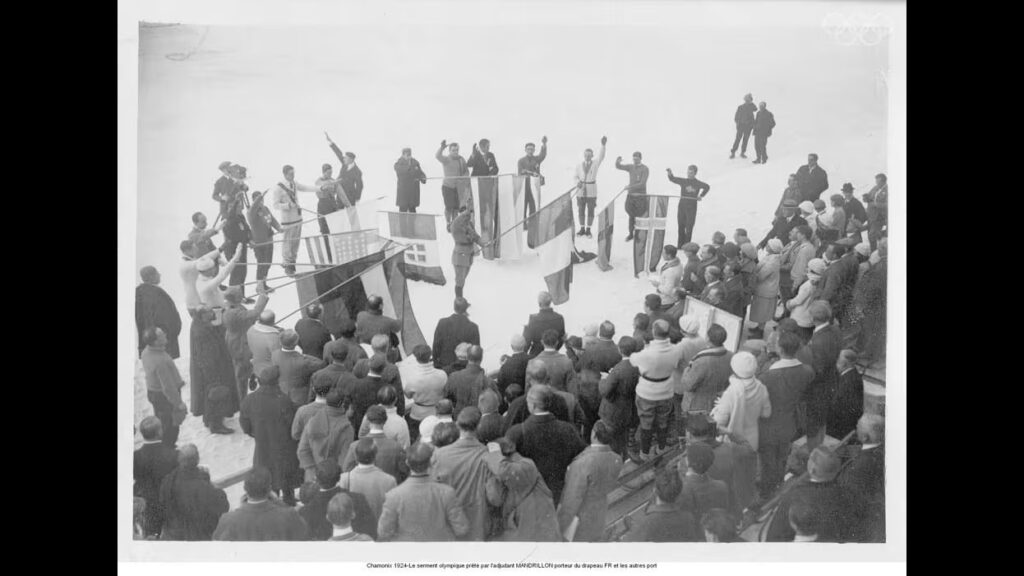
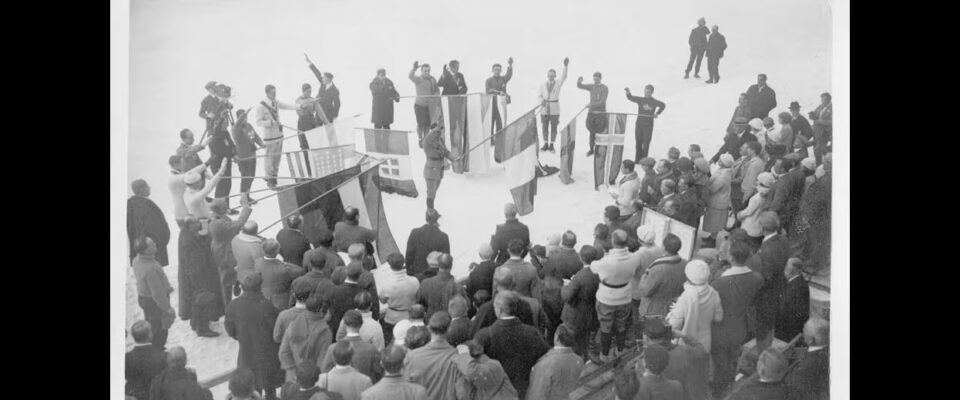
The Week began on January 25, 1924, with the Opening Ceremony. The event was overseen by Gaston Vidal, the Secretary of State for Physical Education. Athletes from the 16 countries in attendance—Austria, Belgium, Canada, Czechoslovakia, Finland, France, Great Britain, Hungary, Italy, Latvia, Norway, Poland, Sweden, Switzerland, the United States, and Yugoslavia—paraded from the city hall to the skating venue.8 Each national team had one representative proudly carrying its flag and another its emblem. Both also held the important task of saying the Olympic Oath for their country, which was said in French. For the United States, Clarence Abel carried the flag and Harry Duruy the emblem. As the teams walked through Chamonix, the band, the Twenty-seventh Alpine Blue Devils, played the national anthem of each country. Athletes from the Allied Countries received the most applause from the crowds. Upon reaching the rink, Vidal “declared the official opening of the sports.9” Immediately following his declaration, 150 the athletes in attendance put on ice skates and started skating around the rink. In the spirit of friendly competition, some of the athletes held impromptu skating races, which excited the crowds. Approximately 4,000 to 5,000 spectators attended the opening ceremonies.10 Overall the Opening Ceremony was considered a great success, exciting the world for the coming days of athletic competition.
“We swear that we come to the Olympic Games as loyal competitors, respectful of the rules that govern them and willing to participate in them in a spirit of chivalry for the honor of our countries and the glory of sport,” – Translated from French to English.11
The Athletic Competition
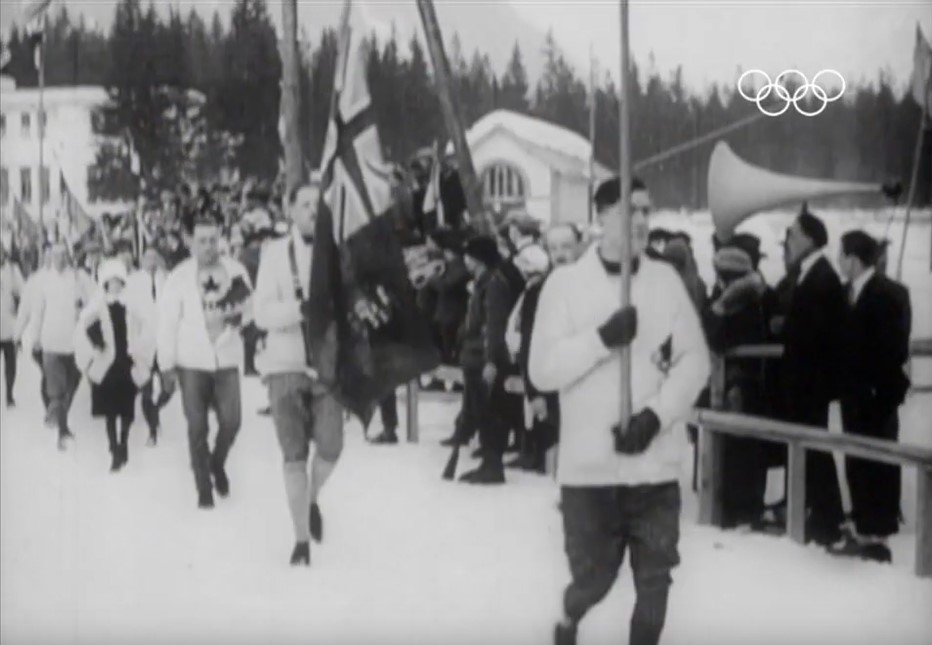

On January 26, 1924, the athletic competition began with speed skating. Over the course of two days, athletes competed in five different events—the 500, 1,500, 5,000, and 10,000 meter races and the all-around. Some of the standout competitors from these events were Charles Jewtraw, Clas Thurnber, and Roald Larsen. Charles Jewtraw won the 500-meter race in 44 seconds.12 He holds the title of being the first athlete to win an athletic event at the Winter Olympics, an honor that also belongs to the United States of America. Old Glory was the first flag flown in the gold medal position at the Winter Games. Clas Thunberg and Roald Larsen, both accomplished speed skaters, won medals in all five events. Thunberg won the most gold medals in the speed skating competition, returning home to Finland with three for his country.13
The most popular event of the Winter Olympic Sports Week began on January 28, 1924: the ice hockey tournament. It lasted a week, ending on February 3, 1924. This event was extremely popular in the United States and Canada. Newspapers in both countries closely followed the dominating gameplay of their respective teams and published titles like “The Canadian Olympic Team Won 22-0 Today14” and “American Hockey Team Victorious.15” Being leagues above the six other teams in the competition, some of the more dramatic game scores were the United States’ 19 to 0 win over Belgium and Canada’s 30 to 0 win over the Czechoslovakian team. After a week of dominating the competition, the United States and Canada met for the final on February 3, 1924. Despite the best efforts of the American team, Canada beat the United States 6 to 1. Both teams had extremely good plays, but the Canadian team was able to defend the American offensive, leading to their win.16 Congratulations were sent to the team, with Premier Mackenzie King saying, “Please extend to members of the Canadian hockey team my heartiest congratulations… All Canada is proud of this latest feather in her cap.”17 The Canadian win allowed them to defend their Olympic title in ice hockey from the 1920 Antwerp Games.

While ice hockey dominated headlines for much of the Winter Sports Week, there were several other athletic competitions underway. One of these was curling, which remained a largely unknown sport until its appearance at the Games. When a Scottish member of the British curling team was on his way to Chamonix from Switzerland for the competition, he was stopped at the border by French authorities.18 The French border agents humorously thought the curling stone was some type of precious material. The Scotsman almost received a fine for his sports equipment, but he was eventually allowed to bring the stone into France for free.19 Following the British win over France in the curling final on January 30, 1924, the same Scotsman said, “Tis a precious stone. Indeed, there’s not so precious to me.”20 Britain beat the French team 46 to 6, placing first in the curling competition, followed in second by Sweden, and finally in third by the French team.21
Danger and Dominance in the Competition
Unlike ice hockey and curling, which were followed by exciting headlines and humorous tales in newspapers, bobsledding proved to be infamous for other reasons. The bobsled chute at Chamonix quickly proved to be extremely dangerous, seriously injuring several athletes over the course of the competition. On January 30, 1924, two members of the French bobsled team were injured during a training accident. The captain of the team, Count de la Fregoliere, suffered a broken arm, while another member of his team suffered a skull fracture.22 The following day, the skipper of the British bobsled team seriously broke both of his legs when his bobsled overturned. Thankfully the four other members of his team were unscathed. The chute was closed for a time but reopened to allow the continuation of the competition.23

The Indianapolis Star said, “The bobsleigh chute has been voted the most difficult in the world to negotiate safely.”24 Similar issues occurred with the sky jump. Work crews had to remove sharp, unsafe corners from it before the skiing competition could occur, which still did not prevent an American skier, Ragnar Omtvedt, from receiving serious injuries that left him bedridden for ten to fifteen days.25 Ultimately, both dangerous pieces of equipment were used in competition. In the bobsled competition, Switzerland took first, Britain took second, and Belgium took third. In the ski jumping competition, two Norwegian athletes, Jacob Tullin Thams and Narve Bonna, took first and second. American athlete Anders Haugen took third.26
The remaining athletic events had little coverage in the news, other than to state Norway’s impeccable dominance. Norway took home both first places in the cross-country skiing competitions at the distances of 18 kilometers and 50 kilometers and all three medals in the Nordic combined, which was a combination of both ski events: cross-country and jumping.27
Women at the Winter Olympics
Of the 260 athletes to compete at the First Winter Sports Week, only 13 of them were women. The 13 female athletes were only allowed to compete in figure skating, which was called “fancy ice skating28” by the newspapers. Figure skating had three divisions of competition. Two individual sections, one for the men and one for the women, and a partnered section where a male and female athlete would skate together. In the individual women’s competition, Austrian skater Herma Plank-Szabo blew the competition away. Beatrix Loughran from the United States took second, and Ethel Muckelt of Great Britain took third.29 In partner skating, the team from Austria took first, Finland second, and France third. Even though several were outnumbered and neglected by the press, the 13 women who competed in these Games laid the foundation for all future female athletes at the Winter Olympics.30
Closing Ceremonies
On February 5, 1924, the Olympic Winter Sports Week came to an end. The medals were distributed to the winners at the Closing Ceremony by the IOC president, Baron Pierre de Coubertin. First place received gold, second silver, and third bronze. Norway ranked first among the participating countries, and Finland was a close second. Surprisingly, most of the athletes had left Chamonix by the time the closing ceremonies happened. People from their respective nations were chosen to receive the medals, standing in place of the absentee athletes. Overall, the winter sports week was considered a great success.31
The Winter Olympics

On May 6, 1926, at an IOC meeting in Lisbon, Portugal, a vote was taken, and 23 or 24 members of the International Olympic Committee chose to rename the Chamonix Winter Sports Week into the First Winter Olympic Games. Unfortunately, the growing success of the Winter Olympics meant the death of their predecessor, the Nordic Games, with its last competition being held in 1926.32 In 1928, the Second Winter Olympics would occur in St. Moritz, Switzerland. Like their predecessor, the Games proved successful and marked the first time Germany was allowed to compete in an Olympic competition since the end of World War I.33 Unfortunately, female athletes would have to wait over a decade until the introduction of Alpine skiing at the 1936 Winter Olympics to finally be allowed to compete in more than just figure skating.34
2024 marked 100 years since the creation of the Winter Olympics, and the upcoming 2026 Games in Milano Cortina will mark the twentieth Winter Olympiad.35 Much has changed since the Games originated, but the desire for global athletic competition and celebration of winter sports remains.
Significance To the 1920s
The Winter Olympics came about during a unique period in history as the world started to look for new and existing forms of entertainment and thinking. Gone were the days of Victorian morality and sensibility. They had been replaced by a collection of new technologies and emerging ideas in the changing academic fields of science, psychology, and the liberal arts. People looked at the world with a more transformative and modern outlook on life than they previously had. The rise of popular media outlets like film and the radio further fueled this shift. 36
Pluralism and The Spirit of the Olympic Games
While Europe was planning the next big international athletic competition, the United States was grappling with its own problems around new cultural ideas. For much of the early twentieth century, the country had been welcoming to immigrants. This changed following the passage of the Emergency Quotas Act of 1921 and the National Origins Act of 1924. Despite these new laws, millions had already made the U.S. their home. They were expected to abandon their own cultures in favor of the historically white Anglo-Saxon Protestant standard of what it meant to be American. This did not sit well with outspoken writers, who instead called for a pluralist culture in America. Hoarse Kallen argued, “Democracy involves not the elimination of differences but the perfection and conversation of differences.”37 Kallen’s words were not directly related to the Olympic Games, but they beautifully encapsulated the spirit of the sporting event. It was an idealist platform where people from diverse cultures could come together, not to erase their differences, but to celebrate them through the shared experience and enjoyment of athletic competition.38
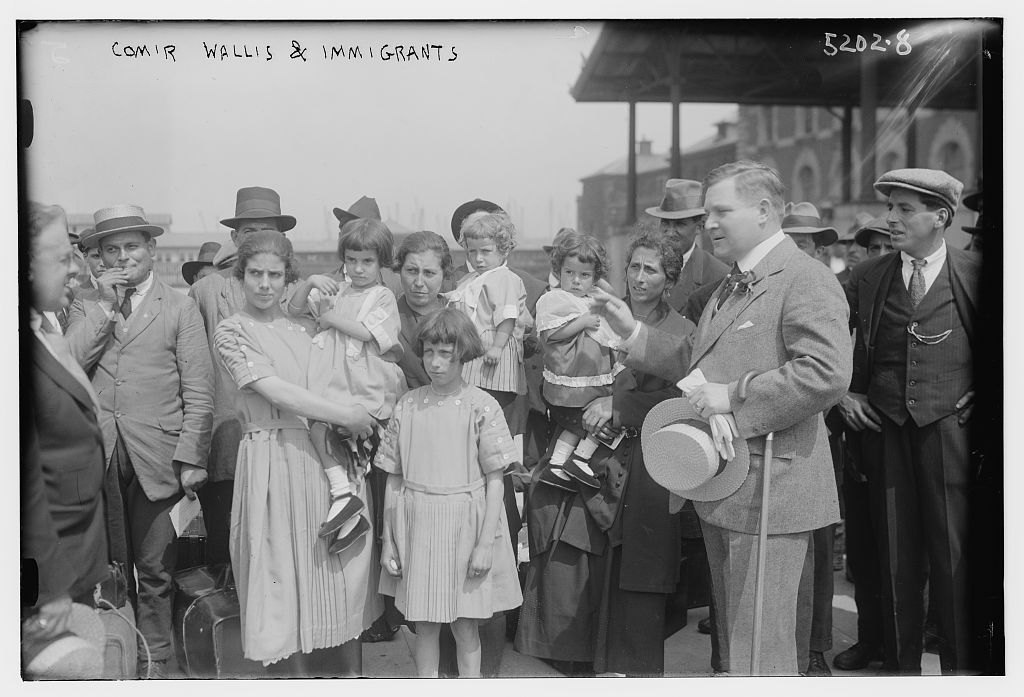
Further expanding on this idea, sociologist Robert Park advocated for the preservation of cultural identity within American society. He proposed the controversial idea that people should retain their heritage and contribute their cultural practices to mainstream society, making it better in the process. This too aligned with the broader Olympic ideals. The Games were a global stage where the nations of the world could showcase their unique cultures and histories. Like all things, though, the vision is often better than the reality. Had the United States chosen to adopt the pluralistic vision presented at the Olympic Games, it would have been a wonderful example to the world about how a diverse country could look and function. Instead the vision was all but ignored, and the world just got an exhibition of winter sports.39
The same year the Winter Olympics were introduced, the U.S. continued to battle with increasingly violent waves of racism and hate. The Ku Klux Klan was growing in power, causing major political upheaval, especially at the 1924 Democratic National Convention. The group terrorized Black Americans, as well as Jewish and Catholic communities. These groups faced intense persecution for their race and religious beliefs. The reality of the American political and societal makeup was a stark contrast to the ideals of the Olympics’ global pluralistic message. The United States government only added to the problem by passing increasingly stricter immigration laws.40
galleries/ioc-gallery-olympic-rings
Kallen and Park’s hopeful vision for a pluralistic society, where cultural differences would be celebrated rather than erased, fell on deaf ears. Instead, the U.S. clung to its exclusionary practices, furthering the divide between different racial, ethnic, and religious groups. Even though the Winter Olympics showcased a potential for global unity and cultural understanding, it would take decades before the U.S. could begin to reflect this ideal in its own society. The Olympics might have presented an opportunity to demonstrate how diverse cultures could coexist and enrich one another, but the U.S. was still entrenched in ideas of racial superiority and segregation.
Further Readings:
De Coubertin, Pierre, Charles Simon, and International Olympic Committee. “The Olympic Oath: A Century of History.” JOH 2. Vol. 2021, 2021. https://isoh.org/wp-content/uploads/2023/09/johv29n2e1.pdf
Edgeworth, Ron. “The Nordic Games and the Origins of the Olympic Winter Games.” Journal of Olympic History, 2009. https://isoh.org/wp-content/uploads/2015/03/187.pdf.
Ioc. “Chamonix 1924 Winter Olympics – Athletes, Medals & Results.” Olympics.com, September 26, 2023. https://www.olympics.com/en/olympic-games/chamonix-1924.
Citations:
Foot Notes:
- “Olympic Messages: Olympic Ideology and Olympic Social Reality,” 50. ↩︎
- Young, “The Origins of the Modern Olympics: A New Version” p 271. ↩︎
- Kuch, “47 Winter Sports List .” ↩︎
- Kuch, “47 Winter Sports List .” ↩︎
- Edgeworth, “The Nordic Games and the Origins of the Olympic Winter Games,” p 68-70. ↩︎
- De Groot, “The Winter Olympics: Driving Urban Change, 1924–2022″ p 84. ↩︎
- Edgeworth, “The Nordic Games and the Origins of the Olympic Winter Games,” p 70. ↩︎
- New York Times “Olympic Ice Games Open at Chamonix: High French Official Formally Declares Classic Sports Festival Under Way. ↩︎
- New York Times, “Olympic Ice Games Open at Chamonix: High French Official Formally Declares Classic Sports Festival Under Way. ↩︎
- New York Times, “Olympic Ice Games Open at Chamonix: High French Official Formally Declares Classic Sports Festival Under Way. ↩︎
- De Coubertin, Simon, and International Olympic Committee, “The Olympic Oath: A Century of History”. ↩︎
- Associated Press, “Americans Score First Points At Winter Olympics.” ↩︎
- “Finland First, America Third in Skating Race.” ↩︎
- “The Canadian Olympic Team Won 22-0 Today.” ↩︎
- The North Adams Transcript. “American Hockey Team Victorious.” ↩︎
- “Canada Again Wins Olympic Hockey Title.” ↩︎
- “Canada Again Wins Olympic Hockey Title.” ↩︎
- “United States with Three Wins Reaches the Hockey Semi-Finals.” ↩︎
- “United States with Three Wins Reaches the Hockey Semi-Finals.” ↩︎
- “United States with Three Wins Reaches the Hockey Semi-Finals.” ↩︎
- “Norway Leads in Olympic Sports.” ↩︎
- “Two Contestants Turn in Accident.” ↩︎
- “Skipper of British Entry Is Injured.” ↩︎
- “England, 11 to 0, in Hockey Competition.” ↩︎
- “Olympic Victors Receive Medals: Baron De Coubertin, President of International Body, Bestows Awards.” ↩︎
- Ioc, “Chamonix 1924 Winter Olympics – Athletes, Medals & Results.” ↩︎
- “Olympic Victors Receive Medals: Baron De Coubertin, President of International Body, Bestows Awards.” Ioc, “Chamonix 1924 Winter Olympics – Athletes, Medals & Results.” ↩︎
- “‘For Countries’ Honor and the Glory of Sport.” ↩︎
- “‘For Countries’ Honor and the Glory of Sport.’” ↩︎
- Ioc, “Chamonix 1924 Winter Olympics – Athletes, Medals & Results.” ↩︎
- “Olympic Victors Receive Medals: Baron De Coubertin, President of International Body, Bestows Awards.” ↩︎
- Edgeworth, “The Nordic Games and the Origins of the Olympic Winter Games,” p 71. ↩︎
- Lapchick, “A Political History of the Modern Olympic Games.” ↩︎
- Gilgien et al., “The Training of Olympic Alpine Ski Racers.” ↩︎
- “Milano Cortina.” ↩︎
- Dumenil, 146, 149. ↩︎
- Dumenil, 166. ↩︎
- Dumenil, 167. Patsantaras, “Olympic Messages: Olympic Ideology and Olympic Social Reality,” 50. ↩︎
- Dumenil 167-168. Patsantaras, “Olympic Messages: Olympic Ideology and Olympic Social Reality” 51. ↩︎
- Dumenil 240-243. ↩︎
Bibliography:
“American Hockey Team Victorious.” The Berkshire Eagle. January 28, 1924. https://www.newspapers.com/image/545008772/?match=1&terms=olympics.
Associated Press. “Americans Score First Points At Winter Olympics.” Livingston Enterprise. January 27, 1927. https://www.newspapers.com/image/956756619/?match=1&terms=the%20first%20winter%20olympics.
“Canada Again Wins Olympic Hockey Title.” The Leader-Post. February 4, 1924. https://www.newspapers.com/image/495426061/?match=1&terms=olympics.
“The Canadian Olympic Won 22-0 Today.” The Expositor. January 29, 1924. https://www.newspapers.com/image/732874415/?match=1&terms=olympics.
De Coubertin, Pierre, Charles Simon, and International Olympic Committee. “The Olympic Oath: A Century of History.” JOH 2. Vol. 2021, 2021. https://isoh.org/wp-content/uploads/2023/09/johv29n2e1.pdf.
De Groot, Stephen J. Essex and Jiska. “The Winter Olympics: Driving Urban Change, 1924–2022.” In Routledge eBooks, 84–109, 2016. https://doi.org/10.4324/9781315735887-13.
Dumenil, Lynn. The Modern Temper: American Culture and Society in the 1920s. First Edition. Hill and Wang, 1995.
Edgeworth, Ron. “The Nordic Games and the Origins of the Olympic Winter Games.” Journal of Olympic History, 2009. https://isoh.org/wp-content/uploads/2015/03/187.pdf.
“England, 11 to 0, in Hockey Competition.” The Indianapolis Star. February 1, 1924. https://www.newspapers.com/image/104804404/?match=1&terms=bobsled%20winners.
“Finland First, America Third in Skating Race.” The Morning Union. January 28, 1924. https://www.newspapers.com/image/1067079773/?match=1&terms=olympics.
“For Countries’ Honor and the Glory of Sport.” The Kanas City Star. February 21, 1924. https://www.newspapers.com/image/654089163/?match=1&terms=fancy%20ice%20skating%20olympics.
Gilgien, Matthias, Robert Reid, Christian Raschner, Matej Supej, and Hans-Christer Holmberg. “The Training of Olympic Alpine Ski Racers.” Frontiers in Physiology 9 (December 21, 2018). https://doi.org/10.3389/fphys.2018.01772.
Hearst Networks EMEA. “Homepage,” March 7, 2025. https://www.history.com/articles/ellis-island#Ellis-Island-Timeline.
Ioc. “Chamonix 1924 Winter Olympics – Athletes, Medals & Results.” Olympics.com, September 26, 2023. https://www.olympics.com/en/olympic-games/chamonix-1924.
Kuch, Max. “47 Winter Sports List (Sorted by Popularity).” SportsFoundation, November 16, 2023. https://sportsfoundation.org/winter-sports-list/.
Lapchick, Richard E. “A Political History of the Modern Olympic Games.” Journal of Sport and Social Issues 2, no. 1 (March 1, 1978): 1–12. https://doi.org/10.1177/019372357800200102.
“Milano Cortina.” Olympic.com. Accessed May 7, 2025. https://milanocortina2026.olympics.com/en.
Nikolaos Patsantaras, “Olympic Messages: Olympic Ideology and Olympic Social Reality,” Xophia Choregia Sport Management International Journal 4, no. Number 1 (2008): 45–55, https://eclass.uoa.gr/modules/document/file.php/PHED268/o.k….15.%2010%20Olympic%20Messages.%20Olympic%20Ideology%20and%20Olympic%20social%20reality.pdf.
“Nordic Games Hockey Match on the Nybroviken 1901 – Antique Bandy | HockeyGods,” n.d. https://hockeygods.com/images/14171-Nordic_Games_Hockey_Match_on_the_Nybroviken__1901___Antique_Bandy.
“Norway Leads in Olympic Sports.” The Ottawa Citizen. January 30, 1924. https://www.newspapers.com/image/455775740/?match=1&terms=curling%20.
“Olympic Ice Games Open at Chanoix: High French Official Formally Declares Classic Sports Festival
Under Way. 150 Athletes in Parade March to Rink and Take Oath of Amateurism Before Clamping on Skates. Competitions Start Today Cold Weather Makes Conditions Good For Speed Events – Americans are Confident.” New York Times (1923-), Jan 26, 1924. http://library.ramapo.edu:2048/login?url=https://www.proquest.com/historical-newspapers/olympic-ice-games-open-at-chamonix/docview/103255490/se-2.
“OLYMPIC VICTORS RECEIVE MEDALS: BARON DE COUBERTIN, PRESIDENT OF INTERNATIONAL BODY, BESTOWS AWARDS. HAUG CROWNED CHAMPION NORWEGIAN STAR OFFICIALLY IS CALLED SKI KING FOR CAPTURING THAT EVENT THREE TIMES.” New York Times (1923-), Feb 06, 1924. http://library.ramapo.edu:2048/login?url=https://www.proquest.com/historical-newspapers/olympic-victors-receive-medals/docview/103396308/se-2.
“Skipper of British Entry Is Injured.” Nanaimo Daily News. January 31, 1924. https://www.newspapers.com/image/325387717/?match=1&terms=bobsled.
“Two Contestants Turn in Accident.” The Ottawa Journal. January 30, 1924. https://www.newspapers.com/image/48175058/?match=1&terms=bobsled.
“United States with Three Wins Reaches the Hockey Semi-Finals.” The Berkshire Eagle. January 31, 1924. https://www.newspapers.com/image/533876474/?match=1&terms=curling%20.
“U.S. Team in Third Place at End of First Day of Winter Olympic Sports.” Brooklyn Eagle. January 27, 1924. https://www.newspapers.com/image/57546865/?match=.
Young, David C. 1987. “The Origins of the Modern Olympics: A New Version.” The International Journal of the History of Sport 4 (3): 271–300. doi:10.1080/09523368708713633.

I am an undergraduate teacher education student at Ramapo College, minoring in history. As a future teacher, I hope to inspire my students to love the subject of history and to understand its importance in their lives.
