
The 1920s were one of the most formative times culturally for not only the United States, but for the entire world. As the decade is so different to its predecessors, the landscape that historiographers have to navigate changed dramatically. The way that a historian from only a few decades after the twenties and a historian from a century after that decade will have historiographical timelines that are vastly different from one another. In the case of Burt Noggle and Jennifer Fronc, this difference is clearly visible.
Noggle
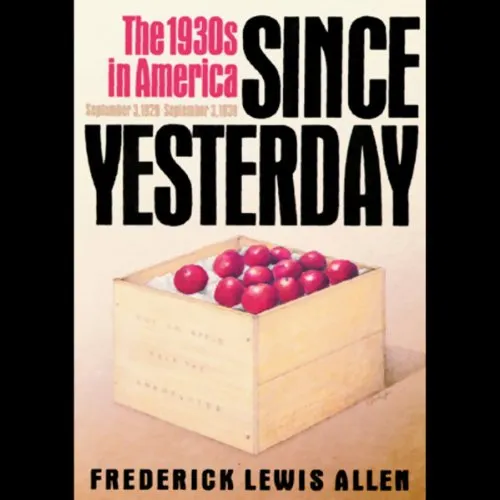
Noggle is a historiographer who wrote “The Twenties: A New Historiographical Frontier” in 1966, which was published to the Journal of American History. In this text, Noggle demonstrates the transcendence of the idea of an isolated decade through the introduction of new avenues that historiographers looked to. To back up his titular point, Noggle points to historian John Spencer Bassett, who wrote on the context of the United States, saying that “The country craved rest” from the war. This goes along with the view being reported by historians, saying that the 20s were an isolated decade in American history due to World War I. Noggle also points to historian Fredrick Lewis Allen who classified 1919-1929 as a unique segment of American history.[1]
Noggle points readers to the historical events such as World War II and the New Deal that came after the 20s, both of which expanded on the idea of an isolated decade in interesting ways. Noggle ends the passage by quoting historian Arthur S. Link calling the 20s a frontier, saying that the 20s are now being studied with sources, rather than the memory of the decade that pervaded the minds of historians for decades. [2]
Fronc
Fronc is a historiographer who wrote “The 1920s—A Historiographical Survey” in 2018. Fronc treats the 1920s much differently from how Noggle had previously treated it, as there were many new revisions and updates to the historiography of this decade. Fronc begins by quoting Noggle on the idea of 50s historians following the idea of the 1920s as an isolated decade. Fronc turns to the modern era, where there is a multicultural approach used in the 20s, unlike what was published before. Fronc includes multiple examples of writings from the 21st century that cover women’s suffrage, which was left out of the old historiography. Fronc includes the idea of the “new woman”, a relatively new concept that is present in all modern-day studies of the 1920s.[3] Additionally, Fronc turns to African American history as another previously unexplored avenue during the mid-20th century.
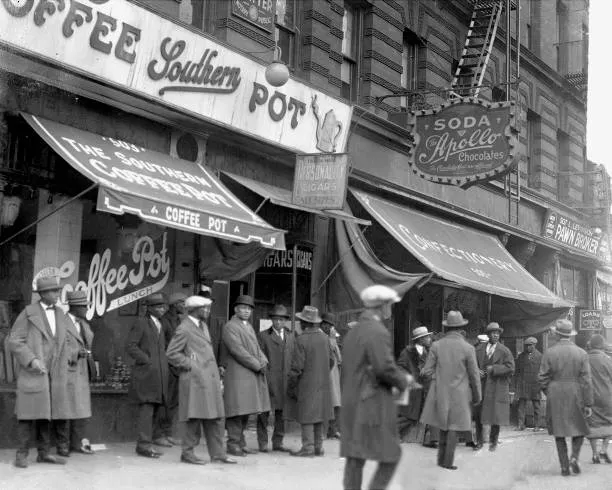
The Harlem Renaissance is the focus of Fronc, including examples from texts such as When Harlem was in Vogue and Black Women and the Re-Construction of American History.[4] Lastly, Fronc moves to immigration history, where much of the marginalization of immigrants was left out of the historiography previously. One common theme among the topics in Fronc’s paper is their controversial nature, as representation of marginalized groups had made little progress during the writings of historians like Noggle.
Conclusion
There is a clear difference between the writings of historians from the 20th and 21st centuries. Probably the most important distinction between the two is the approach of the two, with historians from Noggle’s writing covering the mystified culture of the 20s, while the writings from Fronc’s writing covering marginalized groups.
[1] Noggle, Burl. “The Twenties: A New Historiographical Frontier.” The Journal of American History 53, no. 2 (1966): 300
[2] Noggle, Burl. “The Twenties: A New Historiographical Frontier.” The Journal of American History 53, no. 2 (1966): 314
[3] Jennifer Fronc. “The 1920s—A Historiographical Survey.” 17
[4] Jennifer Fronc. “The 1920s—A Historiographical Survey.” 18-19
Bibliography:
Fronc, Jennifer. “The 1920s—A Historiographical Survey.” 15-24
Noggle, Burl. “The Twenties: A New Historiographical Frontier.” The Journal of American History 53, no. 2 (1966): 299–314. https://doi.org/10.2307/1894201.

Duncan Thomson is a History Major and Museum and Exhibition Studies minor at Ramapo College of New Jersey.
