
Since the dawn of time, sporting events served as a space where people of different cultures and backgrounds can come together in the spirit of athletics and friendship…
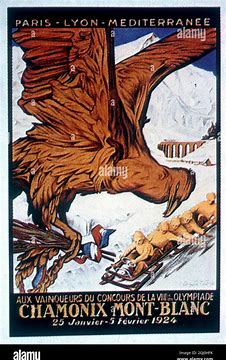
One of the most significant examples of this was the creation of the Winter Olympics. The games began during a very unique period in human history. Technologies like the automobile, radio, and film emerged. At same time, the academic fields of science, psychology, and the liberal arts saw great shifts. The combination of these events lead people farther and farther away from the Biblical centered view of the past towards a more transformative and modern outlook on life. The rise of popular media outlets further fueled this shift.1 In 1921, the International Olympic Committee decided that France could hold a one week winter sports exhibition to coincide with the Summer Olympics of 1924. Taking inspiration from the Norse Games of the prior decades, the First Winter Olympics was attended by sixteen countries. The athletes competed in sixteen different sport disciplines. This new modern take on winter sports proved successful enough. Four years later the Second Winter Olympics happened in 1928, and the tradition of global winter sports competition officially began.
At the same time the Winter Olympics were taking shape in Europe, the United States was grappling with its own problems around new cultural ideas. For much of the early twentieth century, the country had been welcoming to immigrants. This changed following the passage of the Emergency Quotas Act of 1921 and the National Origins Act of 1924. Despite these new laws, millions had already made the U.S. their home. They were expected to abandon their own cultures in favor of the historically white Anglo-Saxon Protestant standard of what it meant to be American. This did not sit well with outspoken writers, who instead called for a pluralist culture in America. Hoarse Kallen argued, “Democracy involves not the elimination of differences but the perfection and conversation of differences.2” Kallen’s words, were not directly related to the Olympic games, but they beautiful encapsulated the spirit of the sporting event. It was an idealist platform where people from diverse cultures could come together, not to erase their differences, but to celebrate them through the shared experience and enjoyment of athletic completion.3
Further expanding on this idea, sociologist Robert Park advocated for the preservation of cultural identity within American society. He proposed the controversial idea that people should retain their heritage and contribute their cultural practices to mainstream society, making it better in the process. This too aligned with the broader Olympic ideals. The Gams were a global stage where the nations of the world could showcase their unique cultures and histories. Like all things though, the vision is often better than the reality. Had the United States chosen to adopt the pluralistic vision presented at the Olympic Games, it would have been a wonderful example to the world about how a diverse country could look and function. Instead the vision was all but ignored, and the world just got an exhibition of winter sports.4
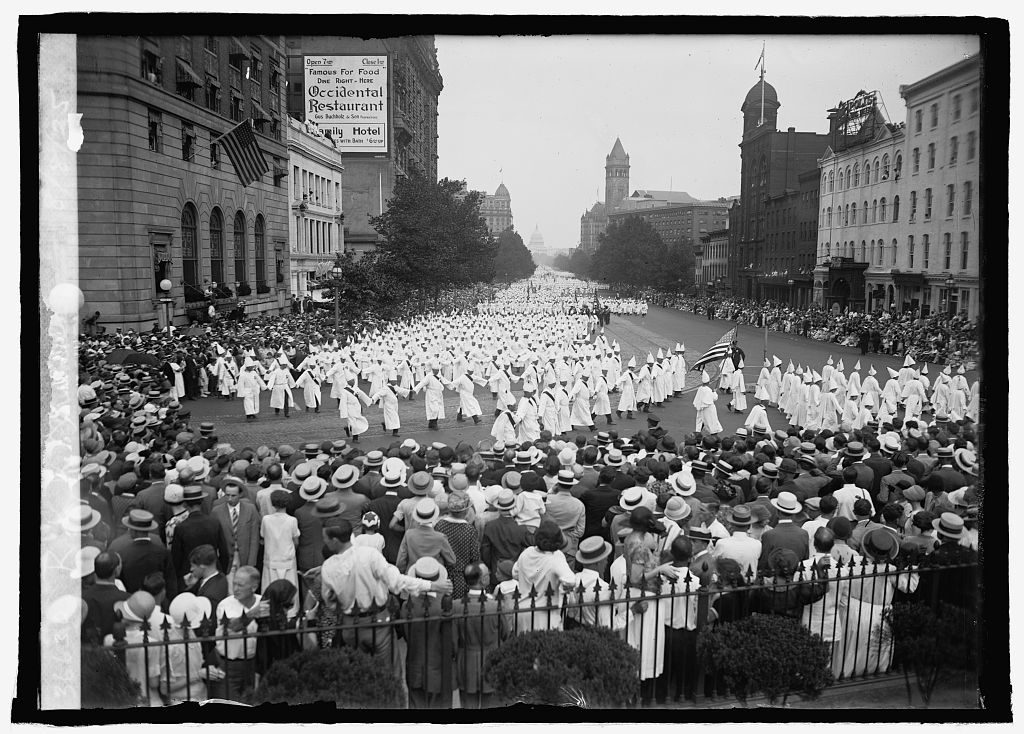
The same year the Winter Olympics were introduced, the U.S. continued to battle with increasingly violent waves racism and hate. The Ku Klux Klan was growing in power, causing major political upheaval, especially at the 1924 Democratic National Convention. The group terrorized Black Americans, as well as Jewish and Catholic communities. These groups faced intense persecution for their race and religious beliefs. The reality of the American political and societal make up was a stark contrast to the ideals of the Olympics global pluralistic message. The United States government only added to the problem by passing increasingly stricter immigration laws. 5
Kallen and Park’s hopeful vision for a pluralistic society, where cultural differences would be celebrated rather than erased, fell on deaf ears. Instead, the U.S. clung to its exclusionary practices, furthering the divide between different racial, ethnic, and religious groups. Even though the Winter Olympics showcased a potential for global unity and cultural understanding, it would take decades before the U.S. could begin to reflect this ideal in its own society. The Olympics might have presented an opportunity to demonstrate how diverse cultures could coexist and enrich one another, but the U.S. was still entrenched in ideas of racial superiority and segregation.
Citations
Footnotes
- Dumenil, 146, 149. ↩︎
- Dumenil, 166. ↩︎
- Dumenil, 167. Patsantaras, “Olympic Messages: Olympic Ideology and Olympic Social Reality,” 50. ↩︎
- Dumenil 167-168. Patsantaras, “Olympic Messages: Olympic Ideology and Olympic Social Reality” 51. ↩︎
- Dumenil 240-243. ↩︎
Biography
Chamonix 1924 Winter Olympics – athletes, medals & results. Accessed April 2, 2025. https://www.olympics.com/en/olympic-games/chamonix-1924.
Dumenil, Lynn. The Modern Temper: American Culture and Society in the 1920s. First Edition. Hill and Wang, 1995.
Nikolaos Patsantaras, “Olympic Messages: Olympic Ideology and Olympic Social Reality,” Xophia Choregia Sport Management International Journal 4, no. Number 1 (2008): 45–55, https://eclass.uoa.gr/modules/document/file.php/PHED268/o.k….15.%2010%20Olympic%20Messages.%20Olympic%20Ideology%20and%20Olympic%20social%20reality.pdf.
Hearst Networks EMEA. “Homepage,” March 7, 2025. https://www.history.com/articles/ellis-island#Ellis-Island-Timeline.

I am an undergraduate teacher education student at Ramapo College, minoring in history. As a future teacher, I hope to inspire my students to love the subject of history and to understand its importance in their lives.
