
When I think of the 1920s, the first thing that comes to mind is the “Roaring Twenties’”. From speakeasies, to mobsters, to prohibition, there are many aspects of the twenties in the United States that stick out to me as the most important aspects of that decade. The culture of the twenties in the U.S. greatly revolved around taboos in society, as well as success gained from working against the system that was currently in place. Underground businesses are also a great part of the 1920s from what I remember. The production of weapons and alcohol, along with the mafia and the gangster culture that would be repeated in American culture throughout the coming decades All around the East coast, the production of weapons and alcohol made up a great part of the economy in urban areas, where most of the culture in the U.S. in the 1920s was centered. Another thing I think of about the twenties in the U.S. is stability. The economy very stable prior to the Great Depression, so presidents from the decade like Harding and Coolidge are well respected in today’s conversation because they worked to keep the country in an economic high, rather than make radical change. I also think of sports when I think of the 1920s. In the U.S., I think about the rise of baseball as a sport and legendary teams like the Yankees and the Red Socks, along with players like Babe Ruth. Across the world, I commonly think of the Olympics, and their return after World War I.
Overseas, the twenties were categorized by tension. While the U.S. was thriving due to only getting involved at the end of World War I, the rest of Europe was hit hard by the war. The economies of European countries, especially those of Central Powers, were destroyed from their defeat. The treaty of Versailles also aided in the destruction of these countries. I usually think of economic depression when I think of the 1920s in Europe because of the fact that Europe was in poor economic conditions.
When I searched for “The 1920s” in Google, these were the two images that stuck out to me the most from my results:
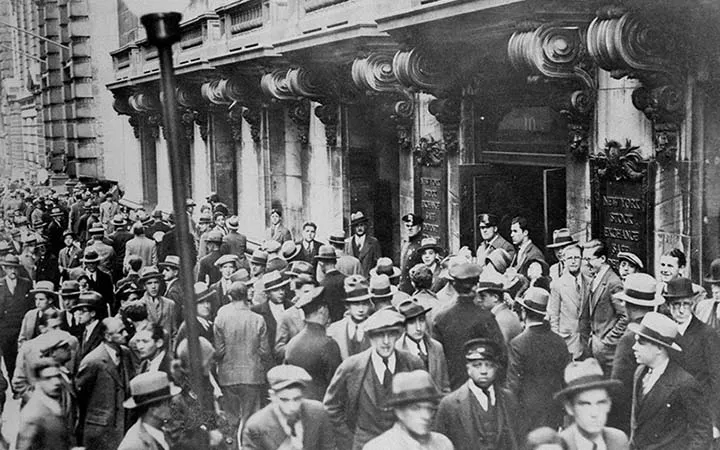
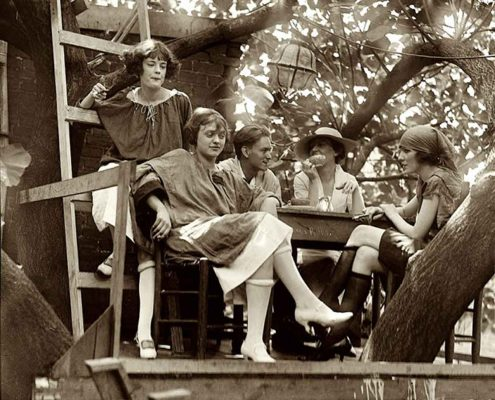
I found that there was much more mention of women’s involvement in the culture at the time based off of the images than what I remember. Almost half of the images I found were of flappers and models. Another aspect that I overlooked before looking into the images was the fashion of the 1920s. The fashion in the U.S. was very important to the culture at the time, with suits and dresses comprising most of what was considered fashion for the middle and upper class. Fashion in this sense, especially as an expression of wealth, was very culturally significant at the time, as it became culturally relevant due to stories like The Great Gatsby emphasizing the new fashion that came about during the time, especially with the “new money” being thrown around the market, making more people rich than ever. On the other hand, there is a deeper look into the 1920s that cannot be overstated. Women had to fight tooth and nail for the right to vote and immigration was prohibited from those in Eastern Europe and Asia, allowing only Protestants into the country. There were many tells of unrest that would eventually lead to the Great Depression and the fall of the Roaring 20’s that can be seen from the pictures.
Bibliography
Glamourdaze. “What Flappers Really Wore in the 1920’s.” Glamour Daze, January 23, 2025. https://glamourdaze.com/2019/03/what-flappers-really-wore-in-the-1920s.html.
Richardson, Gary. “Stock Market Crash of 1929.” Federal Reserve History. Accessed January 29, 2025. https://www.federalreservehistory.org/essays/stock-market-crash-of-1929.

Duncan Thomson is a History Major and Museum and Exhibition Studies minor at Ramapo College of New Jersey.
