
Naturally, when I think about the 1920s, the first thing to come to mind is the idea of the roaring 20s. Although I understand this to be an inaccurate caricature of what the era was truly like, it is the most persistent image that we are presented with today. This is clear in the way in which the Great Gatsby remains the primary example we are provided with, which continues to be taught in schools today. This perpetuates an image of the 1920s centered around lavish parties. I also think of the iconic women’s fashion of the era, mainly involving drop-waist dresses or flapper dresses. This look would be completed with short hair and a long, slender tobacco pipe. I am also compelled to think of the advent of talking films, which is brought to mind only by the film Singin’ in the Rain. Although this movie was made in the 1950s, it is a representation of the movement from silent movies to ones with sound. This new technology was likely one of many, but it is the only I know to definitely have occurred in the 1920s.
Significant events occurred in the 1920s; this includes the creation of prominent organizations, like the League of Nations, the women’s suffrage movement, and peacemaking efforts. The Women’s International League for Peace and Freedom was one such organization that rose to prominence during this decade, although it had been established before the 1920s. This awareness is tied to my work with the Jane Addams Papers Project. Outside of this, I look at the 1920s as an era in between important world events. It is before the Great Depression, which is of course tied to the presence of Wall Street during the 1920s. Furthermore, it takes place after the industrial revolution and after an important era of the labor movement, which thus means that this decade saw the results of these movements in labor. Perhaps most importantly, the 1920s was part of the interwar period, as it was after World War I and before World War II. This is of course indicative of the post-WWI turmoil that plagued the world, in particular the losing parties in Europe, after the peace treaty.
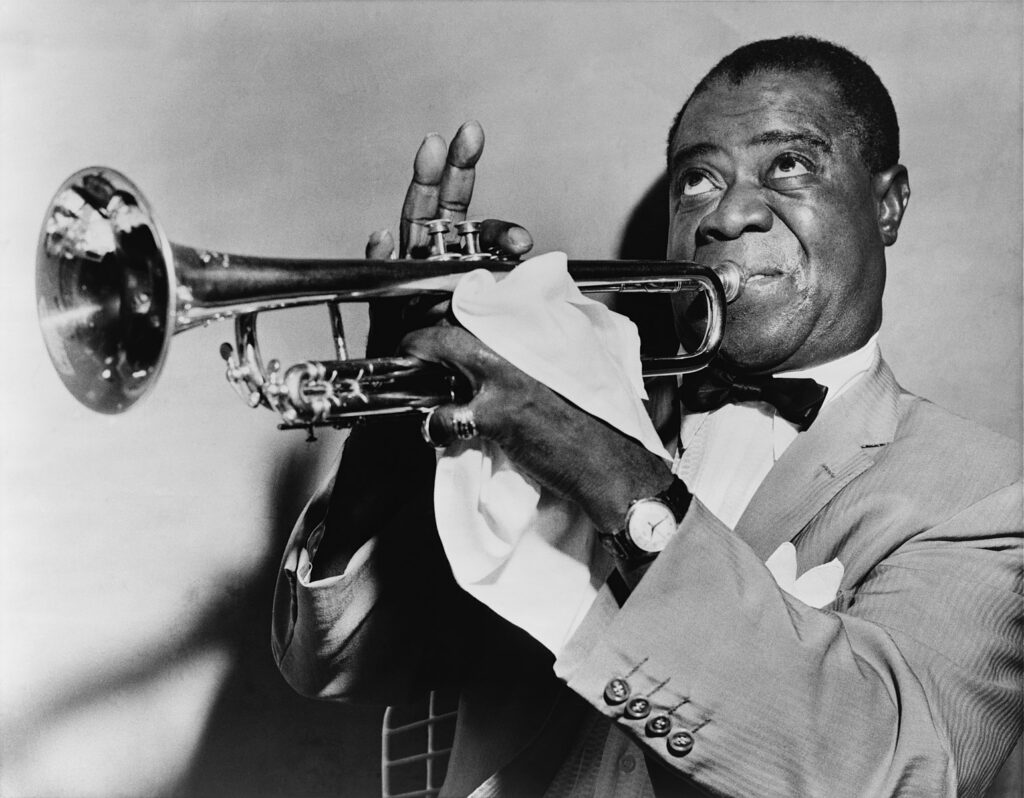
1. Louis Armstrong Playing the Trumpet, Herbert Art Gallery & Museum (Herbert Art Gallery & Museum, July 12, 2022), https://www.theherbert.org/news/259/grown-up-in-the-1920s-music.
Upon searching for images of the 1920s, I stumbled upon one of the iconic trumpeter and singer Louis Armstrong. I was, of course, aware of his presence before seeing this image, but I had not known that his music came into popularity during the 1920s. With consideration to the fame and legacy of Armstrong, I can infer from this image that the 1920s was an important era for jazz as a genre. With that said, most images I saw that included people of color were limited to performers like Armstrong. This is indicative of the discrimination that people of color were subjected to during the 1920s.
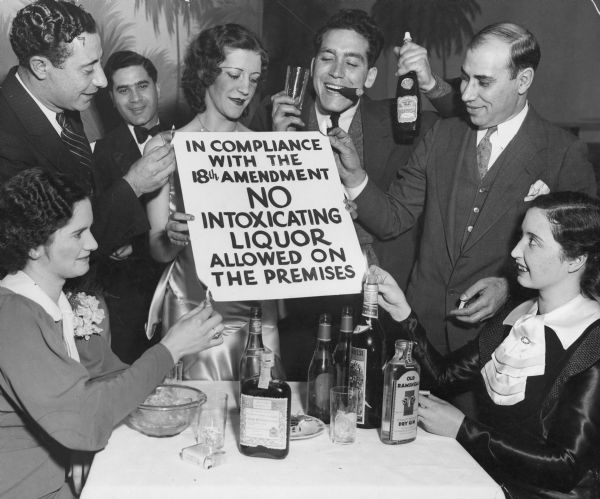
2. Frank Scherschel, Revelers Celebrating the End of Prohibition, Wisconsin Historical Society (Wisconsin Historical Society), accessed January 27, 2025, https://www.wisconsinhistory.org/Records/Image/IM9426.
This second image demonstrates one of the many reactions the American public had to prohibition, a policy that had slipped my mind upon my first consideration of the events of the 1920s. Although there were individuals who supported prohibition, like Jane Addams, this image makes it clear that there were many who were in complete defiance of this law. The tongue-in-cheek manner in which this image is posed demonstrates the humor with which many interacted with the 18th amendment.

3. An American Advertisement for Cars, Public Broadcasting Service (Public Broadcasting Service), accessed January 27, 2025, https://ny.pbslearningmedia.org/resource/ush22-soc-1920sadvert/american-advertisements-in-the-1920s-interactive-image/.
The final image I located when searching through pictures of the 1920s appears to be an advertisement for cars. This makes it clear that by the 1920s, cars became a popular mode of privately owned transportation. This may also be indicative of the increased affordability of cars. The rhetoric of this advertisement further demonstrates the consumer culture that was likely prominent during this decade.
These images tell a fascinating story of the musical, political, and technological changes that the 1920s saw, but there is much left to be said about the era. I look forward to discovering more about this decade during this semester!
Bibliography
An American Advertisement for Cars. Public Broadcasting Service. Public Broadcasting Service. Accessed January 27, 2025. https://ny.pbslearningmedia.org/resource/ush22-soc-1920sadvert/american-advertisements-in-the-1920s-interactive-image/.
Louis Armstrong playing the trumpet. Herbert Art Gallery & Museum. Herbert Art Gallery & Museum, July 12, 2022. https://www.theherbert.org/news/259/grown-up-in-the-1920s-music.
Scherschel, Frank. Revelers Celebrating the End of Prohibition. Wisconsin Historical Society. Wisconsin Historical Society. Accessed January 27, 2025. https://www.wisconsinhistory.org/Records/Image/IM9426.

Stefanie Viera is a 3rd year History and Humanities & Global Studies double major who is taking the Discovering Digital History course in the spring of 2025. She currently work at the Jane Addams Papers Project as an Editorial Assistant.
