
Henry May’s 1956 journal article titled “Shifting Perspectives on the 1920s” and Jennifer Fronc’s 2018 journal article titled “The 1920s–A Historiographical Survey” were published approximately 60 years apart. They both offer strong surveys of what historians have said about the 1920s, but the topics that they focus on differ, fitting within their respective time periods.
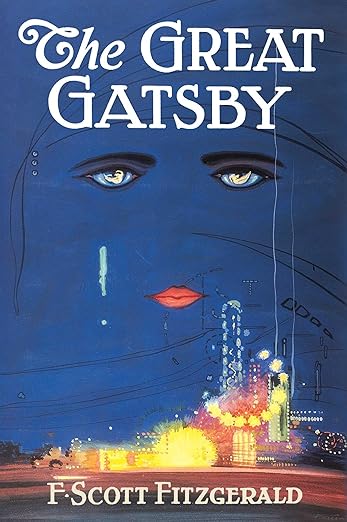
May’s article focuses on how discussions about the 1920s during the ‘20s generated praise and criticism for various reasons. He states that the most popular view of the ‘20s defines it as the “New Era,” focusing on technological advancements, financial gains, and new business structures, and going so far as to define it all as “a new civilization.”1 The social science perspective similarly viewed the decade in a positive light, as bringing in a transitional period of social intelligence and order.2 However, the view of literary intellectuals was negative, defining the ‘20s as a time of moral decline.3
May tracks how the 1920s was studied and discussed through the 1930s, ‘40s, and ‘50s. Historians of the 1930s, with the Great Depression as their reality, did not look kindly upon the ‘20s, dismissing any of its abundance or progress in favor of portraying it — especially its conservatism — as “merely a contrasting background for the New Deal.”4 May points out that this one-sided view of the 1920s continued well into the 1950s but with some subtle changes.
The 1940s brought some cold feelings towards the ‘20s because of the decline in progressivism, specifically blaming the writers of that time for ruining morale.5 With some more distance from the ‘20s, historians of the 1950s were divided, some still viewing it with disapproval while others displayed nostalgia or appreciation, especially for the achievements made during the decade.6
Fronc’s historiographical analysis of the 1920s included more focused subject matter. Fronc mainly pulls from texts of the 2000s and 2010s. However, she leads by referencing texts from the 1950s and ‘60s, which described how the 1920s were (and continue to be) studied as distinct from the surrounding decades. However, she supports interpretations that frame the ‘20s as part of a decades-long Progressive Era.7
Fronc analyzes the historiography of the 1920s through a few different lenses: prohibition and women’s suffrage, African American history, and immigration history. These all challenge the notion of the 1920s as an entirely positive decade, emphasizing where the decade had its pitfalls. Fronc cites many pieces of writing to discuss how Prohibition developed as a means of controlling working-class and immigrant populations and how many pieces of legislation were meant to keep poor white and African American women, in particular, from exercising their voting rights.8
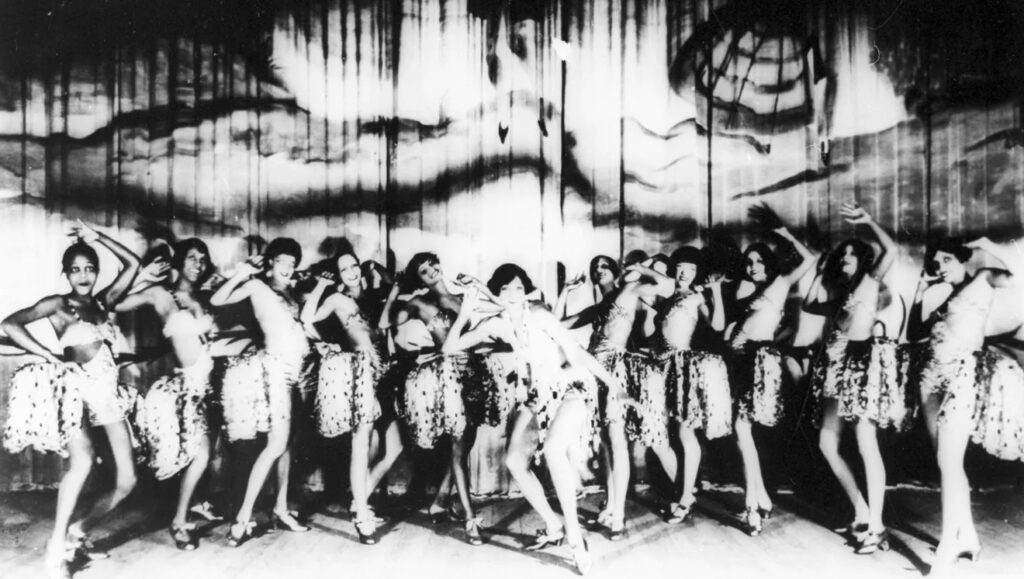
Much writing in the past couple of decades has also pointed out how the depiction of African American history in the ‘20s often places too much emphasis on the Harlem Renaissance, ignoring the racism and violence that still occurred in that decade.9 Similarly, Fronc states that historians decentering the Ellis Island narrative have allowed many to explore more deeply the xenophobia and racism that caused the 1920s anti-immigrant policies and the switch to a “gatekeeping” attitude within the U.S.10
In some ways, May and Fronc focus on entirely different areas. Because of when May’s piece was written, it understandably stays on the surface level when discussing how historical viewpoints have changed from the ‘20s to the ‘50s. Fronc’s piece dives much deeper, offering more analysis and nuances to specific subjects, such as sexism, racism, and xenophobia, that easily fly under the radar in discussions of the 1920s. Fronc’s focus also makes sense given the period it’s written in. For one, most of the surface-level discussion about the historiography of the 1920s had probably already been done by 2018, and discussions about social issues were and still are much more prevalent than in the 1950s.
These articles seem to agree on the broader portrayal of the 1920s, though, and how the decade is often overhyped as a time full of partying and abundance that had no underlying problems. Both exemplify how the 1920s must be and already has been analyzed within the context of the decades surrounding the ‘20s.
What all of the historical writings about the 1920s also have in common is how they have distinctly changed based on the social factors within the U.S. of the time. Thus, the 1920s seemed frivolous and were looked at with resentment during the difficult 1930s but brought up nostalgia during the prosperous 1950s, while they are now analyzed through a social justice lens in the 2010s.
Overall, the main changes seem to be that analysis has grown more specific over time and has included more diverse perspectives, which aligns with how history and public opinion have shifted through the decades. While the plights of women, people of color, and immigrants were often overlooked before the middle of the 20th century, the change has been reflected in how history is studied now.
Learning about how history was previously written contextualizes what historians, and society as a whole, found important. Analyzing the changes can track what society values and how public opinion shifts. It allows people studying history now to understand better the inherent biases embedded within older texts and to remember to consider the biases that now exist in modern historical writings. Any biases and interpretations, whether old or modern, can certainly impact student learning and analysis for the future.
- Henry May, “Shifting Perspectives on the 1920s,” Mississippi Valley Historical Review (1956), 406. ↩︎
- May, 407 ↩︎
- May, 409 ↩︎
- May, 412 ↩︎
- May, 418 ↩︎
- May, 420 ↩︎
- Jennifer Fronc, “The 1920s–A Historiographical Survey,” in the Routledge History of the United States (2018), 15. ↩︎
- Fronc, 16-18 ↩︎
- Fronc, 18 ↩︎
- Fronc, 21 ↩︎

Rebecca Gathercole is a senior Communications Arts major with a minor in Creative Writing.
