
Overview
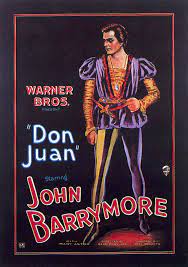
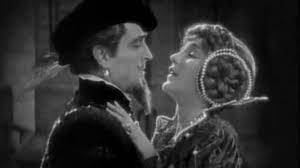
Don Juan is a 1926 American silent film directed by Alan Crosland and produced by Warner Bros. It stars John Barrymore in the title role of the legendary Spanish seducer and womanizer, Don Juan. The film follows a legendary Spanish lover as he pursues romantic adventures and duels with rivals in 16th century Spain. The film begins with Don Juan, the protagonist, seeking to avenge the death of his father by challenging “Count de Polan” to a duel. After defeating Polan, Don Juan is wounded but manages to escape with the help of his loyal servant, Pedrillo. Fleeing to a nearby monastery for refuge, Juan encounters a beautiful novice named Adrianna and is instantly smitten by her, however Adrianna has taken a vow of chastity and rebuffs his advances. Undeterred, Don Juan continues his escapades, charming and seducing numerous women along the way. He also becomes entangles in a political conspiracy involving the King of Spain, who suspects him of treason. Juan’s adventures lead him to encounter various characters, including a jealous husband, a vengeful suitor, and a lecherous Duke among others. As the story unfolds, Don Juan’s pursuit of Adrianna becomes more desperate, and he faces numerous challenges in his quest to win her heart. Ultimately, Don must confront his own reckless behavior and come to terms with the consequences of his actions.
Don Juan is considered a commercial and critical success since its release in 1926, and it remains a landmark film in the history of cinema, and a film that has made a significant impact on the development of the motion picture industry. Don Juan was also one of the most expensive films made up to that time, with a budget of over one million dollars. The film’s lavish sets, costumes, and special effects were highly praised by critics and audiences alike. In addition to Barrymore, the film features a talented cast of actors, including Mary Astor, Warner Oland, and Myrna Loy in one of her earliest film appearances.
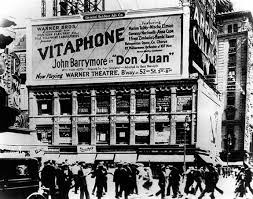
The premiere of Don Juan was a star-studded event that took place on August 6, 1926, at the Warner Bros. Theater in New York City. The event was attended by many celebrities of the time, including John Barrymore, as well as Gloria Swanson, Douglas Fairbanks, Mary Pickford, and Charlie Chaplin who were all stars of the era. The premiere was a highly anticipated event, due to it being the first film with synchronized sound effects and musical score. The event was covered extensively by the press, and fans lined the streets to catch a glimpse of the stars as they arrived. The film was well-received by the audience, who were impressed by the film’s innovation, technology, and advanced style for the time. The Warner Bros. Theatre was located at 1700 Broadway in New York City, and had a seating capacity of around 3,500 people. It was one of the largest and most luxurious theaters of the time and was equipped with all of the latest technologies of the era. The theater remained a popular venue for several decades, hosting many premieres and events over the years until it was demolished in 1952. The exact number of people that attended the premiere of Don Juan is unknown, but it is estimated that it was a fully sold out event hosting at least 3,400 people. The success of the film in its initial run at the box office demonstrated the potential profitability of sound films and encouraged studios to invest in sound technology. Don Juan pushed the boundaries of what was possible in film production, and use of technologies at this time.
Significance
The film is notable for a number of reasons. It was the first feature-length film with synchronized sound effects, including a synchronized musical score and sound effects in selected scenes. However, it did not include any spoken dialogue, as that technology was not yet available. The production of Don Juan (1926) required the development of new technology, including the Vitaphone, elaborate special effects (for the time), and advanced camera techniques. These advancements paved the way for future innovations in filmmaking.
The film used a sound-on-disc system called the Vitaphone, which synchronized a 16-inch phonograph record with the film’s projection. The record contained the synchronized musical score and sound effects that were played back during the film’s screening. The synchronization was achieved by timing the playback of the sound disc with the projection of the film, using a special device called a “projector interlock”. A projector interlock refers to a safety mechanism in film projectors that prevents multiple projectors from running at the same time, which could have caused damage to film prints at the time. The interlock system was designed to ensure that only one projector would be running during a film screening.
Vitaphone allowed films to add synchronized sound to a motion picture. It was developed by the Western Electric Company and was introduced in 1926, in the fil Don Juan. The system was used primarily in the 1920’s and early 30’s, before it was surpassed by better technology. Many classic films from this period, such as The Jazz Singer (1927) and The Singing Fool (1928), used the Vitaphone system to add synchronized sound to their musical number and sound effects. However, because the Vitaphone system relied on separate sound discs, it was limited in its ability to incorporate dialogue, and films using this system remained silent with musical accompaniment and sound effects. It wasn’t until the development of sound-on-film technology in the late 1920’s that synchronized dialogue was invented, that films began to have dialogue sound. While the Vitaphone has been long surpassed by more advanced technology, many of the Vitaphone discs have survived and have been preserved, providing a unique glimpse into the early days of sound in cinema. This system was revolutionary at the time and paved the way for the development of sound in motion pictures.
The 1920’s was a decade known for its cultural, social, and political changes and the film reflected some of the attitudes and values of the time. It also reflected attitudes and values of the time, as well as some of the challenges that people of the era faced. One example of this is gender roles, such as the “male gaze”, where women were objectified and seen as objects of male desire. This was a common attitude in the 1920’s, as traditional gender roles were being challenged and new forms of sexual expression were emerging. Another example is political instability. The film’s plot revolves around political intrigue and the struggle for power between various factions. This was a representation of the political struggles of the 1920’s, as the aftermath of World War One and the economic challenges of the time created by social unrest and political tension. A third example is economic prosperity and excess. The film’s lavish sets, costumes, and special effects were a reflection of the prosperity of the 1920’s, as the United States experienced a period of economic growth and prosperity. The film’s excess reflected the era’s tendency towards extravagance and opulence.
John Barrymore’s portrayal of Don Juan also set a new standard for leading men in Hollywood. He was suave, sophisticated, romantic, and his performance helped establish the archetype of the “silver screen” hero. The character of Don Juan, who was a legendary seducer and womanizer, became a popular figure in literature and drama throughout the 1920’s. The film helped cement the character’s place in popular culture and inspired other films, plays, and novels that featured similar characters.
Sources
Hall, M. (1926, August 7). Vitaphone stirs as talking movie; new device synchronizing sound with action impresses with its realistic effects. noted musicians heard provides orchestral accompaniment to photoplay “Don Juan,” with John Barrymore. The New York Times. Retrieved April 11, 2023, from https://www.nytimes.com/1926/08/07/archives/vitaphone-stirs-as-talking-movie-new-device-synchronizing-sound.html
In The Good Old Days Of Classic Hollywood. (2015, June 25). The Classic Movie History Project Blogathon: Don Juan (1926 ) and the introduction to vitaphone. In The Good Old Days Of Classic Hollywood. Retrieved April 11, 2023, from https://crystalkalyana.wordpress.com/2015/06/25/the-classic-movie-history-project-blogathon-don-juan-1926-and-the-introduction-to-vitaphone/
A tale of romance and derring-do (with synchronized music and sound effects): A study of don juan (1926). Silver Screen Classics. Retrieved April 11, 2023, from https://silverscreenclassicsblog.wordpress.com/2021/06/26/a-tale-of-romance-and-derring-do-with-synchronized-music-and-sound-effects-a-study-of-don-juan-1926/
Wikimedia Foundation. (2023, April 4). Don Juan (1926 film). Wikipedia. Retrieved April 11, 2023, from https://en.wikipedia.org/wiki/Don_Juan_(1926_film)
