
As the semester has drawn to a close, my perception of the 1920s has not completely changed, but shifted. Originally, I perceived the era through a personal lens because I have family roots in it. This fond perception remains, but has grown post the research conducted this semester. It has grown because now that I am better informed I can appreciate all aspects of it, not just the one that relates to me. In fact, I now consider my original perception quite narrow.

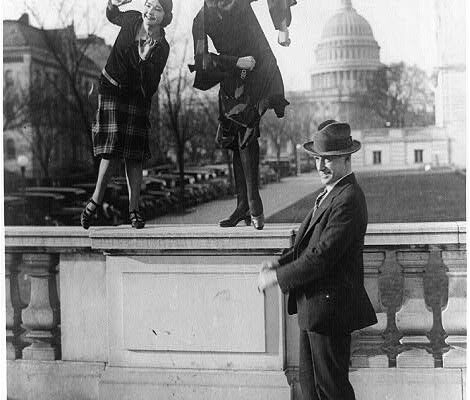
Upon the initial search to gather a scope of the decade through google images, I was disappointed to see the lack of diversity within the images the search yielded. Taking a second look at those image results I can now recognize that there is much more representation than I originally perceived. There are so many pictures of women, they are dancing, drinking, wearing short dresses and pants, they are voting! Many social advancements happened for women in the 1920s, and I wish I had dedicated more research to the phenomena.

In fact, the decade is almost too encompassing that I cannot keep track of all the events and people that shaped the 1920s into the present, one hundred years later, as my classmates have contributed to my new wealthy knowledge of the decade. So, for the purpose of this reflection I’m going to hone in on my own research over the course of the semester. I had begun my research with a deep dive into immigration law, as that is what my original perception of the 1920s centered around. This course of research led me to a broadening of that viewpoint. I was aware of immigration restrictions, but I was really not aware of why they were passed and how they affected everyone at the time. I read excerpts from the congressional record and was intrigued to see the discourse senators had about immigration and the Emergency Quota Act. The 1920s was no longer just “when immigrants arrived in droves and began family foundations in America,” it was not that simple. The immigrants that were lucky enough to find themselves in the United States were forced to jump through hoop after hoop, prejudice after prejudice. Although, in the present they still do. The research conducted for that post gifted me a better understanding of the country’s current immigration situation, which was just as limited as my knowledge of the 1920s immigration situation prior to this.

My research then took me to Chicago. I was excited to reach this point as I desired to better understand the city due to the roots my family had there. Naturally, to gain a better understanding of Chicago during the 1920s you must look into the man that ran it, Al Capone. I knew very little about him, other than the fact that his nickname was “Scarface.” I had never seen the 1983 film but I could understand when he was referenced in popular culture. Through my research I learned about the role prohibition played in the 1920s, many people still desired alcohol consumption despite the outlawing of it. Capone considered himself a “provider of a service,” but his methods were incredibly violent. The 1920s were an era filled with crime committed by gangs because it was much harder to connect back to the perpetrators. I found Capone’s life fascinating, and my research on his life ushered me into cultivating the next portion of my research, radio.
It was the first commercial radio broadcast of 1920 that started the chain reaction of technological advancement that would result in the smartphones of today. Through my research I learned that only private companies had access to radio, but postwar capitalist efforts of the eclectic companies to become relevant led to radio access for the global public. That first broadcast opened the door for fan culture to grow around sports and music. Commercial radio’s integration into standard media consumption changed politics as we know it. Political candidates and presidents could broadcast to the public which made the two groups feel connected. The age of connection was ushered in at the moment. Without commercial radio I may not be writing this post on the internet, radio you read not just hear.
Overall, the 1920s mean much more to me now that I have gained a better understanding of the people and events that shaped the decade. In fact, I find many parallels between the 1920s and the 2020s. I look forward to comparing the decades in later years.

Michelle Steidle is a History Major at Ramapo College, graduating with the Class of 2023. She enjoys historical research, long walks on the beach, and a good joke.
