
The Beginning
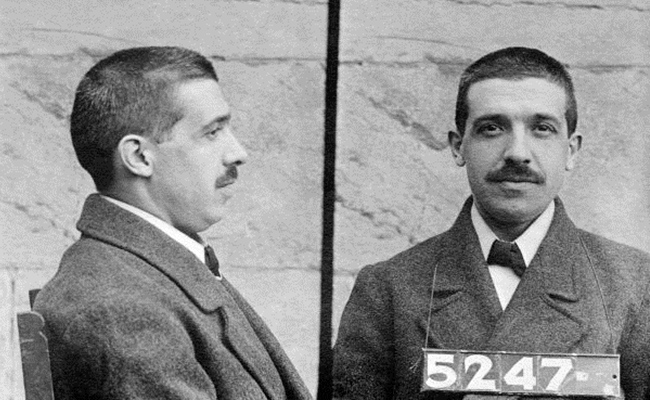
Charles Ponzi, born in Lugo Italy on March 3, 1882, was a native of Italy who led a life of crime. According to the Century Foundation, a think tank, while living back in Italy, he would frequently steal from his parents and parish priests. [1] Eventually, he immigrated to Canada for a period of time and then moved permanently to the United States (U.S.) where he gained his notoriety in 1920. Charles Ponzi’s last name, Ponzi, is associated with and named after one of the most famous and well-known financial scams all around the world. However, what do we know about Charles Ponzi and how did the Ponzi scheme originate? Well, in 1919, Ponzi discovered what he saw to be the most brilliant idea – he decided to buy certificates for postage stamps from the International Postal Union and then sell them in another market where the prices are significantly higher. Was he aware that it was likely not going to make investors a lot of money? Most definitely. However, he knew that he could take advantage of investors that were gullible and new to investment in general.
In addition, it has been reported that Ponzi never even purchased any postage certificates. He would simply use money from new investors to somewhat repay the initial investors, and of course, he would not forget to save some for himself. He was only focused on how much he could eventually grow his own money, and with that, he developed what is now known as the Ponzi Scheme. Britannica defines a Ponzi Scheme as a “fraudulent and illegal investment operation that promises quick, easy, and significant returns on investments with little or no risk.” [2] They continue to describe the Ponzi scheme in a structure that is now more commonly referred to as a pyramid scheme. “in which the operator, at the pyramid’s top, acquires a small group of investors that is initially provided with tremendous investment returns via funds secured from the second group of investors.” [3] In only eight months of twelve, in 1920, Charles Ponzi was able to “earn” about $15 million by convincing everyday individuals in finance that he could help them make even more money and that he knew the secret to true wealth. He was able to use his words to persuade his followers in trusting him with more and more money. He was worried that citizens of the public were beginning to catch onto him as he was not trying to hide his newfound wealth. According to the Century Foundation, he was living in a very large mansion. With time, he decided that hiring a public relations expert would be the best move. [4] However, it was the same public relations expert that tipped off the authorities to Ponzi’s fraud. Newspaper reporters also began to pick up on pieces of the scam as word was starting to float around among concerned investors that were getting tired of waiting on their investment. Eventually, it was the Boston Post that fully exposed Charles Ponzi and his scheme.
According to Britannica, Ponzi scammed and essentially stole millions of dollars from thousands of New England residents, primarily from 1919 through 1920 simply by creating a plan based on the sale of European postage stamps. He initially began with only focusing on a small group of investors, however, as word spread of this new investment opportunity with great promises, hundreds of investors began contacting Ponzi on their own accord to try and get a piece of the pie. His highest peak of the scam, in his eyes one of his biggest accomplishments, he raised $1 million in only three hours. [5] However, nine months later, his fraud was discovered. As investors awaited their promised higher investment, there was only $30 worth of stamps, for which Ponzi collected $15 million from individuals. After this was discovered by the investors, Ponzi was arrested in 1920 and faced heavy prison time after being charged with multiple counts of fraud and larceny. During his time in prison, he tried contacting as many investors as he could, apologizing for his “mistakes” and ensuring to them that he would make it up to them when he was released. It is doubtful that Ponzi actually regretted his actions, instead, he was trying to retain any relationships he possibly could with these investors so he could scam them once again. The United States Immigration Authorities did not want to give him a second chance however and instead deported him back to Italy. Ironically, back in Italy, he served as a treasury official for Mussolini’s fascist movement until his reputation was discovered. He tried to salvage what he could of his reputation and fled to Brazil until he lost his job and subsequently, all of his money. [6] in an article for the Wall Street Journal, titled, “The Original Ponzi Schemer,” the author discusses the psychology and thought process behind Charles Ponzi, describing his actions as a result of “status anxiety,” and wanting to both be and live among the wealthy. [7]
Charles Ponzi was the most prominent criminal that followed through with this scam, thus it is named after him. However, according to The Times, the scheme that is known as the Ponzi scheme did not only begin with Charles Ponzi. It first surfaced in 1879 by Sarah Howe in Boston after she created what was known as the “Ladies Deposit” to provide a space for women to make investments. Similar to Charles Ponzi, she promised the women she worked with that they would receive a much higher return on investment, insisting that their initial investment would double in under a year, but that never materialized. As word of her promises spread throughout Boston, the reporters for the Boston Daily Advertiser began following the numbers and ended up revealing her scam. According to The Times, she did eventually get caught and proven guilty, receiving three years in prison. However, she clearly did not learn her lesson because as soon as she got out, she carried out a nearly identical scam for another two years before she got caught and punished once again.

Source: https://commons.wikimedia.org/wiki/File:Ponzi1920.jpg
Modern-Day Ponzi Schemes
Even though there is a lot of information regarding Ponzi Schemes and signs to look out for that have been published both in books and online, Ponzi Schemes still continue to happen in modern times. In 1997, numerous Ponzi Schemes which took place in Albania collapsed, sparking nationwide rioting and rebellion, which eventually developed into a major crisis. [8] The most relevant and largest Ponzi Scheme to date was run by Bernard Larence “Bernie” Madoff, born April 29, 1938, in Queens, New York, who defrauded thousands of investors out of more than hundreds of billions of dollars for nearly twenty years. When investors chose to invest in his Ponzi Scheme, they felt that they could trust him due to his seemingly respectable reputation and experience in working for NASDAQ, an American financial corporation and stock exchange, in the 1990s. Another reason many investors were inclined to trust him due to his insistence that he used a method that was legitimate. He held the majority of his client’s funds in bank accounts and would fund or repay investors that were wanting to “cash out” with funds from other investors, similar to Ponzi. However, it was not until 2008, when the market crashed, that he could no longer keep up. With that, he decided to confide in his sons regarding the scam he had been running, and they notified authorities. The last recorded amount being held in the bank account was $64.8 billion in funds from his client’s around the time that he was caught. In 2009, Madoff actually pled guilty to his crimes and was charged with 11 federal felony counts, and received a sentence of 150 years in prison. [9]
With society continuing to move towards a more digital platform for all of our needs, it is important to be able to spot the signs of a potential Ponzi or pyramid scheme as they are only going to become more common due to the greater accessibility and reach they now have online. As seen in the case of Charles Ponzi, these scam artists will purposely try to play towards an individual’s anxiety and fear of missing out. They will try to be very picky as to who they will allow to contribute an investment towards their scam, which leads to other individuals, even those that may be suspicious of the ‘investment opportunity, to feel like they may miss out on a million-dollar opportunity. However, it seems that in the case of the Ponzi Schemes, history is repeating itself. It is imminent that there will still continue to be new Ponzi Schemes created and those that are still being kept under wraps will continue to be run. Charles Ponzi has left behind a legacy, and while not necessarily a positive one, it will forever impact the financial sector. Ponzi Schemes are still seen as “white-collar” crimes that tend to get a blind eye because they usually involve individuals of higher status and wealth, which is another aspect of the criminal justice system that could use some further reform.
Footnotes:
[1] The Century Foundation et al., “Who Was Charles Ponzi?,” The Century Foundation, March 7, 2016, https://tcf.org/content/commentary/who-was-charles-ponzi/?agreed=1.
[2]“Ponzi Scheme,” Encyclopædia Britannica (Encyclopædia Britannica, inc.), https://www.britannica.com/topic/Ponzi-scheme#ref1111939.
[3] Ibid.
[4] The Century Foundation et al., “Who Was Charles Ponzi?”
[5] “Ponzi Scheme,” Encyclopædia Britannica.
[6] The Century Foundation et al., “Who Was Charles Ponzi?”
[7] Daniel Akst, “The Original Ponzi Schemer,” The Wall Street Journal (Dow Jones & Company, October 15, 2020), https://www.wsj.com/articles/the-original-ponzi-schemer-11602778470.
[8] “In Ponzi We Trust,” Smithsonian.com (Smithsonian Institution, December 1, 1998), https://www.smithsonianmag.com/history/in-ponzi-we-trust-64016168/.
[9] Adam Hayes, “The Bernie Madoff Story,” Investopedia (Investopedia, April 22, 2021), https://www.investopedia.com/terms/b/bernard-madoff.asp.
Resources:
Akst, Daniel. “The Original Ponzi Schemer.” The Wall Street Journal. Dow Jones & Company, October 15, 2020. https://www.wsj.com/articles/the-original-ponzi-schemer-11602778470.
The Century Foundation, Richard D. Kahlenberg, Ann O’Leary and Julie Kashen, Casey Berkovitz, Anna Bernstein, — By Rebecca Vallas, — By David Brady, — By Richard D. Kahlenberg, — By Amanda Novello, and — By Ann O’Leary and Julie Kashen. “Who Was Charles Ponzi?” The Century Foundation, March 7, 2016. https://tcf.org/content/commentary/who-was-charles-ponzi/?agreed=1.
Hayes, Adam. “The Bernie Madoff Story.” Investopedia. Investopedia, April 22, 2021. https://www.investopedia.com/terms/b/bernard-madoff.asp.
“In Ponzi We Trust.” Smithsonian.com. Smithsonian Institution, December 1, 1998. https://www.smithsonianmag.com/history/in-ponzi-we-trust-64016168/.
“Ponzi Scheme.” Encyclopædia Britannica. Encyclopædia Britannica, inc. Accessed April 30, 2021. https://www.britannica.com/topic/Ponzi-scheme#ref1111939.
Weisman, Steve. “The History of Ponzi Schemes Goes Deeper Than You Think.” Time. Time, August 12, 2020. https://time.com/5877434/first-ponzi-scheme/.

Angelina Farallo is a Law and Society Major at Ramapo College of New Jersey. Ever since she was in elementary school, history has always been her favorite subject. During her studies at Ramapo College, she has studied how the modernization of technology has affected various industries such as the law, and in this case history which is what drew her to take this Digital Humanities course.
