
The Irish War of Independence
Since 1169, Ireland was under the control of the British Empire with a few periods on independence. The Irish were not treated very well by their conquerors and thus revolts popped up all the time. In 1916, one revolt would spark nationalism across the country. Remembered as the “Easter Rising,” the people were determined to become free. This rebellion was squashed, but it set up the 1919 revolution that would eventually free the nation.
In the 1918 Irish elections, Sinn Féin, an Irish republican and democratic political party, won. On January 21, 1919, they declared independence from the British, starting the Irish War of Independence. In September 1919, the United Kingdom outlawed the new government and the conflict intensified. The Irish War of Independence would end on July 11, 1921 with the founding of the Irish Free State, a Dominion of the United Kingdom.
The Irish Civil War
Many in the newly found Irish Free State were unhappy with the treaty with the United Kingdom. They believed that this treaty was a betrayal of those who sacrificed their lives for a 100% free Ireland. The Anglo-Irish Treaty not only made the Irish Free State a Dominion, but it created Northern Ireland, a province of the United Kingdom. On January 7, 1922, the Irish Parliament accepted the treaty. Éamon de Valera, Cathal Brugha and Austin Stack would resign the following week in protest.
The fighting would start the next month on February 18 with an Anti-Treaty Irish Republican Army (IRA) unit led by Ernie O’Malley seizing an Royal Irish Constabulary barracks in Clonmel, taking 40 policemen prisoner and capturing 600 rifles and thousands of rounds of ammunition. There would continue to be killing, raiding, and skirmishes throughout the war. One notable skirmish occured in Dublin. On April 14, 1922, under the command of Commandant-Generals Liam Mellows and Rory O’Connor, 200 IRA take control of the Four Courts, the principal seat of the Supreme Court, the Court of Appeal, the High Court and the Dublin Circuit Court. Six days later, intense firing would break out across Dublin1“Fierce Fighting Rages over Dublin Buildings”, The New York Times, April 20, 1922, https://timesmachine.nytimes.com/timesmachine/1922/04/21/99013631.pdf.
On June 28, 1922, the IRA released a Civil War Proclamation followed by a call to arms the next day. The proclamation declared that this civil war is a continuation of the Irish War of Independence. They are still fighting the British, the war is not over.
We, therefore, appeal to all citizens who have withstood unflinchingly the oppression of the enemy during the past six years to rally to the support of the Republic and recognise that the resistance now being offered is but the continuance of the struggle that was suspended by the truce with the British. We especially appeal to our former comrades of the Irish Republic to return to that allegiance and thus guard the Nation’s honour from the infamous stigma that her sons aided her foes in retaining a hateful domination over her.
Comdt.-Gen. Liam Mellows, Comdt.-Gen. Rory O’Connor, Comdt.-Gen. Jos. McKelvey, Comdt.-Gen. Earnan O’Maille, Comdt.-Gen. Seamus Robinson, Comdt.-Gen. Sean Moylan, Comdt.-Gen. Michael Kilroy, Comdt.-Gen. Frank Barrett, Comdt.-Gen. Thomas Derrig, Comdt. T. Barry, Col.-Comdt. F. O’Faolain, Brg.-Gen. J. O’Connor, Gen Liam Lynch, Comdt.-Gen. Liam Deasy, Col.-Comdt. Peadar O’Donnell, P. Ruttledge. (June 28, 1922)
The Call to Arms on June 29, 1922 can be seen as a continuation of the Civil War Proclamation. The Call to Arms called for citizens to drive out the British: “Citizens, defend your Republic! … Mercenaries wearing Irish uniform, paid, equipped, and armed by England, and acting under England’s orders, are attacking our brothers of the Irish Republican Army, who defend the living Republic, and will defend it to the death2“Call to Arms, 1922”, Óglaigh na hÉireann War News, No Other Law, June 29, 1922, http://www.nootherlaw.com/archive/call-to-arms-1922.html.”
The War would end on May 24, 1923 with IRA Chief of Staff Frank Aiken’s “Dump Arms Order.” Even though the Anti-Treaty IRA lost, the sentiment and spirit of full Irish independence still remained. IRA members would continue actions across the country, most notably hunger strikes by over 8,000 prisoners across the country. The Irish Free State would become the Republic of Ireland with the Republic of Ireland Act, 1949, finally gaining full independence from the United Kingdom.
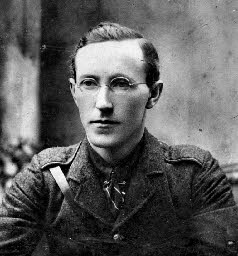
Liam Lynch Biography
Liam Lynch, born William Lynch3Joe Gannon, Liam Lynch, Civil War Martyr: “It never should have happened”, The Wild Geese, October 17, 2020, https://thewildgeese.irish/profiles/blogs/liam-lynch-civil-war-martyr-it-never-should-have-happened, was born on November 20, 1892 to Jeremiah and Mary Lynch. His family was very nationalistic which influenced Lynch heavily. At the age of 17, when apprenticing with a hardware store owner, he joined the Gaelic League and the Ancient Order of Hibernians, two pro-Ireland organizations.
In 1913, Lynch joined the Irish Volunteers. This would be the start of his career as an Irish nationalist. By 1917, he had already become a Lieutenant in charge of over seventy men. He would be promoted to Commandant of the Second Cork Brigade in 1918. Here he would make a name for himself. By April 1920, he was promoted to Commander of the newly formed Southern Division, composed of nine brigades. He would hold this position until the end of the Irish War of Independence.
Being opposed to the Anglo-Irish Treaty, Lynch continued to fight. I April 1922, he was voted Chief of Staff of the IRA. He would hold the position until his death. In October, being frustrated with the civil war, the Free State Army began executing prisoners under martial law. Lynch did not allow any of his prisoners to be executed, stating, ““no such acts can under any circumstances be tolerated4Joe Gannon, Liam Lynch, Civil War Martyr: “It never should have happened”, The Wild Geese, October 17, 2020, https://thewildgeese.irish/profiles/blogs/liam-lynch-civil-war-martyr-it-never-should-have-happened.”
Death of Liam Lynch
On April 10, 1923, Lynch was shot while trying to escape from the IRA’s secret hideout with important documents in the Knockmealdown Mountains. Lynch along with Frank Aiken, Bill Quirke, Seán O’Meara, Jerry Frewen, and Seán Hyde were fleeing Northeast when they were spotted by a squadron of around Free State soldiers led by Lieutenant Larry Clancy. The six IRA officers only had two handguns whereas the Free State Soldiers were all carrying Enfield rifles. Their only options was to run. As they were running away a single bullet hit Lynch. Knowing he could no longer go on, he gave the documents to Aiken and stayed behind to hold back the advancing soldiers.
When the soldiers arrived he told them “I am Liam Lynch, Chief-of-Staff of the Irish Republican Army. Get me a priest and doctor. I’m dying.”5Medea Ryan, Liam Lynch, the Real Chief (Cork, Ireland: Mercier Press, 1986), 164. The soldiers brought Lynch a few miles away to Nugent’s Pub in Newcastle. An ambulance arrived shortly after that brought him to South Tipperary General Hospital. Liam Lynch was pronounced dead around 8 p.m. His burial was two days later at Kilcrumper Old Cemetery in Fermoy. As per requested, he was buried next to fellow IRA member and close friend Michael Fitzgerald, who died during the 1920 hunger strike6“HUNGER STRIKER DIES IN CORK JAIL AFTER 68-DAY FAST”, The New York Times, October 18, 1920, https://www.nytimes.com/1920/10/18/archives/hunger-striker-dies-in-cork-jail-after-68day-fast-michael.html.
Significance to the 1920s
According to historian Tom Mahon, Lynch’s death effectively ended the war7Tom Mahon and James J. Gillogly, Decoding the IRA (Cork, Ireland: Mercier Press, 2008), p. 66.. On April 27, Frank Aiken, Lynch’s successor as Chief of Staff of the IRA, called a ceasefire. On May 24, he would give a dump arms order.
Comrades — The arms with which we fought the enemies of our country are to be dumped. The foreign and domestic enemies of the Republic have for the moment prevailed. But our enemies have not won. Neither tortures nor firing squads, nor a slavish press can crush the desire for independence out of the hearts of those who fought for the Republic or out of the hearts of our people. Our enemies have demanded our arms. Our answer is, ‘We took up arms to free our country, and we’ll keep them until we see an honourable way of reaching our objective without arms’. There is a trying time ahead for the faithful soldiers of Ireland. But the willing sacrifices of our dead comrades will give us the courage to face it in the knowledge that these sacrifices have ensured the ultimate victory of our cause. Their examples and their prayers will help us to be like them, faithful to our ideals unto death.
Frank Aiken, Chief of Staff (May 24th, 1923)
On the same day, President of the Irish Republic Eamon de Valera declared that they look at other routes to getting full Irish independence: “The Republic can no longer be defended successfully by your arms. Further sacrifice of life would now be vain and continuance of the struggle in arms unwise in the national interest and prejudicial to the future of our cause. Military victory must be allowed to rest for the moment with those who have destroyed the Republic. Other means must be sought to safeguard the nation’s right8Eamon de Valera, “Legion of the Rearguard”, No Other Law, May 24, 1923, http://www.nootherlaw.com/archive/legion-of-the-rearguard.html.”
On an international scale, the Irish War of Independence garnered sympathy across the world including in the United States and the United Kingdom. Many Irish-American would travel across the Atlantic to aid the fight. The Civil War continued to garner sympathy, but not as much. However, the IRA would gain the support of the Soviet Union. After the war in 1925, the IRA would begin to spy on the British and Americans in return for £500 (later decrease to £100). The Soviets and the IRA would sever ties in 1927, but re-establish them during The Troubles in the 1960s.
Citations
Bibliogrpahy
Aiken, Frank. “Dump Arms Order, 1923”. No Other Law. May 24, 1923. http://www.nootherlaw.com/archive/dump-arms-order-1923.html
Aiken, Frank. “Suspension of Offensive, 1923”. No Other Law. April 30, 1923. http://www.nootherlaw.com/archive/suspension-of-offensive-1923.html
“Call to Arms, 1922”. Óglaigh na hÉireann War News. No Other Law. June 29, 1922. http://www.nootherlaw.com/archive/call-to-arms-1922.html
De Valera, Eamon. “Legion of the Rearguard”. No Other Law. May 24, 1923. http://www.nootherlaw.com/archive/legion-of-the-rearguard.html
“Fierce Fighting Rages over Dublin Buildings”. The New York Times. April 20, 1922. https://timesmachine.nytimes.com/timesmachine/1922/04/21/99013631.pdf
Gannon, Joe. Liam Lynch, Civil War Martyr: “It never should have happened”. The Wild Geese. October 17, 2020. https://thewildgeese.irish/profiles/blogs/liam-lynch-civil-war-martyr-it-never-should-have-happened
“HUNGER STRIKER DIES IN CORK JAIL AFTER 68-DAY FAST”. The New York Times. October 18, 1920. https://www.nytimes.com/1920/10/18/archives/hunger-striker-dies-in-cork-jail-after-68day-fast-michael.html
Mahon Tom and James J. Gillogly, Decoding the IRA. Cork Ireland: Mercier Press, 2008.
Mellows, Liam et al. “Civil War Proclamation, 1922”. No Other Law. June 28, 1922. http://www.nootherlaw.com/archive/civil-war-proclamation.html
Ryan, Medea. Liam Lynch, the Real Chief. Cork, Ireland: Mercier Press, 1986.

Michael Kilduff is a history major at Ramapo College of New Jersey. He is looking to become a high school history teacher after going to graduate school for history education.
- 1“Fierce Fighting Rages over Dublin Buildings”, The New York Times, April 20, 1922, https://timesmachine.nytimes.com/timesmachine/1922/04/21/99013631.pdf
- 2“Call to Arms, 1922”, Óglaigh na hÉireann War News, No Other Law, June 29, 1922, http://www.nootherlaw.com/archive/call-to-arms-1922.html
- 3Joe Gannon, Liam Lynch, Civil War Martyr: “It never should have happened”, The Wild Geese, October 17, 2020, https://thewildgeese.irish/profiles/blogs/liam-lynch-civil-war-martyr-it-never-should-have-happened
- 4Joe Gannon, Liam Lynch, Civil War Martyr: “It never should have happened”, The Wild Geese, October 17, 2020, https://thewildgeese.irish/profiles/blogs/liam-lynch-civil-war-martyr-it-never-should-have-happened
- 5Medea Ryan, Liam Lynch, the Real Chief (Cork, Ireland: Mercier Press, 1986), 164.
- 6“HUNGER STRIKER DIES IN CORK JAIL AFTER 68-DAY FAST”, The New York Times, October 18, 1920, https://www.nytimes.com/1920/10/18/archives/hunger-striker-dies-in-cork-jail-after-68day-fast-michael.html
- 7Tom Mahon and James J. Gillogly, Decoding the IRA (Cork, Ireland: Mercier Press, 2008), p. 66.
- 8Eamon de Valera, “Legion of the Rearguard”, No Other Law, May 24, 1923, http://www.nootherlaw.com/archive/legion-of-the-rearguard.html
