
Overview
When thinking of toys that have tested the fate of time, none are as prevalent as the yo-yo. It’s a simple toy that is two disks tied together with a string that people can perform increasingly difficult tricks with. The average person in the 21st century is aware of Duncan Toys Company and the various yo-yos they sell, but they don’t know who brought the modern concept to the United States.
What many people don’t realize is that the story of the first commercialized yo-yos is one of immigrant success during a time of hatred and nationalism. Despite the surplus of anti-Filipino riots throughout the United States and the eventual stock market crash, Pedro Flores created a product that lasted long after his death, and his name and story deserve to be acknowledged by the public sphere.
The Creator
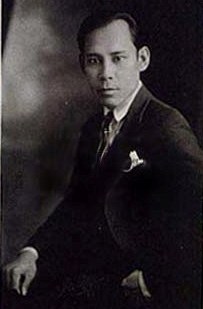
Pedro Flores was born in 1896 in Vintar, a municipality in the Philippines. It’s very likely he did not have the best childhood growing up, as his home country was transitioning through a period of war and turmoil. They had been part of the Spanish–American War, with a naval battle happening in Manila bay, and many Filipinos fighting alongside the Americans.
When they were free from the chains of Spanish rule, the United States annexed them, and they soon found themselves in the Philippines-American War after revolting against their new colonial power, until the Philippines surrendered in 1901.
What he did gain from everything, despite his rough childhood, was the precursor to the modern yo-yo.
In 1915, at around 19 years old, Flores moved from the Philippines to the United States, landing himself in California in order to pursue an education at San Francisco’s High School of Commerce.1 Afterwards, he studied law at the University of California’s law school, but dropped out and moved to Santa Barbra, working odd jobs in order to survive.2
While working as a bellboy, he decided to “[demonstrate] a toy that he had carved out of wood during his lunch break.”3 After reading of a man who made money off of a rubber ball attached to a string, he thought back to the yo-yo and figured it had market potential, stating “I do not expect to make a million dollars, I just want to be working for myself. I have been working for other people for practically all my life and I don’t like it.”4
From there, he set his pursuits on starting up a yo-yo company. He had no luck asking for assistance from wealthy Filipino countrymen, so Flores focused on receiving a certificate to conduct business, which he received on June 9th 1928. From there, he started the Yo-Yo Manufacturing Company in Santa Barbara, California.5
The Production
Although its modern iteration comes from Pedro Flores, the idea of the yo-yo has been around for centuries in Ancient Greece and China, showing up in pots and paintings respectively.6 In the 18th century, it was a popular toy among aristocrats and, in English, was referred to as a “bandalore” or “quiz.”78 A popular theory states the yo-yo was used as a weapon in the Philippines, but there is no evidence to back up this claim.
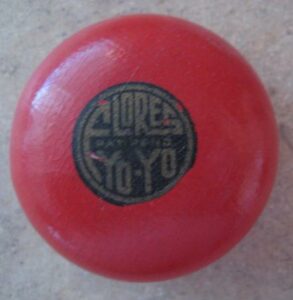
Additionally, many people incorrectly claim that “yo-yo” is a word from Tagalog that translates to “come-come” or “to return” in English. In Tagalog, the word does not exist. “Halika dito” (come here) and “bumalik” (with a person, to return) are actual words in Tagalog, but not “yo-yo.”
Another theory is that the word comes from Ilocano, but I am not familiar enough with the language, nor do I know anyone who can speak it. This makes the question of where the word “yo-yo” comes from unanswered, but the simplest answer could be that Flores came up with something catchy that would help the toy sell. Unfortunately, no one can know for sure.
After the creation of the Yo-Yo Manufacturing Company, Flores created a dozen yo-yos that he sold to the neighboring children on June 23, 1928.9 Some quick math reveals that each yo-yo likely took a day to create. By November of that same year, 2,000 yo-yos were produced. This attracted financiers James Lewis and Daniel Stone, who helped him create a new company in Los Angeles that had machines.[] He finally didn’t have to carve yo-yos by hand. By November 1929, he also had Flores Yo-Yo Corporation in Hollywood, and was producing 300,000 yo-yos daily.
What helped propel the yo-yo’s popularity was the yo-yo contests held. The first contests happened in 1928, and were hosted by Pedro Flores himself in Santa Barbara. These original contests were a test to see “who could make the yo-yo go up and down the most times without stopping.”10
There were also contests to see “who could throw their yo-yo the farthest with a complete return to the hand, and who could perform the most perfect spins in five minutes.”11 These fun tricks one could do with a yo-yo attracted the attention of various people, going as far out as interesting Donald F. Duncan, the man behind Duncan Toys Company.
After the success of the yo-yo, Flores sold the product to Duncan in 1930 for around $25,000 to $250,000—though many agree the price to be on the lower end of the spectrum.12 He is quoted with saying “I am more interested in teaching children to use the yo-yos than I am in manufacturing of yo-yos,” and did promote the toy for Duncan after the fact.13 Flores continued to attach himself to the yo-yo, helping people such as Joe Radovan sell the Chico Yo-yo, and even started Flores Corp. of America in 1954, where he temporarily produced more of the toy.14 Unfortunately, many of these companies are gone, and Flores eventually passed in 1964, but Duncan still sells yo-yos of varying skill levels to this day.
Significance
Immigration and Racism
Pedro Flores was an immigrant from the Philippines. He isn’t unlike other immigrants who came to the United States; he likely traveled across the Pacific Ocean to seek a better life outside the Philippines. However, as a Filipino immigrant, his experience is more unique from other immigrants.
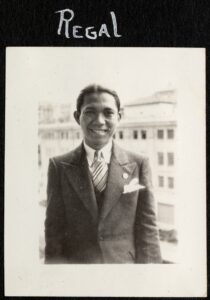
After the Spanish-American War and the Philippine-American War, the United States controlled the Philippines behind the scenes. This included Filipino education, where they taught the new generation English, and that all men are created equal. As a result, Filipinos did not see themselves as aliens when they immigrated to the United States and “existed, rather, in a midway zone between Filipino and American identity.”15
Filipino immigrants were also unaffected by the Immigration Act of 1917, which imposed literacy tests on Asian immigrants. This is likely due to the Philippines being controlled by the United States.
Numbers rose as more Filipinos immigrated to the United States, with a large population of them settling in California—it is the closest state to the Philippines, after all. However, as immigration rose throughout the United States, the Ku Klux Klan rose to fight for nativism. They were one of many groups to lobby for restrictions on immigration.16 Additionally, despite their focus being against black Americans and Catholics, they also targeted immigrants, such as Filipinos. The KKK stirred much anti-Asian sentiment within America, causing anti-Filipino riots to occur in America.
For example, in 1927, one of the biggest anti-Filipino riots happened in Yakima Valley, Washington. A mob of white people was demanding that Filipino farmworkers be driven out from the valley, believing that “since the Filipinos were brown-skinned and Asian, they should not be permitted to approach white women or compete with white men for jobs.”17 This is, obviously, not true and only serves to objectify Filipinos, but people believed it at the time, and these mobs eventually chased them out after threatening their deaths. The perpetrators were arrested, but only received ten days of jail time.
Something similar happened in Wenatchee Valley, Washington in 1928 and 1929, where Filipinos were chased out of the valley.18 What happened at these riots, and many other anti-Filipino riots throughout the decade, is disgusting. This isn’t even the worst of what I found, as more violent acts have been committed in different riots, but the fact that white people were willing to chase these Filipinos down because they looked different is a testament to the hatred of the decade, even with the pluralism of the time.
Despite this anti-Filipino sentiment along the West Coast, Pedro Flores still made a name for himself. This is an amazing accomplishment that should be celebrated alongside other famous figures of the decade. He made a noteworthy contribution to culture then and now, and his name deserves recognition as well.
Reflection of Culture
When reflecting upon consumer culture, the creation of the modern yo-yo for American audiences is an interesting case. Especially when compared to objects like the Form Model T.
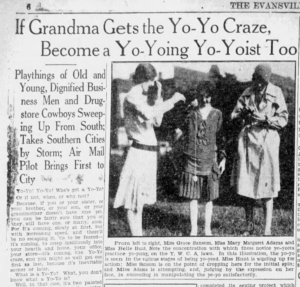
Pedro Flores created a product based on the culture he knew, and managed to sell it through demonstration. According to Lynn Dumenil, blue-collar workers helped shape consumer culture, while white-collar workers were more susceptible to consumer culture through things such as advertising.1920
As stated before with Filipino immigrants being the midway point of their Filipino and American identities, Flores’s yo-yos exist as him contributing his culture, that being a toy from the Philippines, while also successfully advertising it to the public.
The Modern Temper specifically discusses how advertisements in the 1920s utilized “the personal approach, the tendency to include “you” in the text.”21 He managed to encapsulate this perfectly with his yo-yo competitions. If a person wished to participate, they needed a yo-yo, and Flores Yo-yos were the only yo-yos available for a while. These competitions eventually spread outside Santa Barbara and outside California, furthering his product’s reach, and getting more people to buy his yo-yo.
On top of that, yo-yos were relatively cheap to make, meaning they could easily be produced and sold to the public. Even when the Great Depression hit, “[inexpensive] toys with high play value, such as the yo-yo and the Radio Flyer Wagon, were very lucrative investments. Whereas other American entrepreneurs lost fortunes, toy inventors such as Pedro Flores and Antonio Pasin acquired millions.”22 The yo-yo surviving the Great Depression is an incredible feat, but it’s thanks to the fact that it’s simply two wooden disks, a wooden axel, and a piece of string. Anyone could hypothetically create a yo-yo if they had the skill and patience.
What this meant for the 20s (and beyond?)
Ever since, the yo-yo has been a popular toy among children. In the late 90s, Yomega partnered with Bandai, causing a bunch of advertising of the yo-yo to spread like wildfire and reignite the craze for the toy.23
The toy became so popular that National Yo-yo Day is celebrated on June 6th to commemorate Donald F. Duncan. While this is an amazing achievement for a toy to have, what about the man who brought the toy to the United States?
I’m not suggesting we change National Yo-yo Day to be on Pedro Flores’ birthday, but it is a shame that Duncan is celebrated before Flores.
The story behind the modern yo-yo is a story of Filipino success that should be celebrated. Considering the toy’s 100th year anniversary is coming up as of writing this blog post, Duncan Toys Company should commemorate the toy’s origin by retelling Pedro Flores’ story. That way, his name isn’t just a footnote in the toy’s history, as he had a huge role in bringing the toy over from the Philippines.
They also used to have a history page back in the early 2000s that mentioned Pedro Flores, but have since removed it as the years have gone by and website standards change. I personally believe they should bring their history page back, so that people curious about the origin of the yo-yo have a starting point and understand that Duncan shouldn’t be taking all the credit from Flores.
After all, to quote Lucky’s Collectors Guide to 20th Century Yo-yos: History and Values, “Although Duncan is now the name most frequently associated with the popularity of the yo-yo, Pedro Flores fueled the original yo-yo fire.”24
Citations
Footnotes
- Naomi Hirahara, Distinguished Asian American Business Leaders (Bloomsbury Academic, 2003), 57. ↩︎
- Hirahara, 57. ↩︎
- Hirahara, 57. ↩︎
- Lucky J. Meisenheimer, Lucky’s Collectors Guide to 20th Century Yo-Yos (Lucky J’s Swim & Surf, 1998), 99. ↩︎
- Meisenheimer, 99. ↩︎
- Mark Fischetti, “String Theory,” Scientific American 291, no. 3 (2004): 110. http://www.jstor.org/stable/26060692. ↩︎
- Fischetti, 110. ↩︎
- Meisenheimer, 34. ↩︎
- Meisenheimer, 99. ↩︎
- Meisenheimer, 36. ↩︎
- Meisenheimer, 100. ↩︎
- Meisenheimer, 61. ↩︎
- Meisenheimer, 100 ↩︎
- Meisenheimer, 100. ↩︎
- Kevin Starr, Golden Dreams (Oxford University Press, 2011), 450. ↩︎
- Lynn Dumenil, The Modern Temper : American Culture and Society in the 1920s (New York, Ny: Hill and Wang, 2007), 207. ↩︎
- Steve Ross, “Ninety Years Ago in Washington, a Wave of Anti-Immigrant Sentiment Resulted in Horror for Filipinos,” Slate Magazine (Slate, August 4, 2017). https://slate.com/news-and-politics/2017/08/ninety-years-ago-in-washington-a-wave-of-anti-immigrant-sentiment-resulted-in-horror-for-filipinos.html?pay=1778139475174. ↩︎
- Ross. ↩︎
- Dumenil, 82. ↩︎
- Dumenil, 86. ↩︎
- Dumenil, 90. ↩︎
- Sharon M. Scott, Toys and American Culture: An Encyclopedia (ABC-CLIO, 2009), xxiv. ↩︎
- Dr. Yo-Yo’s Emporium of Wonderful Things, “AYYA: 10 Years and Throwing – the Unreleased Documentary,” YouTube, November 4, 2012, 30:36. https://youtu.be/EeYhGP92ESI?si=ufsyMmG1iAuFIyvR. ↩︎
- Meisenheimer, 100. ↩︎
Bibliography
Dr. Yo-Yo’s Emporium of Wonderful Things. “AYYA: 10 Years and Throwing – the Unreleased Documentary.” YouTube, November 4, 2012. https://youtu.be/EeYhGP92ESI?si=ufsyMmG1iAuFIyvR.
Dumenil, Lynn. The Modern Temper : American Culture and Society in the 1920s. New York, Ny: Hill and Wang, 2007.
Fischetti, Mark. “String Theory.” Scientific American 291, no. 3 (2004): 110–11. http://www.jstor.org/stable/26060692.
Hirahara, Naomi. Distinguished Asian American Business Leaders. Bloomsbury Academic, 2003.
Meisenheimer, Lucky J. Lucky’s Collectors Guide to 20th Century Yo-Yos. Lucky J’s Swim & Surf, 1998.
Ross, Steve. “Ninety Years Ago in Washington, a Wave of Anti-Immigrant Sentiment Resulted in Horror for Filipinos.” Slate Magazine. Slate, August 4, 2017. https://slate.com/news-and-politics/2017/08/ninety-years-ago-in-washington-a-wave-of-anti-immigrant-sentiment-resulted-in-horror-for-filipinos.html?pay=1778139475174.
Scott, Sharon M. Toys and American Culture: An Encyclopedia. ABC-CLIO, 2009.
Starr, Kevin. Golden Dreams. Oxford University Press, 2011.

Eryn is a Ramapo College sophomore majoring in History and minoring in Museum Studies.
