
Overview
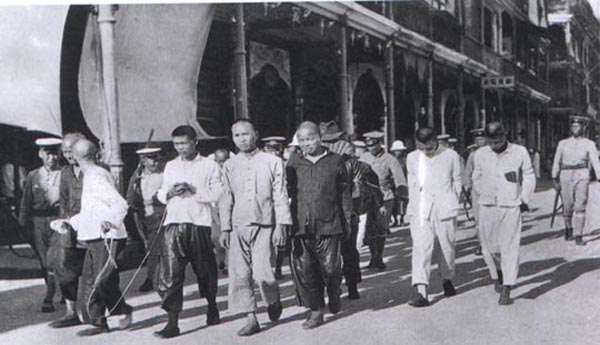
The Shanghai Massacre of April 12, 1927, is an event that embodies the sheer chaos of political party rivalries in China during the 1920s and the potency of anti-communist ideologies around the globe. On this day, right-wing forces within the Chinese Nationalist Party gathered up and executed any known members of the Chinese Communist Party and anyone associated with the left-wing faction of the nationalists who supported an alliance with the Communist Party. As part of the much larger conflict between nationalist reformers and radical revolutionaries that consumed China for nearly the entire first half of the 20th century, the massacre marks a crucial turning point. After this violent suppression of Communist leaders and other political dissenters in major cities such as Shanghai, the Chinese Communist Party was fundamentally weakened, and the Chinese Nationalist Party was divided into those who condoned the violence and those who still favored diplomacy.
In a global context, depictions of the Shanghai Massacre in newspapers throughout Europe and the United States (or the mere lack of depictions) reflect how communism as a political concept conjured vastly different fears and anxieties depending on the preexisting cultural climate of a region. Both geographical proximity to the newly formed Soviet Union and an underlying social turmoil in regard to the government’s role in public life shaped the clash between Communists and non-Communists in China into a bloody struggle for political control. Although Western media during the 1920s was in a frenzy about the existential threat posed by the spread of communism, these fears did not take into account the violent oppression that encouraged even the average Chinese citizen to embrace revolution of any kind.
The story of how an internal divide began brewing amongst Chinese nationalists, and how the Chinese Communist Party was initially formed, comprises countless political decisions in both China and the Soviet Union throughout the early 1920s. The first such event that specifically set the stage for the violent spring of 1927 was the contact between Russian Comintern agent Hendrik Sneevliet and Republic of China founder Sun Yat-sen in December of 1921.1 Yat-sen had been instrumental in overthrowing the Qing dynasty a decade earlier, and Sneevliet viewed him as the perfect candidate for helping communism catch on in China. As the leader of the Chinese Nationalist Party, Yat-sen recognized the newly formed Chinese Communist Party as a legitimate political party and pursued a diplomatic alliance. This combination of Communists and those in the nationalist party who supported their political existence became known as the “First United Front.”2
While Sneevliet’s influence upon the formation of the First United Front is obviously impossible to quantify, the Soviet Union’s geopolitical game plan was soon impacted by preexisting rivalries between Chinese nationalist leaders. In June of 1922, one of the most influential military leaders within the Nationalist Party, Chen Jiongming, renounced Yat-sen’s authority and forced him to withdraw from Guangzhou and flee to Shanghai.3 Although Sun Yat-sen ultimately returned to Guangzhou with support from the Communist Party, it had become clear that not everyone shared his willingness to include Communists in contemporary Chinese society. As Yat-sen continued his push towards unifying China under one nationalist government, he faced heavy resistance not just from local warlords but from dissenting officials within his own party. After his death from cancer in 1925 left an empty place at the top of the Nationalist Party, this power struggle intensified dramatically.
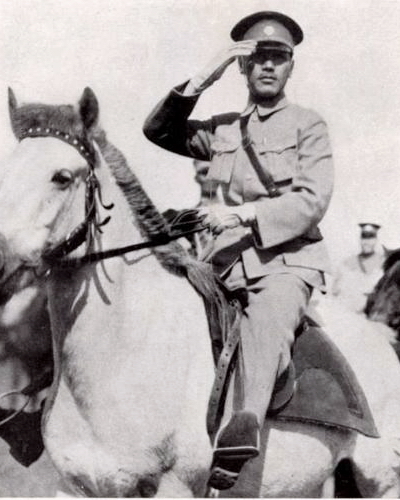
On the right-wing side of the Nationalist Party and in command of the National Revolutionary Army was Chiang Kai-shek: a hardened military commander with his sights set on political and ideological domination. On the left-wing side of the party was a prominent politician and poet, Wang Jingwei, who embraced collaboration with the Chinese Communist Party and the Soviets. As these two factions battled for control of their party, Kai-shek was continuing Yat-sen’s military campaign to conquer Northern China. Unable to counter his use of the military, Communist-supported leaders asserted that the Central Executive Committee held ultimate power over the nationalist government. On March 10, 1927, the Committee met without Kai-shek and resolved to strip him of his power, citing his dismissal of their authority and anti-Communist sentiments.4
Infuriated by this move to curtail his power, Chiang Kai-shek redirected his military campaign through Northern China towards Shanghai and planned to take the city as a display of his personal authority. However, in late March Communist-led workers assumed control of Shanghai, and other Nationalist generals were withholding their attacks out of fear of foreign intervention from the Soviet Union. Upon first arriving at the city and observing the strength of assembled Communist forces, Kai-shek did not pursue immediate military action but rather began forging secret alliances with anti-Communist warlords and other Nationalist leaders who favored the right-wing faction.5
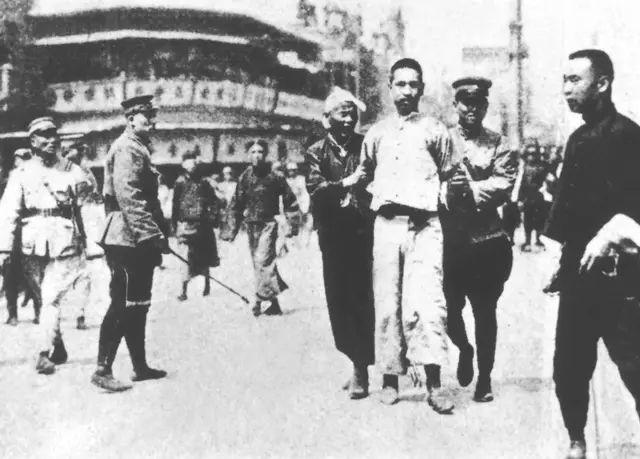
Meanwhile, Wang Jingwei of the leftist faction had been reassured by both local Nationalist leaders in Shanghai and Soviet officials that with their support, Kai-shek would be unable to take the city.6 Unaware of the pending threat of Chiang Kai-shek’s secret network of supporters, pro-Communist organizations proceeded with multiple public strikes and demonstrations on April 12. Nationalist forces seized this moment and engaged in a widespread purge of anyone who was visibly associated with leftist ideology. Even unarmed people who were merely seen demonstrating in the streets were arrested, if not killed for suspected Communist ties. Over the next two months, all Communist cells operating within Shanghai and in other cities where Kai-shek was able to encourage allies to assist with the purge were exposed and crushed. Striking workers, many of whom only opposed the practices of singular companies, were either executed or imprisoned for their associations with the Chinese Communist Party.
Political leaders from both the Communist Party and the leftist faction of the Nationalist Party were hunted down and brought to the same fate. This forced politicians who had been actively engaged in diplomatic negotiations with other leaders of the Nationalist government to flee for friendly provinces in the South, where Kai-shek’s Northern Campaign had no local implications. Some of the local warlords who supported the purge were even more violent and aggressive with the individuals they rounded up. In Kwangtung, Governor Li Chi-shen’s forces gathered approximately 2,000 suspected opponents of right-wing nationalism and had many of them shot publicly.7
This violent suppression of Communists across various major cities in China cemented a political divide within the country’s population and leaders. Left-leaning individuals who may have supported some type of alliance between the Communist Party and the Nationalist Party were now painfully aware that such collaboration would never be possible, given the standard of confrontation Chiang Kai-shek set in April of 1927. If they chose to relinquish all ties to Chinese nationalism, they would be seen as traitors by the country’s largest military force and would have few other options besides joining the unprepared and under-funded Communist Party. If they chose to ally with the right-wing branch of the Nationalist Party, they would essentially be at the whim of constant scrutiny and suspicion. From within the party, there was no longer any hope of reaching agreements with political minorities, even those that could facilitate an alliance with the Soviet Union.

Chiang Kai-shek’s drastic and destructive action against Communist groups and their allies essentially ensured the length and scope of the subsequent Chinese Civil War. Nationalists were internally divided by the sheer intensity of the anti-Communist violence, and the Communist Party itself now carried with it a story that elicited sympathy from all other political factions. Between the polarization of the Chinese public and the Soviet Union’s obvious support for the Communist Party, the imminent civil war would not be another simple crushing of dissenters. It would be an extenuating violent conflict, lasting from 1927, in the aftermath of the Shanghai Massacre, until the Communist Party’s eventual conquering of nearly the entire country in 1949. Although a 21st-century perspective on history seems to paint the Chinese Communist Party as a massive political and military force with a very blatant agenda, the bloodshed of the April 12th massacre was part of a much larger sequence of events that brought Communists the internal cohesion and popular support needed to amass more power. Perhaps presciently, Kalfred Dip Lum wrote in 1927 that Chinese Nationalist leaders “have started something which they cannot control.”8
Significance
The purging of Communist leaders and supporters by the Chinese Nationalist Party in 1927 serves as a grim reminder of the intensity of anti-communist ideology during the 1920s and the stark discrepancies in how this sentiment impacted different regions of the world. Compared to the execution of Sacco and Vanzetti, which occurred the same year, the Shanghai Massacre represents an entirely different tier of chaos and destruction. Yet due to isolationist attitudes, the violent clash between Communists and Nationalists in China was treated as generally irrelevant throughout the Western world.
In many cases, newspapers in the United States did not even mention that the political factions being suppressed were in fact communist. One Illinois paper referred to the events of April 12th as nationalist troops fighting to disarm “Guerilla gunmen.”9 With most American readers struggling to picture what Shanghai even looked like, media outlets had completely free reign over the context in which they placed the violence of the Shanghai Massacre. During a decade when major business interests in the United States would do anything to bar communist ideology from catching any foothold in the public consciousness, the press naturally hesitated from expressing sympathy for communist communities. Publishing more accurate accounts of the Shanghai Massacre would expose American audiences to a situation in which nationalists were violently attempting to crush all forms of political dissent, with no consideration of the Chinese public’s best interests.
The massacre marked the beginning of a ferocious push by Chinese nationalists to eliminate dissent of any kind and highlighted the dangers of organizing widespread initiatives for governmental reform. In the context of Chinese history, it set the stage for a bloody conflict between the Communist and Nationalist parties, which would last for many decades. Placed in a global context, the violence in China serves as a reminder that Europe was not the only setting of destructive ideological conflict during the early 20th century.
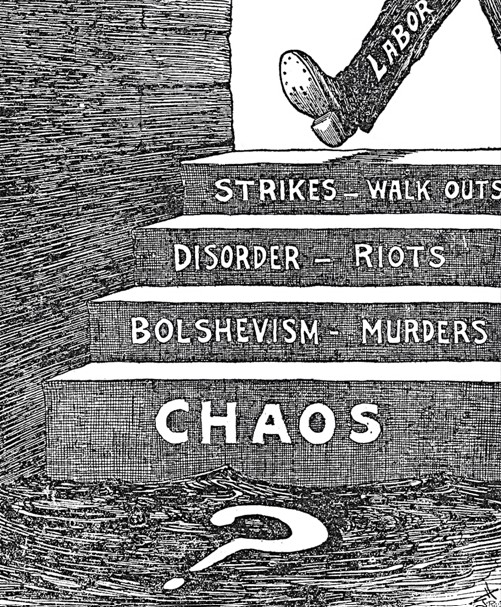
Particularly in the United States, changing patterns of immigration and the formation of the Soviet Union sparked a Red Scare during the 1920s. This was largely sustained by wealthy, white Protestants, who were desperate to maintain their political and social authority at a time when American isolationism and the internal culture of the country itself were undergoing fundamental evolutions. While this manifested as an “overwhelming insistence upon conformity,”10 in the United States, there is no comparison to the violent suppression of Communists in China. Therefore, events such as the Shanghai Massacre paint a very different picture of global anti-communist attitudes during the 1920s than the stories constructed by American businessmen who merely feared losing their fortunes to public ownership.
While historian Lynn Dumenil explains that in the U.S., “The agendas of the business community, voluntary associations, politicians, and the press helped persuade a susceptible public that the Bolshevik menace was a serious one,”11 the Communist Party was by no means a media phantom in China. Influenced by the geographical proximity of the Soviet Union combined with countless cultural factors, communism was able to gain traction in China that was simply not achievable in the United States. Therefore, conservatives within the Nationalist Party, such as Chiang Kai-shek, plunged the country into war in an effort to resist the same revolutionary change that Americans feared.
Although the conflict between new ideologies and strict nationalism embodied the decade of the 1920s in both countries, the sheer differences in scope of that conflict created drastically different legacies of anti-communist sentiment. As Dumenil notes, the Red Scare in the United States was fueled by a broader resistance to social change, which ultimately ebbed and flowed in relevance depending on contemporary economic conditions.12 However, for interwar China, the clash between Nationalists and Communists set the stage for an extenuating military conflict that would last until 1949 and shape the course of Asian history throughout the entire century. Ultimately, the Red Scare of the 1920s in the United States was largely minimized in history by later clashes with communism, which developed from the aftermath of events like the Shanghai Massacre in China.
Citations
Footnotes
- David P. Barrett, “The Role of Hu Hanmin in the ‘First United Front’: 1922-27,” The China Quarterly, no. 89 (March 1982): 35. ↩︎
- Ibid., 34. ↩︎
- Ibid., 36. ↩︎
- F. Gilbert Chan and Thomas H. Etzold, China in the 1920s: Nationalism and Revolution (New York: New Viewpoints, 1976), 147-149. ↩︎
- Ibid., 150-151. ↩︎
- Ibid., 153. ↩︎
- Ibid., 157. ↩︎
- Kalfred Dip Lum, “Chinese Civil War and Foreign Relations,” News Bulletin (Institute of Pacific Relations) (February 1927): 20. ↩︎
- International News Service, “Chinese Nationalists in Frantic Efforts to Strengthen Position; China in a Ferment,” Waukegan News-Sun, April 12, 1927, p. 16. ↩︎
- Lynn Dumenil, The Modern Temper: American Culture and Society in the 1920s (New York: Hill and Wang, 1995), 218. ↩︎
- Ibid., 221. ↩︎
- Ibid., 225. ↩︎
Bibliography
- Featured image: “Communists being rounded up in one of the purges.” April 1927. Accessed May 6, 2026. https://commons.wikimedia.org/wiki/File:Communist_purge.jpg.
- Barrett, David P. “The Role of Hu Hanmin in the ‘First United Front’: 1922-27.” The China Quarterly, no. 89 (1982): 34-64. https://www.jstor.org/stable/653620.
- Chan, F. Gilbert, and Etzold, Thomas H., eds. China in the 1920s: Nationalism and Revolution. New Viewpoints, 1976.
- Chang, Kuo-t’ao. The Rise of the Chinese Communist Party. University Press of Kansas, 1971.
- Dumenil, Lynn. The Modern Temper: American Culture and Society in the 1920s. Hill and Wang, 1995.
- International News Service. “Chinese Nationalists in Frantic Efforts to Strengthen Position: China in a Ferment.” Waukegan News-Sun, April 12, 1927, p. 16.
- Lum, Kalfred Dip. “Chinese Civil War and Foreign Relations.” News Bulletin (Institute of Pacific Relations), (1927): 19-22. https://doi.org/10.2307/2485490.
- Wilbur, C. Martin. The Nationalist Revolution in China: 1923–1928. Cambridge University Press, 2009.
More Resources
- Coble, Parks M. The Shanghai Capitalists and the Nationalist Government, 1927-1937. Harvard University Press, 1986.
- Isaacs, Harold R. The Tragedy of the Chinese Revolution. Stanford University Press, 1938.
- Thornton, Richard C. China, the Struggle for Power, 1917-1972. Indiana University Press, 1973.

A senior at Ramapo College, majoring in American Studies and minoring in Anthropology.

