
In November 1920, one of the most horrifying and frequently disregarded incidents of violence against races in early 20th-century American history took place in Ocoee, Florida1. Black Ocoee citizens made an effort to fulfill one of the most important basic rights in a modern society: the ability to vote on election day. They encountered coordinated and intensifying white violence rather than being let to take part in the political process. Black residents were attacked by a white mob who set fire to homes, damaged property, and eventually drove the entire Black community out of the town.Due to the lack of formal inquiries and the hiding of data, the precise number of African Americans slain is still unknown. Following the incident, Ocoee was essentially turned into a “sundown town” where Black people were forbidden from residing, turning a historically diverse countryside into an ethnically exclusive area through displacement and intimidation.
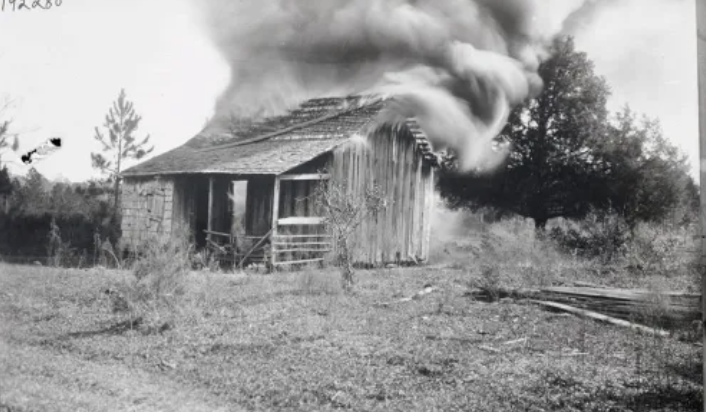
It is evident that the Ocoee Massacre is primarily a local tragedy but also a potent symbol of the greater conflicts influencing the United States in the 1920s when viewed within the larger social and academic framework of Lynn Dumenil’s The Modern Temper, especially Chapters 4-6. According to Dumenil’s research, the decade was characterized by significant cultural conflicts incorporating pluralism, conformity, and conflicting ideologies regarding morality, society, and authority in addition to modernity and consumer culture. These conflicts are strikingly reflected in the bloodshed in Ocoee.
The struggle between old religious worldviews and secular modernity is one of The Modern Temper’s main topics. Chapter 4 describes how ancient spiritual frameworks that established long defined ethical standards in American society started to be challenged by new, secular modes of thought that were based in science, modernity, and shifting social norms. But despite this, religion did not vanish; rather, it continued to be closely associated with social identity and frequently served as a justification for established inequalities. The ideological context in which the violence at Ocoee took place is explained by this conflict.Racial segregation was seen by many white Protestant households in the Jim Crow South as a component of a divinely approved social order rather than just a legal or system of politics. Black political engagement may be viewed in this perspective as a challenge to “natural” or “God-ordained” hierarchy. Thus, the massacre might be seen as both a forceful defense of a cherished social system that refused the constitutional consequences associated with Black suffrage and an act of racial terror. In this way, earlier, religiously sanctioned systems of racial dominance directly clashed with contemporary democratic ideals of equality.
Dumenil’s explanation of conformity clarifies why, in some groups, such extreme behavior may be socially accepted rather than denounced. Community identification in severely segregated settings was frequently based on common racial presumptions. People who questioned these presumptions were seen as dangers to societal stability, especially Black individuals who asserted their civic rights. As a result, the violent reaction in Ocoee served as a kind of social enforcement,2 guaranteeing that racial norm violations would not be accepted. Black political engagement was portrayed as an unnatural as well as hazardous disruption of communal order rather than as a fundamental right.
As part of a larger national sequence of racial violence, intimidation, and resistance that shaped the United States in the late 19th and early 20th centuries, particularly during and after the “Red Summer” of 1919, every one of these events Ocoee, Orlando, Tulsa, the Greenwood District, Elaine, Chicago, Washington, Knoxville, Omaha, and Springfield are closely related. Black Americans were witnessing increasing political consciousness, economic advancement, and community organizing in various states and areas, whether it was by means of prosperous communities like Greenwood in Tulsa, labor organizing among sharecroppers in Elaine, or rising civic engagement and voting rates in places like Ocoee.White mobs, who feared losing their economic, political, and social power, frequently responded violently to this advancement. A Black person trying to cast their votes in Ocoee, a labor dispute in Elaine, a false claim in Tulsa, or racial tensions sparked by routine interactions in cities like Chicago and Washington, D.C. were some of the specific triggers that led to violence in many of these cases, but the underlying causes seemed much greater and more deeply caused by systemic racism, segregation, and white supremacy. In addition to carrying out lynchings and mass murders with little to no legal repercussion, these mobs frequently destroyed entire Black neighborhoods, as demonstrated by the burning of Tulsa’s Greenwood District, the destruction of Black homes in Springfield, and the extensive devastation in Chicago and Omaha
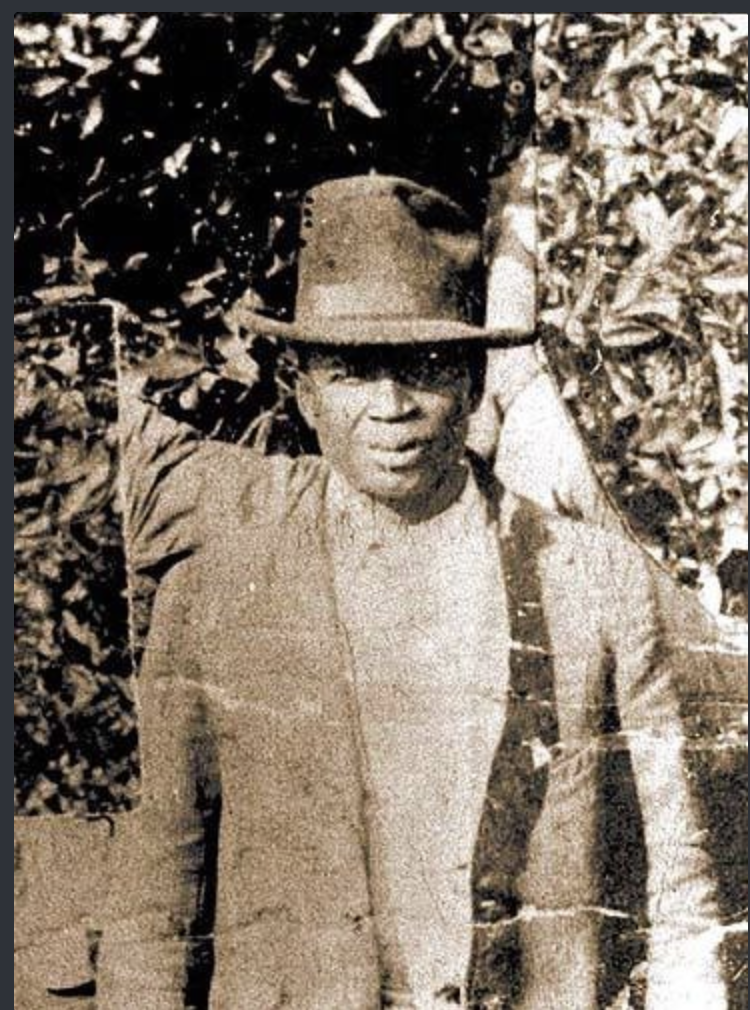
For instance, when Black inhabitants of Ocoee, Florida, tried to take advantage of their right under the constitution to vote in 1920, a brutal white response resulted in the killing of Black residents and the total devastation of their city. The most well known victim was Julius “July” Perry.3One of the main racial concerns of the 1920s is highlighted by this incident: the organized rejection of Black suffrage in the South by violence, intimidation, and disenfranchisement. This incident is connected to nearby Orlando because it illustrates the wider regional repercussions of the Ocoee Massacre, including the displacement of survivors, the destabilization of Black neighborhoods, and the development of dread of political engagement throughout central Florida.In a similar vein, one of the most horrific instances of racial violence in American history is the Tulsa Race Massacre of 1921, in which a rich Black neighborhood was demolished following a false charge against a Black adolescent. Hundreds of Black people were killed and decades of Black economic advancement was erased when white mobs, encouraged by local officials and enabled by a shortage of constitutional protection for Black citizens, set fire to houses, churches, and businesses. The devastation of the Greenwood District reflected the larger racial anxiety that characterized the 1920s and was an attack on Black prosperity in general as well as on specific people.
These similar conflicts4 may also be seen in the 1919 Elaine Massacre in Arkansas, where Black sharecroppers tried to band together for better pay and working conditions. Black labor movement was frequently criminalized and ruthlessly crushed, as seen by the extraordinary violence they faced from white mobs along with federal troops in place of dialogue. Racial violence broke out during the Red Summer of 1919 in northern places like Chicago and Washington, D.C., demonstrating that these problems were not exclusive to the South.After a Black adolescent drowned and white beachgoers refused to assist him, Chicago’s housing and employment competitiveness, segregation, and racial prejudice resulted in days of rioting. Returning white World War I soldiers and civilians attacked Black citizens in Washington, D.C., demonstrating how racial aggressiveness was encouraged even in the nation’s capital by postwar economic insecurity and hatred.
Other incidents5 like Knoxville and Omaha show how rapidly racial tensions might turn into mob violence whenever white mobs sought vigilante punishment or Black residents were wrongly convicted of crimes. Black citizens of Knoxville defended a jail after a lynching attempt became violent, demonstrating both the ongoing danger of extrajudicial murder and the determination of Black communities that refused to be helpless victims.A white mob in Omaha torched the courthouse and lynched a Black man, demonstrating how even the legal system was either complicit or helpless in a display of racial hate. Though it occurred a little earlier, the Springfield Race Rebellion of 1908 fits into this similar historical tendency and is particularly noteworthy since it served as inspiration for the founding of the NAACP, a key civil rights organization that was established to combat racial injustice via political and legal methods.
When combined, these incidents show a recurring national pattern6: during a time of swift social and economic transformation, racial violence was employed as a means of upholding white dominance and stifling Black growth. Racial anxiety was particularly high during the 1920s7 as Black Americans fought against long-standing obstacles to housing, work, education, and voting. During this decade, white supremacist organizations like the Ku Klux Klan also had a significant comeback, dramatically establishing racial violence and harassment in many American communities.Additionally, police enforcement and municipal governments either neglected to protect Black residents or actively took part in the violence, perpetuating a system where justice was not administered evenly. Racial concerns in the 1920s were not isolated confrontations but rather a deeply ingrained national dilemma8, as seen by the incidents in Ocoee, Tulsa, Chicago, Washington, Knoxville, Omaha, Springfield, Elaine, and neighboring places like Orlando. In the end, these tragedies demonstrate the extreme violence employed to uphold racial inequality as well as the tenacity of Black communities, which persisted in rebuilding, resisting oppression, and laying the groundwork to feed the later campaign for civil rights that would confront and ultimately change these unfair systems.
The slaughter9 also demonstrates the boundaries of 1920s pluralism. Even while the decade is frequently linked to growing urbanization, creative innovation, and cultural variety, these changes were not uniformly spread across American society. As Dumenil10 points out, strong reaction movements like negativity, racial prejudice, and the revival of the Ku Klux Klan coexisted with pluralism. Ocoee demonstrates how variety was brutally rejected rather than welcomed in many regions of the nation, particularly the rural South. Many white groups attempted to maintain strict racial borders rather than adjust to a more diverse society, sometimes by using violence and intimidation. The promise of plurality in the 1920s was therefore severely constrained and disputed.
The Ocoee Massacre’s significance11 stems from its capacity to symbolize continuity as well as transformation in the history of America. Black people’ attempt to vote, on the one hand, is a reflection of contemporary principles of democracy and the protracted fight for political inclusion and civil rights after Reconstruction. However, the violent retaliation is a continuation of earlier racial control systems that had been firmly established in Southern states since the abolition of slavery. This duality bolsters Dumenil’s claim that the 1920s were a time of intense conflict between divergent conceptions of American society rather than just a tale of advancement and modernity. Tradition and modernity did not coexist peacefully; rather, they were always at odds with one another.
Setting12 the Ocoee Massacre in its larger historical perspective is crucial to comprehending its significance. Fears of social upheaval, immigration, and political instability were common throughout the post-World War I period of national development. In reaction to perceived cultural concerns, groups like the Ku Klux Klan were seeing a remarkable comeback, espousing white supremacy and “Americanism.” Local disputes over racial equality and voting rights might quickly turn into widespread violence in this atmosphere of fear and retaliation. Ocoee was a local manifestation of racial, democratic, and identity-related national conflicts in the United States in the early 20th century rather than a singular act of violence.
In the end, the Ocoee Massacre highlights13 an important fact about the 1920s: pictures of wealth, jazz, and contemporary consumer culture are insufficient to fully comprehend the decade. These factors coexisted with institutional racial violence and the brutal enforcement of inequality, despite the fact that they were genuine and important. Not everyone had the same “Roaring Twenties” experience. Among many African Americans, especially in the southern region, the decade was characterized by exclusion, fear, and displacement rather than freedom and joy. Ocoee serves as a potent reminder that the history of contemporary America cannot be fully told without taking into account the violence that shaped it
“Emancipation Betrayed: The Hidden History of Black Organizing and White Violence in Florida from Reconstruction to the Bloody Election of 1920” by Paul Ortiz (2005):
“A History of Ocoee and Its Pioneers” by Nancy Lillian Maguire: A local history produced by the Ocoee Historical Commission.
- Ocoee Massacre ↩︎
- Ocoee Representation ↩︎
- Julius “July” Perry ↩︎
- Similar Conflicts ↩︎
- Other incidents ↩︎
- National Pattern ↩︎
- During the 1920’s ↩︎
- National dilema ↩︎
- The slaughter ↩︎
- Dumenil points ↩︎
- Ocoee Massacre’s significance ↩︎
- Setting ↩︎
- Highlights ↩︎

Ramapo junior majoring in history with hopes of becoming a lawyer
