
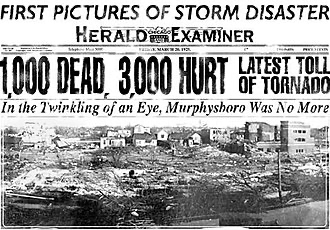
The Tri-State Tornado Outbreak took place from March 17th-18th and it’s known as one of the deadliest tornadoes ever. The tornado moved through Eastern Missouri, Southern Illinois, and Southern Indiana, 695 people were killed and 2,027 were injured. Thinking about this tragic event as not just as natural disaster, but an event that showcases the more vulnerable and the instability of the 1920s.
The 1920s was pivotal for its culture, introducing things like the jazz era and flappers. However, the 1920s was also filled with cultural conflict between urban values and traditional values. In the book The Modern Temper by Lynn Dumenil, she highlights the divide through significant events throughout the twenties such as the Scopes Trial, “The trial is also important for the way in which it highlighted a polarization-not just in religion but in American culture itself” (Dumenil 190). The areas of the U.S. that were greatly affected by the Tri-State Tornado were areas that leaned towards traditional values and had an anti-evolution sentiment. Given the context, the tornado can be seen as something that emphasized religion and community rather than science and institutional authority. This goes back to Dumenil’s point on how despite the spread of modern ideas, traditional beliefs remained dominant in many part of the country during the twenties.
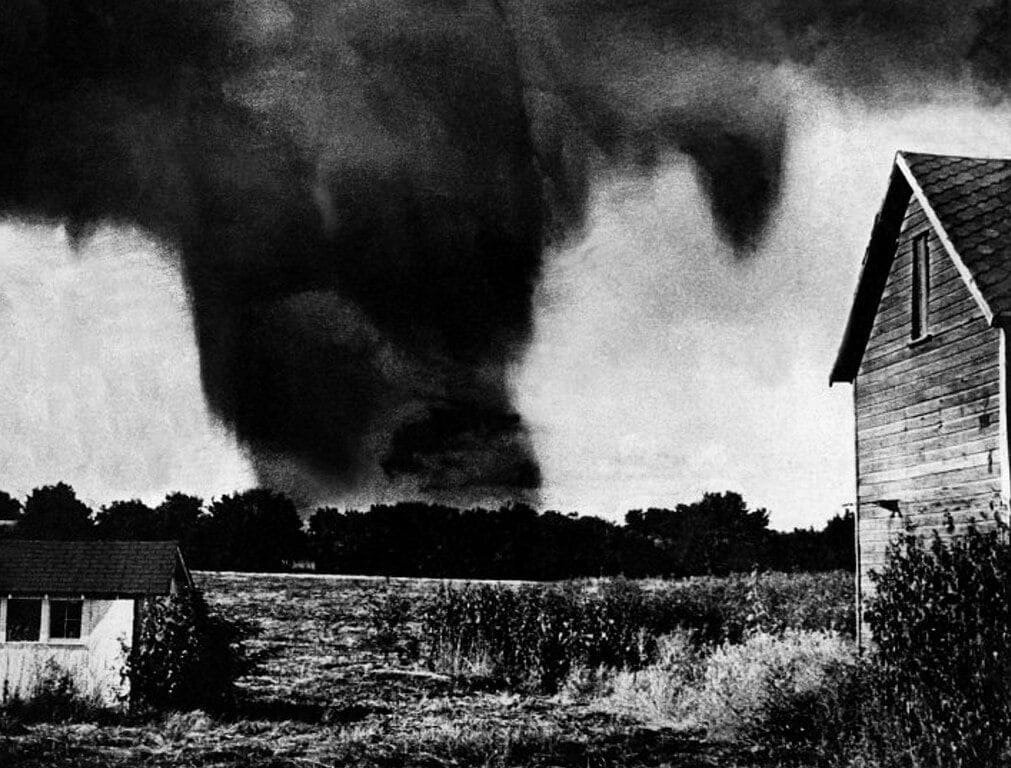
The 1920s was also a time for rapid expansion and huge cultural shifts. It completely transformed how Americans understood and prepared for severe weather conditions. The disater struck during a time with no modern forecasting, radar, or any warnings. This highlights a time period where there was a lack of preparation for these types of events that forced a reevaluation for public safety and emergency responses. Another important theme in The Modern Temper is how anxiety and optimism can in fact, coexist. Dumenli states that many Americans embraced modern and progressive lifestyles during this era, but also felt uneasy with all the rapid change and social instability (Dumenli 267). The Tri-State Tornado can perfectly relate to this. On a surface level, the 1920s were a time of economic growth and technological advancement, but a disaster as big and deadly as the Tri-State tornado can really expose just how vulnerable many communities in the twenties still were. The destruction, as well as the casualties caused by the tornado undermined the idea that progress makes your life feel much more secure, especially in rural areas that lacked infrastructure and resources. Because of this, we can clearly see how the tornado reflects the anxieties that were always hidden beneath the decade’s optimism.
By giving the Tri-State Tornado historical context through chapters 4-6 of The Modern Temper by Lynn Dumenil, we begin to gain a deeper understanding of its significance and how it greatly impacted the 1920s. We can clearly see this was a time where citizens were unable to get warnings ahead of time about this disaster resulting in many being unprepared. The vent also highlights the persistence of rural traditionalism and the underlying anxieties the decade faced. To this day, it still remains as the deadliest tornado in U.S. history.
