
Harry Houdini’s death most directly relates to the major chapter ideas of chapter 2 of Lynn Demenil’s book The Modern Temper, “Work and Consumption”. Dumenil describes the consumption patterns of the 1920s as something that “embraces leisure, consumption, and self expression”, and “Americans had more money and leisure”, leading to the rise of entertainment as a leading form of consumption. 1
Consumption in this case refers to the act of purchasing items, engaging in recreational activities, or any type of leisure activity. One of the types of consumption in the 1920s was various kinds of entertainment now available to the working class.
One of the most popular forms of entertainment that emerged was theater. Houdini performed the majority of his shows in theaters, which was one of the most popular locations and forms of entertainment at the time. Televisions were not yet a household item around the time of Houdini’s death, so thousands of people would go to theaters to see him perform his death defying stunts.
When Houdini was examined by a doctor in Detroit, he was told he would need emergency surgery to remove his ruptured appendix, which would mean cancelling his show the evening of October 24. He decided to have the operation done the next day, but this delay caused the toxins from his appendix to enter his bloodstream, ultimately leading to his untimely death. One could say Houdini died for the sake of entertainment. He had the choice between a performance and a life saving procedure, and he chose to delay the surgery in order to perform.2
Fitting Houdini’s death into the historical context makes it clear just how demanding the entertainment industry was if he was willing to risk his life to perform a 2.5 hour long show. Entertainment was all the rage and Houdini was one of the greatest performers, so viewing his death from this perspective makes it clear that it would have been devastating to the industry.
The 1920s was a decade of progress and change, which included cultural representation within entertainment. “Jewish performers were heavily represented in various forms of entertainment”, Harry Houdini being one of them.3 Not only was Houdini Jewish, he was also an immigrant from Hungary, which touches upon the themes of immigration discussed in chapter 1, “Public and Private Power”.
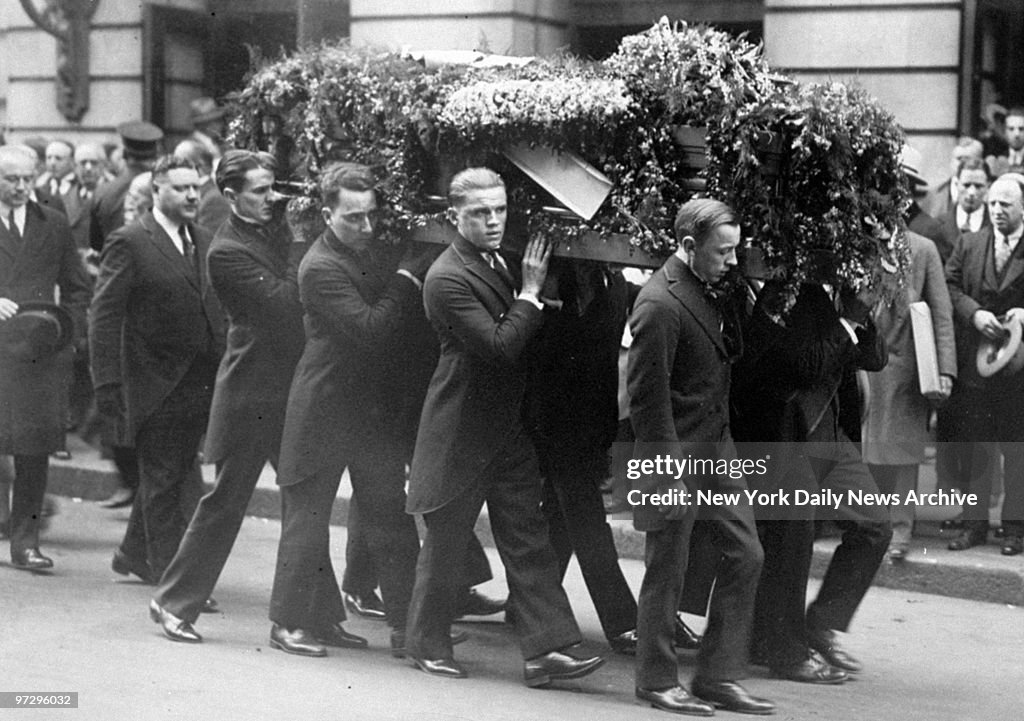
More directly related to Houdini’s death is the amount of newspaper coverage it received. National news coverage was starting to overshadow local news among major newspapers, which can be applied to the coverage of Houdini’s death.5 From October 22 to November 5, 1926, 5,009 different newspapers mentioned his name, with the highest coverage state being California with 385.6
Overall I feel that this chapter highlighted the importance of entertainment within consumer culture during the 1920s and heightened my understanding of my topic in context. These points made throughout the chapter make it easier to realize just how important Harry Houdini really was and how much of an impact his death would have made across the world.
“Casket of Harry Houdini Being Carried to Hearse.” Getty Images. Accessed February 18, 2026. https://www.gettyimages.com/detail/news-photo/casket-of-harry-houdini-being-carried-to-hearse-news-photo/97296032.
- Lynn Dumenil. The modern temper: American culture and society in the 1920s. United States: Hill and Wang, 1995. (57)
↩︎ - Arnold Van de Laar . “The Death of an Escape Artist: Harry Houdini – the History Reader.” The History Reader, May 29, 2025. https://www.thehistoryreader.com/historical-figures/death-escape-artist-harry-houdini-appendicitis-surgery/
↩︎ - Lynn Dumenil. The modern temper: American culture and society in the 1920s. United States: Hill and Wang, 1995. (81)
↩︎ - “Casket of Harry Houdini Being Carried to Hearse.” Getty Images. Accessed February 18, 2026. https://www.gettyimages.com/detail/news-photo/casket-of-harry-houdini-being-carried-to-hearse-news-photo/97296032.
↩︎ - Lynn Dumenil. The modern temper: American culture and society in the 1920s. United States: Hill and Wang, 1995. (73)
↩︎ - “Historical Newspapers from 1700s-2000s – Newspapers.ComTM.” Newspapers.com. Accessed February 18, 2026. https://www.newspapers.com/search/results/?date-end=1926-11-05&date-start=1926-10-22&keyword=harry%2Bhoudini.
↩︎

Ramapo College sophomore majoring in History and minoring in Museum Studies + Music Industry
