
The Woman’s World’s Fair was specifically designed, published, managed and organized by women, for women during the early 1900s. The fair, which was held in the American Exposition Palace in Chicago, Il (now the Museum of Science and Industry),was intended to demonstrate the achievements of women within different fields, including in the sciences, literature and even within the domestic sphere. The fair also acted as a type of career fair, demonstrating different opportunities now available to women within the new and modern world, and networking them with people who would be able to help them.
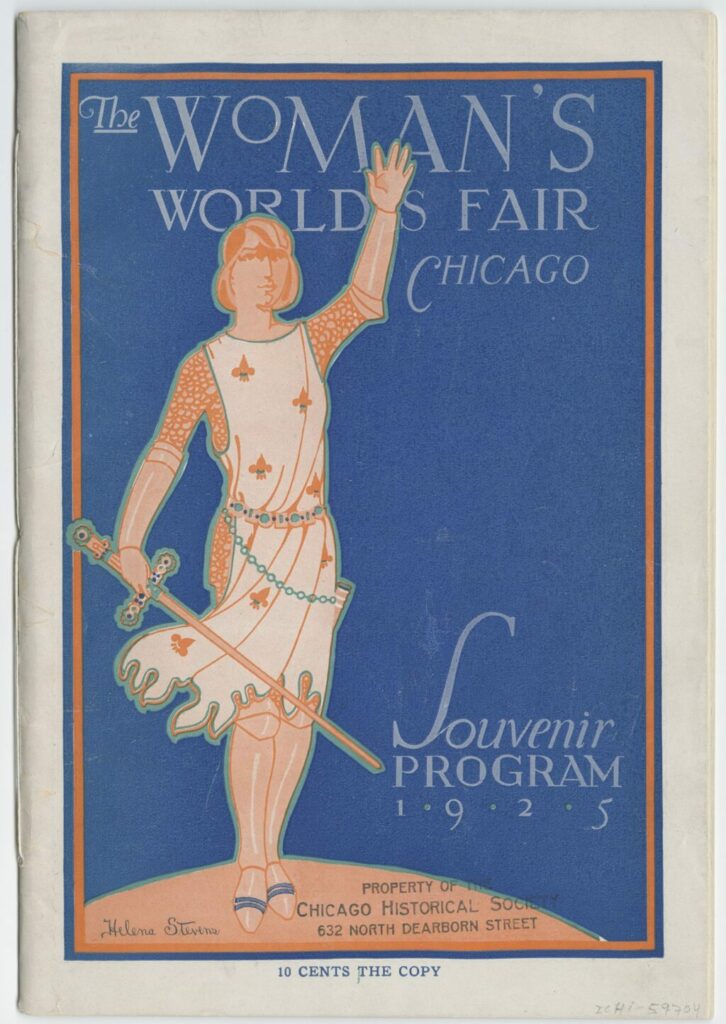
Some of these occupations included opportunities within botany, mathematics, architecture, blacksmithing, cinema operators, miners, artists and so on. With about 280 booths in attendance, over 100 occupations, career paths and opportunities were displayed. These events also intended to raise money for the Women’s Republican Party, several members of the organizing committee were a part of this organization.
The first fair was held from April 18th to the 25th, 1925, however there were years of preparation needed in order to organize such an event, and there are even newspaper clippings from as early as 1923 publishing the fair. Initially the fair was only intended to run for one year however, within the first years’ operation there were close to 160,000-200,000 visitors. The overwhelming number of visitors even caused the fair to expand into surrounding buildings just to adhere to the population. Due to the popularity, the fair then began to run annually until 1928 (see timeline for more specific dates), and by that time several other foreign countries had joined in the fair’s events. Some of which included Greece, Great Britain and Germany.

As a whole the fair intended to help women transition from their traditional positions in society, into their new ones. Within previous decades the ‘traditional’ role of women was held within the domestic, they were intended to keep the home clean, cook, tend to children, and any other responsibilities needed. If they were able to work it’s likely that their occupation still fell within the domestic sphere with jobs such as housekeeping often being readily available. However, as the years progressed women began to establish their place within the public sphere and therefore within the rest of typical society. Their jobs began to hold more public positions, which included jobs such as secretaries and salesclerks. However many women were limited in their knowledge of what was available to them, and resulted in many women working within the same jobs. The fair intended to expand women’s horizons and possibilities in their progressive era.
Who organized the fair?
With each fair came endless amounts of boards and committees created in order to ensure a successful and impactful fair. However two women credited with much of the fairs’ success are Helen Marie Bennett and Ruth McCormick.
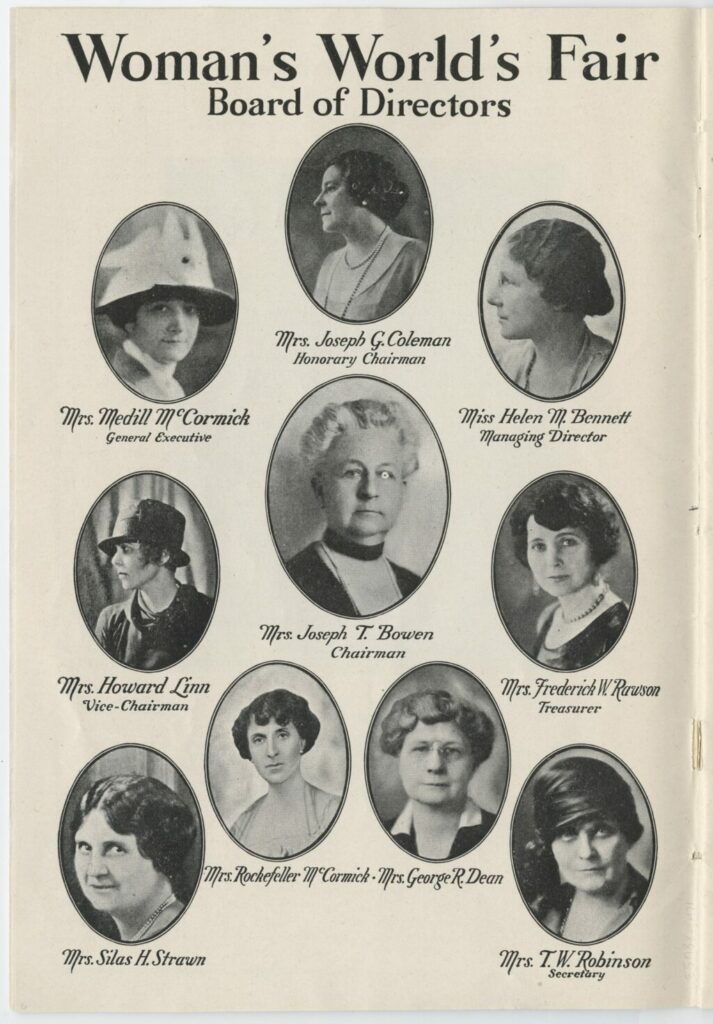
Helen Marie Bennett: Born September 17th, 1972 in Washington, Iowa, Bennett was an American journalist and businesswoman, she worked for the Chicago Record and authored several books including ‘Women and Work.’ She also served as manager of the Chicago Bureau of Occupations, which essentially where college-educated women went to seek employment, the bureau acted as a sort of guide for these women. Despite all this Bennett is most known for being a part of the committee that organized all four woman’s fairs.
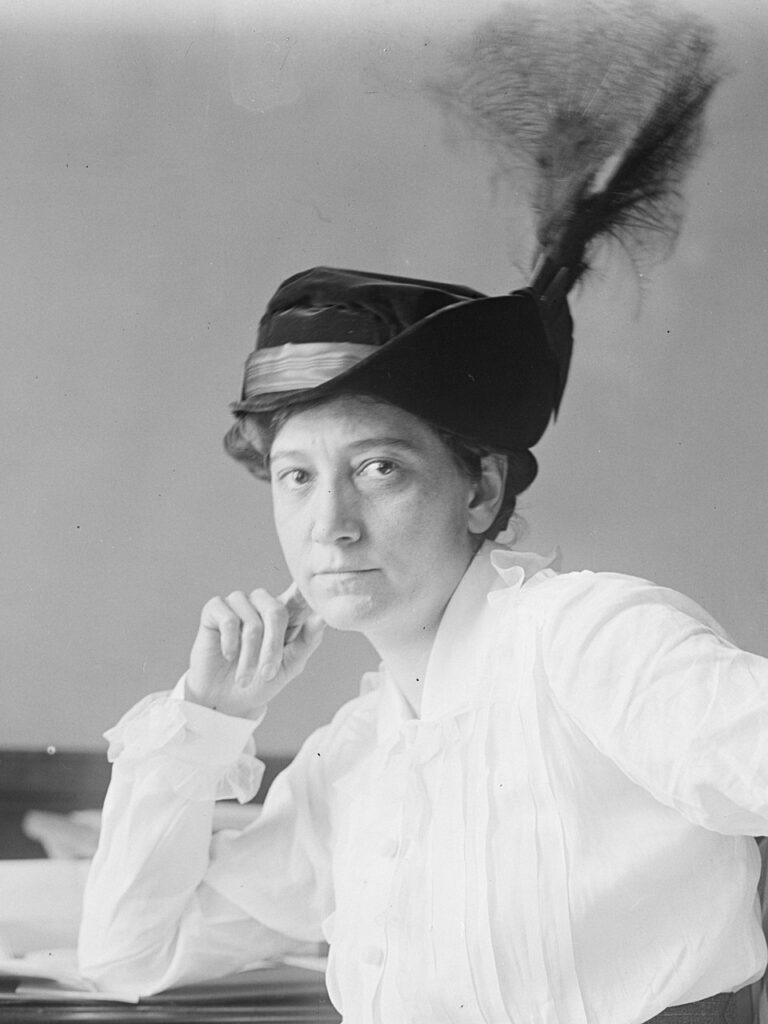
Ruth McCormick: Born March 27th, 1880 in Cleveland Ohio, McCormick went on to become a very successful politician, activist, and publisher. Despite her familial wealth McCormick chose to live within the University of Chicago Settlement, which introduced her to working women and exposed her to the issues they faced. This in turn made McCormick a better writer and publicist at the Chicago Tribune, which she worked at very early in her career.. She was also a member of the Welfare Committee, the Women’s City Club of Chicago, she served as a chairwoman for the women’s welfare section of the National Civil Federation, and was an incredibly active member of the Progressive Party, she even went on to win a seat within the party in 1912. Her husband served one term in the US House of Representatives, and was Senate to Illinois in 1918, very often McCormick is credited with her husband’s political success and she eventually served as chairman to the women’s first Republic National Committee. However after the death of her husband in 1925 McCormick dedicated herself to the Woman’s Fairs. Where she went on to serve as a general executive and as a member on the Board of Directors. Even after the death of her husband McCormick was still incredibly active in politics, going on to become the Republican representative for Illinois from 1929-1931.
The Influences of the Woman’s World’s Fair
The Fair was the result of a multitude of ever-developing factors within the late 19th and early 20th century. These factors and events challenged the traditional gender norms set within society and led to women gaining more freedom within society and their everyday lives.
The 1893 World’s Fair
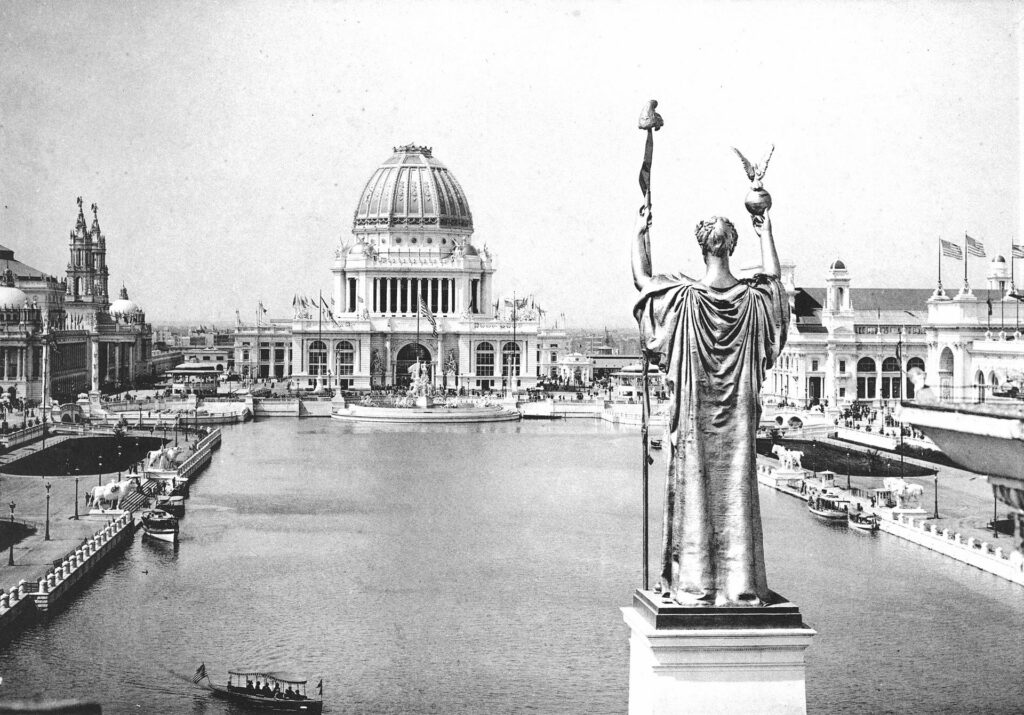
The 1893 World’s Fair, which is also referred to as the Columbian Exposition, was the first ever world’s fair held in Chicago. The Fair was meant to celebrate the 400th anniversary of Christopher Columbus’ arrival in the new world. The centerpiece of such a celebration was over 600 acres of land from the Frederick Law Olmsted Jackson Park were carved out and rebuilt specifically for this exposition. The fair grounds, which would later be referred to as The White City, aimed to demonstrate an ideal and almost euphoric United States. The city was specifically designed and covered in a white plaster, therefore giving it the nickname of White City, all of the buildings were also a specific height in order to give a more uniformed look, and at the center of the entire fair was a large water pool, meant to be representative of the voyage Columbus took. Due to the time and care put into the architectural aspects of the fair, it now serves as a great influence to Chicago architects. Over the six month residency the fair sought to host millions of visitors, from all walks of life, and from all over the world, over 46 nations participated in this fair. As a whole this fair served as an exposition for innovations in architecture, engineering, transportation, weaponry, art, and so much more. This specific fair also greatly impacted the American’s perception of beauty, since it exposed Americans to new cultural aspects from other countries.
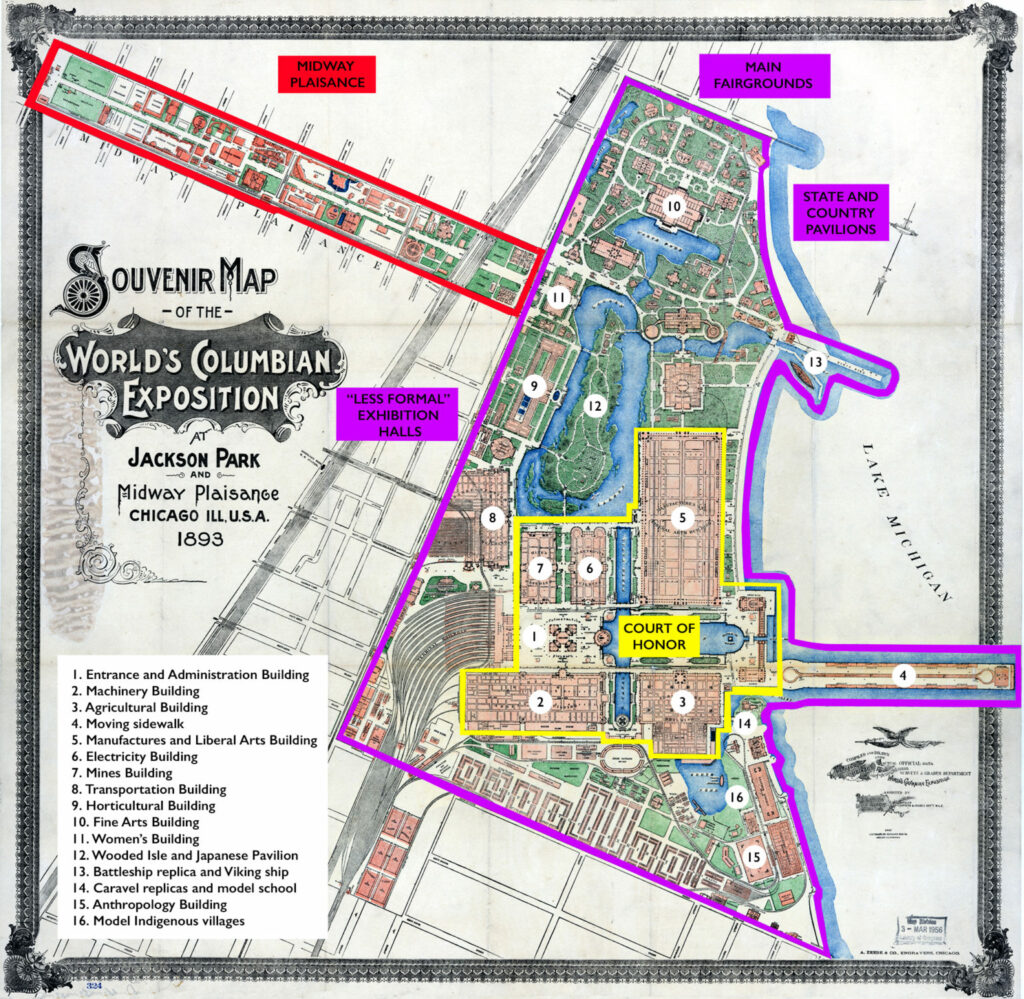
Overall the fair greatly impacted American culture, economics and even politics, it was meant to demonstrate the United States as being wealthy and progressive, however the fair truly exposed several flaws within American society.
Every aspect of the 1893 World’s Fair was specifically designed, which is demonstrated within the very architecture of the fair. It would therefore make sense that the fair was also specifically designed to exclude those typically oppressed within this society, including women. Although there was a Women’s Building within the fair’s design, it was on the very outskirts of the fair’s main buildings, and only a fraction of the size. Aside from this building there was a clear lack of representation of Women within the fair. Due to this many thought that a fair specifically tailored for and representing women was greatly needed, this idea then snowballed into what is now known as the Woman’s World’s Fairs.
The Women’s Suffrage and Rights Movement
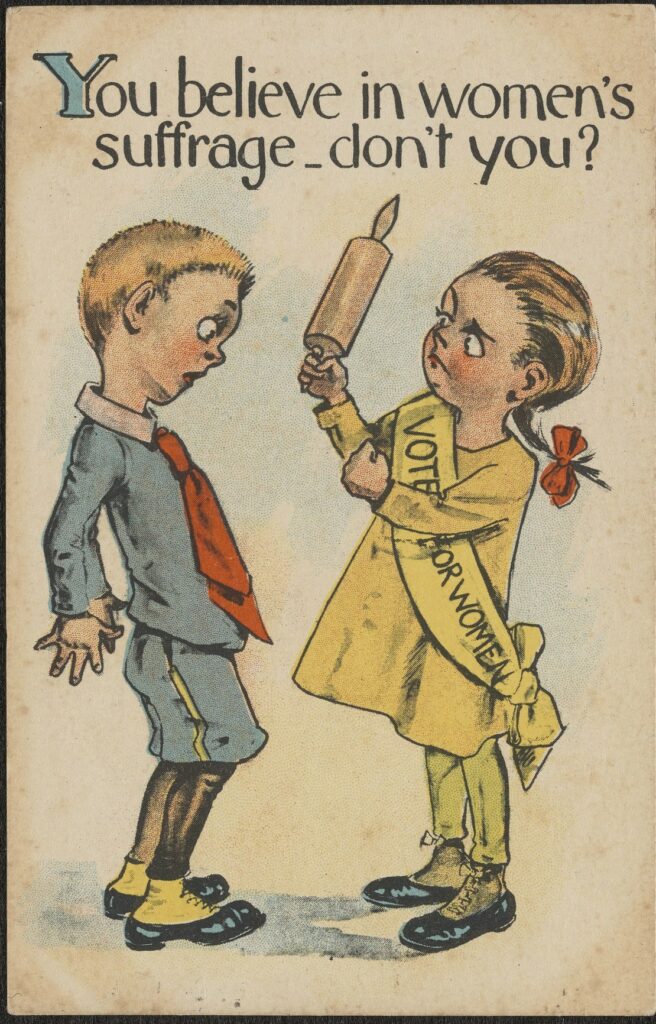
The Women’s Suffrage movement stemmed from the women’s rights movements within the mid-19th century. At first these movements demonstrated several different goals, however despite this several leaders within the movement decided that gaining the right to vote would be most important. It would open doors to several other opportunities women were seeking within society, however disputes over how to gain the vote caused many divisions. Although historians tend to paint the women’s suffrage movement as being a part of the very early 20th century, the first recorded attempt at a national movement began in Seneca Falls, New York in July of 1848. After several other movements, demonstrations, and petitions, the division over how women would gain the right to vote eventually split the movement into two groups, the National Woman Suffrage Association (NWSA) and the American Woman Suffrage Association (AWSA). Around the 1890s the two groups realized their division only impeded on progress and the two combined to great the National American Women Suffrage Association (NAWSA), Thirty years after the groups united an incredible stride in the movement was made when Jeannette Rankin was elected to Congress as the Republican Representative of Montana. Rankin was an active member in the suffrage and rights movements, and used her platform to support the movement, her support was quickly felt in 1917 when she testified to Congress on the movements in order to keep it on the agenda. Soon a Committee on Women’s Suffrage was created in order to consider bills related to women’s voting rights. After two years of hearings, lobbying, and meetings Congress finally passed a bill on women’s voting rights July 7th 1919, and just over a year later the bill was officially adopted into the Constitution.
Although this was an incredible achievement for the women’s suffrage movement, it still excluded a great deal of American citizens. Specifically African American men and women, it would be almost 40 years before their rights were granted. All in all the exclusion of this population of Americans demonstrated the country’s failed Reconstruction movement.
This movement greatly influenced the development of the Women’s World’s Fairs, many members of the organizing committee, including Ruth McCormick, were at the forefront of the Suffrage and Rights movements. The results of these movements, including the right to vote, opened the door to many women and gave them access to the public sphere. However, even though many women were now able to be within the public sphere, they were still greatly limited in what they could do occupationally speaking. The fair was greatly needed in order to demonstrate to women what opportunities were available to them within this new public sphere.
The New Woman
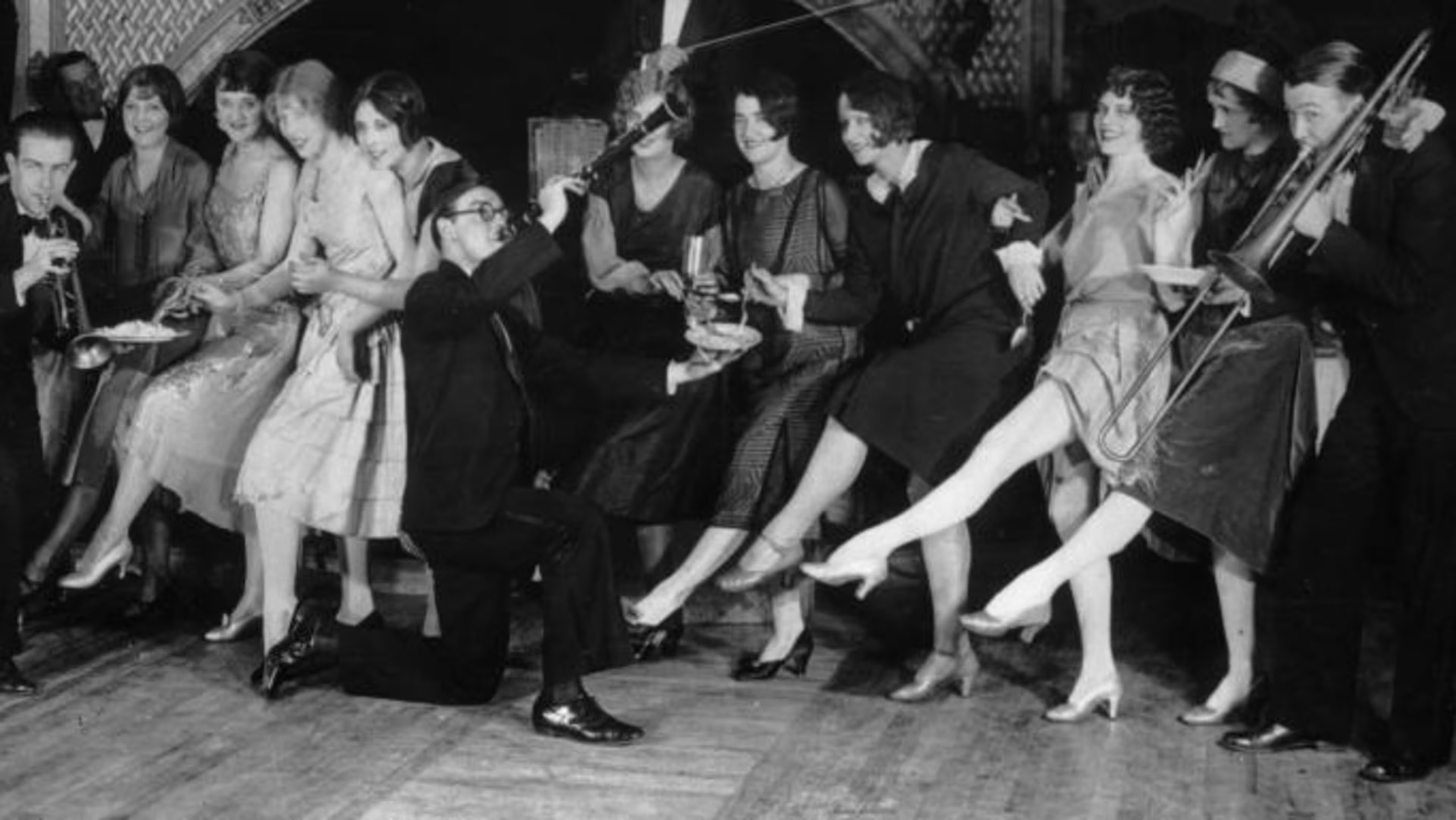
Although the late 1800s and early 1900s demonstrate great times of progression for women’s equality, there is no surprise that older generations often pushed back against these ideas. Often the new and progressive women within society were referred to as the ‘New Woman,’ and as positive as it sounds it was typically meant as a sort of insult. The ‘New Woman’ typically referred to the younger generation of women, who demonstrated feminist ideals and who are now cultural icons. These women, often referred to as ‘flappers’ were actually just working class women. They were women who worked, were financially independent, voted, and spent their nights out on the town, however most importantly they were women who spent money free from male influence. So it’s no surprise that these new women were typically welcomed in urban environments such as Chicago.
The Romanticization of the New Woman
Often when eras of great progression, such as the women’s suffrage and rights movements, get romanticized, and many of the negative aspects are glossed over. First off, the jobs that became readily available for women were smaller-scale jobs men took on to start their climb within their careers, like salesclerks or secretaries. These jobs were then feminized and seen as lesser, therefore they were only paid about 42-63% of what men would make in that exact position. This pay gap was even greater for women of minority groups. Many women also worked within the same positions, and although the Women’s World Fair presented many opportunities, they were mainly directed toward white educated women.
The Working Woman in the Media
Another interesting notion to keep in mind is the role that the media has played in encouraging the development of the New Women and of women within the public sphere. Of course the economy is going to encourage women to work, since in the end it meant they would receive more money. Between the 1900s and 1930s representation of the working women increased dramatically. At first women were presented as doing very simple jobs within offices and stores, but more importantly it was presented that the workplace was an environment in which women would be able to meet their husbands. As the years went on, and working women in media became a natural sight, the media began reflecting the realities of working women’s lives. Representing the mundane, repetitiveness of their lives.
Overall the development of the working women, the new women, and of flappers came as a direct result of the 19th amendment and directly influenced the women’s world’s fair. Although women began to enter the public sphere they were still very limited in what they could do, the fair acted as a networking agent for them. And although these were great times of progression it is extremely important to understand how romanticized this era is and how many negative details are simply glossed over.
Conclusion
As a whole the Woman’s World’s Fair stood as a testament to the progressive nature of the early 20th century. The event, created by women and for women, provided them with access to the opportunities available to them. Achievements within several different fields were proudly displayed and hundreds of booths demonstrated new career paths women of the era could take up. The creation of this fair was the direct result of a multitude of events, including the limited representation in the1893 Columbian Exposition, the strides made within the Suffrage and Woman’s Rights movements, and the active development of what is now known as the ‘New Woman.’ Typically this era of history is presented as being extremely progressive, and the events of the World’s Fairs (both the Columbian and the Woman’s) only further emphasized this idea since they were intended to demonstrate progression in a culture, engineering, and many other topics. However it is important to keep in mind the large population of Americas that were outright discriminated against during these fairs. It’s also important to note that even women who were able to be a part of the public sphere through these job opportunities were still discriminated against and even sexualized in some aspects. Ripples of these misogynist, and racist ideas are demonstrated in the decades after the fairs, and aspects of such are even felt within modern day society. With any event in history it’s important to understand not only the context of the event, but the multifaceted sides of the event as well. By understanding this one can truly grasp the importance and influence that major events, such as the Woman’s World’s Fair, had on society and how it affects modern society.
Timeline:
Citations:
““The New Woman” | US History II (American Yawp).” Courses.lumenlearning.com, courses.lumenlearning.com/suny-ushistory2ay/chapter/the-new-woman-2/.
“Chicago Architecture Center.” Chicago Architecture Center, 2024, www.architecture.org/online-resources/architecture-encyclopedia/worlds-columbian-exposition-of-1893.
Dumenil, Lynn. The Modern Temper : American Culture and Society in the 1920s. New York, Hill And Wang, 1995.
Estherwang. “The 1925 Woman’s World’s Fair in Chicago – Chicago History Museum.” Chicago History Museum, 22 Apr. 2025, www.chicagohistory.org/the-1925-womans-worlds-fair-in-chicago/. Accessed 18 Mar. 2026.
Ganz, Cheryl. The 1933 Chicago World’s Fair : A Century of Progress. Urbana, Univ. Of Illinois Press, 2012.
Grossman, Ron. “Chicago’s Society Women Threw a World’s Fair of Their Own in the 1920s to Showcase Female Talent.” Chicago Tribune, March 11, 2024. https://www.chicagotribune.com/2024/03/03/womens-world-fair-chicago/
Miller, Taylor Jade. “New Women, New Opportunities: The New Women of Chicago’s World’s Fairs, 1893-1934,” 2018
“MCCORMICK, Ruth Hanna | US House of Representatives: History, Art & Archives.” History.house.gov, history.house.gov/People/Detail/17791.
Patrick, Jeanette. “Ruth Hanna McCormick.” National Women’s History Museum, 2016, www.womenshistory.org/education-resources/biographies/ruth-hanna-mccormick-simms.
Scott. “Woman’s Part at the World’s Fair, Part I.” Chicago’s 1893 Worlds Fair, April 2, 2024. https://worldsfairchicago1893.com/2019/03/01/womans-part-at-the-worlds fair-part-1/.
“The House Supports Women’s Suffrage, 1917–1919 | US House of Representatives: History, Art & Archives.” History.house.gov, history.house.gov/Exhibitions-and-Publications/WIC/Historical-Essays/No-Lady/House-Supports-Suffrage/.
“The World’s Columbian Exposition: The White City and Fairgrounds – Smarthistory.” Smarthistory.org, smarthistory.org/white-city-and-fairgrounds/.
Tracey Jean Boisseau, and Abigail M Markwyn. Gendering the Fair : Histories of Women and Gender at World’s Fairs. Urbana, University Of Illinois Press, 2010.
Weimann, Jeanne Madeline. The Fair Women: The Story of the Woman’s Building World’s Columbian Exposition, Chicago 1983. Chicago, IL: Chicago, III : Academy Chicago, 1981.
“Woman’s World’s Fair, 1925.” Chicagohistory.org, 2026, encyclopedia.chicagohistory.org/pages/1374.html. Accessed 18 Mar. 2026.
Suggested Resources:
The Chicago Digital Collections
The Chicago Architecture Center

Madison is currently a senior at the Ramapo College of New Jersey, who took this course in the spring of 2026. She has a major in Visual Arts, with a concentration in Art History, along with a double minor in Anthropology and Museum and Exhibitions Studies. After graduating Madison hopes to continue her education in order to become an Archaeologist or Museum Educator.
