
The 1920s are often a decade characterized by glamour and excess following World War I. Due to the culture of the twenties, people often only associate the decade with the age of jazz and flappers without highlighting the other significant aspects. Thus, the historiography surrounding the twenties constantly shifts, revealing more hidden narratives of the decade. Historians, Henry F. May and Burl Noggle, both approached their studies of the 1920s with open minds to provide a more comprehensive understanding of the decade.
1956: Henry F. May’s “Shifting Perspectives on the 1920s”
In 1956 American historian Henry F. May wrote a historiographic article on the 1920s titled “Shifting Perspectives on the 1920s.” Throughout the essay, May challenges the dominant historical perspective that portrayed the twenties as merely a decade of cultural excess. May begins his essay with a discussion of the origin of these popular narratives. He highlights how the majority of the characterizations of the twenties did not come from historians, however from leaders of the twenties such as businessmen and writers.
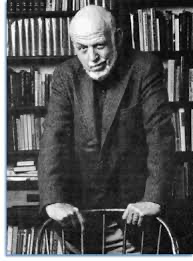
These groups effectively controlled the historical interpretations of their work and skewed narratives to be more favorable. Henry F. May highlights how primary historians writing about the 1920s used these interpretations to understand the impact of the decade.1 Further, he criticizes the narratives of these historians for their limited and narrow view of the economic and political contexts of the decade. He demonstrates how the further society progresses from the 1920s the more historians could accurately portray the intellectual and economic tensions of the decade based on primary sources, not skewed interpretations. He ends the article calling for historians to utilize diverse sources to encourage multiple perspectives, explore the dynamics of prewar America, and finally analyze the effects of the 1920s to provide an accurate historical account. 2Henry F. May’s work helped historians contextualize the intellectual and cultural shifts through an emphasis of these political, economic, and social dynamics at the center of the twenties. He proved how these dynamics were essential to a comprehensive understanding of the decade.
1966: Burl Noggle’s “The Twenties: A New Historiographical Frontier”
Similarly, in 1966 American historian Burl Noggle wrote “The Twenties: A New Historiographical Frontier.” Burl Noggle also critiqued previous historians for their narrow interpretations of the decade. He begins his article with a discussion of the works of John Spencer Bassett and Fredrick Lewis Allen.3 Noggle describes how Allen’s interpretation of the twenties remained the dominant perspective nearly thirty years later. Allen published his book Only Yesterday, in 1931 immediately following the 1920s, however, the majority of the writing took place during the decade. Allen claimed to provide a historical account of the decade while living through it; this further proves May’s perspective that many historical interpretations were not in fact historical but simply primary sources of the decade which complicated the historical narrative of the twenties.4

Noggle goes on to cite May’s argument surrounding the historiography of the decade. Similar to May, Burl Noggle called for historians to seek beyond the popular narratives to explore the political, economic, and cultural complexities that drove the dynamics of the decade. Noggles believes historians could portray an accurate historical interpretation through an analysis of these intellectual complexities.
Significance of Historiography
I agree with the historiographic interpretations of both May and Noggle. As history and society move further away from the 1920s the more scholars can interpret the effects of the decade and learn about how the political, economic, and cultural dynamics informed history. This is due to a multitude of reasons such as accessibility of sources, the internet, and overall the acceptance of less dominant narratives. It is essential to analyze historiographical interpretations over time because they often reflect the cultural conditions of their time period. It is extremely difficult, maybe even impossible to present a purely objective historical analysis. All historical interpretations reflect some narrative or bias to some degree. Historiography allows scholars to explore those narratives to better comprehend the attitudes of society at that time. For instance, prior to the Civil Rights Movement, there was not much scholarship surrounding the black experience during the early twentieth century.5 As social and cultural attitudes developed throughout the later twentieth century, the scholarship surrounding Black Americans increased and reflected that shift.
Through their articles, both historians analyze the political landscape of the decades following the twenties to reveal the true effects of the movements from the 1920s. Henry F. May and Burl Noggle helped reframe the 1920s as more than a period of cultural excess and explored the economic and political tensions that drove the dynamics of the decade. They called for historians to analyze the decade as a critical turning point in society. The changing historiographic interpretations and scholarship also emphasize the cultural importance of hidden narratives from previously marginalized groups. Historiography reveals how historical interpretation is shaped by the values of each generation. It provides a unique opportunity to rewrite and reveal new narratives of the past.
Footnotes
- Henry May, “Shifting Perspectives on the 1920s
Download Shifting Perspectives on the 1920sOpen this document with ReadSpeaker docReader,” Mississippi Valley Historical Review (Dec. 1956), 406. ↩︎ - Henry May, “Shifting Perspectives on the 1920s
Download Shifting Perspectives on the 1920sOpen this document with ReadSpeaker docReader,” Mississippi Valley Historical Review (Dec. 1956), 427. ↩︎ - Burl Noggle, “The Twenties: A New Historiographical Frontier
Download The Twenties: A New Historiographical FrontierOpen this document with ReadSpeaker docReader,” The Journal of American History (Sept. 1966), 299. ↩︎ - Burl Noggle, “The Twenties: A New Historiographical Frontier
Download The Twenties: A New Historiographical FrontierOpen this document with ReadSpeaker docReader,” The Journal of American History (Sept. 1966), 302. ↩︎ - Banks, James A. “African American Scholarship and the Evolution of Multicultural Education.” The Journal of Negro Education 61, no. 3 (1992): 273–86. https://doi.org/10.2307/2295248, 2. ↩︎
Bibliography
Banks, James A. “African American Scholarship and the Evolution of Multicultural Education.” The Journal of Negro Education 61, no. 3 (1992): 273–86. https://doi.org/10.2307/2295248.
Burl Noggle, “The Twenties: A New Historiographical Frontier
Download The Twenties: A New Historiographical FrontierOpen this document with ReadSpeaker docReader,” The Journal of American History (Sept. 1966), pp. 239-314.
“Burl Lee Noggle Famous Death.” Khoolood, October 29, 2014. https://www.khoolood.com/obituaries/5130/Burl-Lee-Noggle.
“Henry F. May (1915–2012).” AHA. Accessed May 7, 2025. https://www.historians.org/perspectives-article/henry-f-may-1915-2012-december-2012/.
Henry May, “Shifting Perspectives on the 1920s
Download Shifting Perspectives on the 1920sOpen this document with ReadSpeaker docReader,” Mississippi Valley Historical Review (Dec. 1956), pp. 405-427.

Erin Pryor is a History and Philosophy double major in the Honors Program, graduating with the Class of 2025. She is a writing consultant on campus at the Center for Reading and Writing. She is the president of Phi Alpha Theta history honors society and a member of Phi Alpha Delta pre-law fraternity.
