
Langston Hughes was one of the most prominent voices of the 1920s through the Harlem Renaissance which celebrated Black culture, creativity, and intellectualism. Langston Hughes’ poetry Collection The Weary Blues is indicative of the period’s racial tensions and progressive efforts towards justice. Society celebrates Hughes for his fruitful contributions to the culture and creativity of the Harlem Renaissance. Majority of the themes explored in Hughes’ The Weary Blues were expressions and reactions to the progressive reforms and racial tensions of the nineteenth and early twentieth centuries. He gave a new voice and spirit to the African American community through his insightful depictions of African American daily life, struggles, and identity through his poetry.
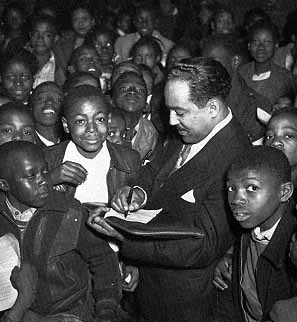
Specifically, much of The Weary Blues explored the impact of the progressive reforms such as Prohibtion had on the African American community and culture. Speakeasy and Jazz club culture associated with Harlem in the twenties boomed as a result of the Prohibition era.1 These speakeasies and clubs were an opportunity for Black artists and musicians to publicly voice their work and beliefs at a time where African Americans were still heavily disenfranchised. Specific institutions, namely The Cotton Club, inspired a few of the poems in the collection such as the title poem “The Weary Blues.”
Similar to the influence of “The New Woman” as expressed by Lynn Dumenil’s The Modern Temper, the Harlem Renaissance and figures such as Langston Hughes inspired concepts of self-expression, individualism, and advocacy within the Black community. “The New Woman,” as expressed by Dumenil challenged traditional gender roles through their pursuit of education, entering the workforce, and engaging in political activism.2 Different political and activist groups such as the National Association of Colored Women continued to grow and assisted the Suffrage Movement. Despite continuous racial prejudices, Black women played a significant role in the Women’s Suffrage movement; “They also viewed it as a way of addressing racial issues such as Jim Crow, male disenfranchisement, and economic discrimination, goals that underlined their view that the elevation of black women was inseparable from racial progress.”3 Despite the positive intentions of these women, they were often met with racism and prejuidice which furthered the racial tension of the twenties. These hardships connected the African American community through shared experiences which brought both Black men and women together to pursue common agendas that addressed the racial injustices of America. Overall, these attitudes prompted the groundwork for celebratory and inclusive movements such as The Harlem Renaissance. The Harlem Renaissance provided these women a space to express their frustrations and passions through art, music, and other creative pursuits.
Ultimately, the Harlem Renaissance was a response to racial tensions and prejudice aimed to foster and encourage Black identity, creativity, and intellectualism. Langston Hughes used his poetry collection to depict the daily lives and stuggles of African Americans in Harlem during the twenties. The movement would not have been possible without the numerous progressive reforms and ideologies that bloomed in the twenties that allowed for the expression of previously silenced voices.
- Drowne, Kathleen. “‘THEAH’S LIFE ANYWHERES THEAH’S BOOZE AND JAZZ’: Home to Harlem and Gingertown in the Context of National Prohibition.” Callaloo 34, no. 3 (2011): 2. http://www.jstor.org/stable/41243200.
↩︎ - Dumenil, Lynn. The Modern Temper: American Culture and Society in the 1920s. United States: Hill and Wang, 2024.
↩︎ - Dumenil. The Modern Temper. 126.
↩︎
Bibliography
Bowery, KGTsays:, Toni Bareasays:, TONE B HURTsays:, and Name. “The Tale of the Cotton Club: ‘The Aristocrat of Harlem.’” The Bowery Boys: New York City History, March 6, 2022. https://www.boweryboyshistory.com/2016/05/tale-cotton-club-aristocrat-harlem.html.
Drowne, Kathleen. “‘THEAH’S LIFE ANYWHERES THEAH’S BOOZE AND JAZZ’: Home to Harlem and Gingertown in the Context of National Prohibition.” Callaloo 34, no. 3 (2011): 2. http://www.jstor.org/stable/41243200.
Dumenil, Lynn. The Modern Temper: American Culture and Society in the 1920s. United States: Hill and Wang, 2024.

Erin Pryor is a History and Philosophy double major in the Honors Program, graduating with the Class of 2025. She is a writing consultant on campus at the Center for Reading and Writing. She is the president of Phi Alpha Theta history honors society and a member of Phi Alpha Delta pre-law fraternity.
