
Overview- The Impact of Langston Hughes’ The Weary Blues and the Harlem Renaissance
The publication of Langston Hughes’ first poetry collection, The Weary Blues, in 1926 marked a defining moment in the Harlem Renaissance. In his poems, Langston Hughes displays the rhythms of jazz and the struggles of Black life in the 1920s through his unique and distinct voice that is both deeply personal and indicative of the era. The Weary Blues not only highlights Hughes’ innovative use of poetry and prose, but also expresses the social and cultural vibrancy of Harlem in the 1920s.
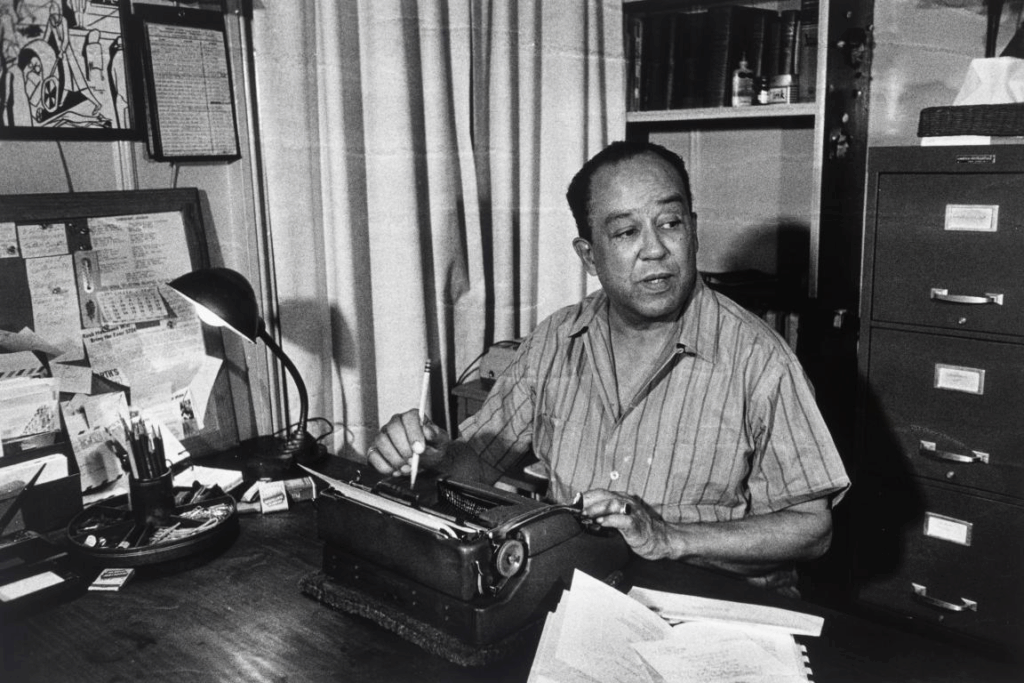
Langston Hughes remains one of the most prominent voices of the 1920s through the Harlem Renaissance which celebrated Black culture, creativity, and intellectualism. Langston Hughes’ poetry Collection The Weary Blues is indicative of the period’s racial tensions and progressive efforts towards justice. Majority of the themes explored in The Weary Blues were expressions and reactions to the Black experience as well as the progressive reforms and racial tensions of the nineteenth and early twentieth centuries. Hughes, along with other Harlem Renaissance artists, gave a new voice to the African American community through his insightful portrayal of African American daily life, struggles, and identity through poetry and music. Society remembers Hughes for his impactful contributions to the culture and creativity of the Harlem Renaissance.
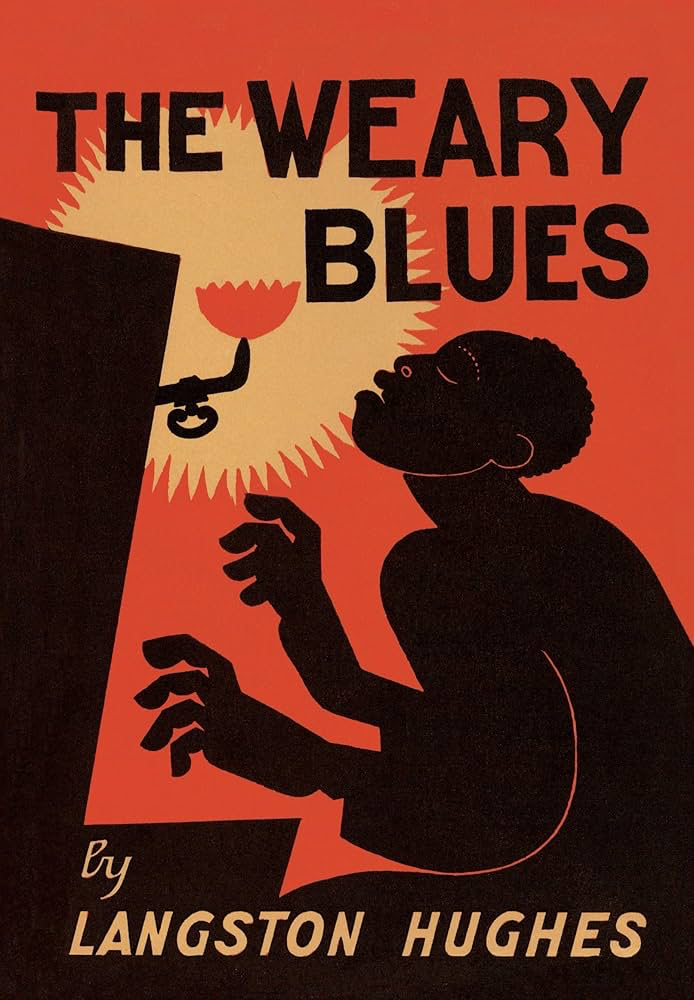
The Harlem Renaissance
As the economy grew in the early twentieth century, thousands of African Americans relocated to industrial cities such as New York, Philadelphia, Chicago, and Detroit. These economic opportunities sparked a new hope and passion for the Black community to thrive in the growing world. Beyond increasing economic opportunity, new attitudes emerged in and revolving around the African American community in the post-reconstruction world.
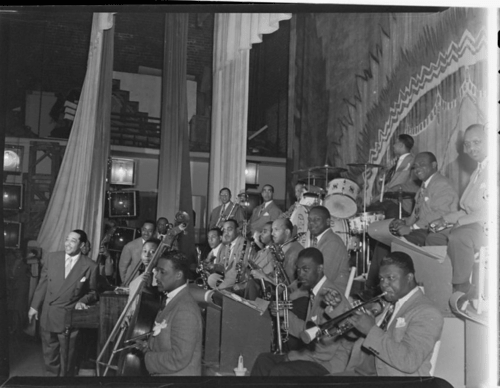
The African American community was viewed as more radical, assertive, and politically active in public spaces which coined the term of “The New Negro.”1 This Great Migration and development of “The New Negro” paved the way for the Harlem Renaissance to thrive. The Harlem Renaissance was a creative cultural movement centered in the Harlem neighborhood of New York City.2 Harlem was the perfect grounds for the artistic and cultural movement because the strong community among African Americans became a space for intellectuals to interact and share their creative pursuits. Prohibition changed the cultural landscape of Harlem and of underground nightlife and speakeasy culture. These speakeasies and clubs became lively venues for jazz performances and Black entertainers. Prohibition offered new spaces for artistic expression and cultural exchange.3
Characterized by a celebration of Black artists, musicians, and writers, the movement helped the African American community voice their experiences of social injustice and prejudice. Through poetry and other forms of artistic expression, Harlem Renaissance artists focused on these themes of racial identity and community.4 Major figures of the Harlem Renaissance included novelists Claude McKay, Jean Toomer, Jessie Fauset; artists Aaron Douglas, and Augusta Savage; and poets Countee Cullen and Sterling Brown. The Harlem Renaissance expanded beyond the borders of the Harlem neighborhood to reach audiences across America and for generations to come.
One of the most influential figures of the Harlem Renaissance was poet Langston Hughes. Hughes gave voice to the people in his community and helped shape a new vision of what it meant to be Black in America. He described the everyday lives, hopes, and struggles of Black Americans. He called for his fellow artists to also focus on ordinary life as the subject of their works rather than the white Protestant themes. His poetry often incorporated the rhythms of jazz and blues as metaphors for the Black experience. Throughout the collection in poems such as “The Weary Blues,” “The Negro Speaks of Rivers,” and “I, Too,” Hughes not only celebrates the pride of Black heritage but also advocates for their civil rights. His work helped inspire future generations of Black writers and thinkers throughout the Civil Rights Movement and well into the twenty-first century.
The Weary Blues
It is easy to recognize the impact jazz and blues culture had on the work of Harlem Renaissance artists and Langston Hughes in particular. Specifically, much of The Weary Blues explored the impact of the progressive reforms such as Prohibition had on the African American community and culture. Institutions, namely The Cotton Club, inspired a few of the poems in the collection such as the title poem “The Weary Blues.”
“The Weary Blues” focuses on Jazz culture in a New York City bar on Lenox Avenue, a common meeting place for working-class individuals of the area. Through this poem, Hughes encapsulates all aspects of 1920s Jazz. Hughes wrote the poem in a specific rhythm to mimic the structure and spirit of blues music. As shown in the video titled “‘The Weary Blues’ on CBUT, 1958” the poem is not meant to be read off the page, but performed, a common attribute to blues-inspired art. He uses metaphors to compare the rhythm and tones of jazz and blues music to the experiences of the Black man in America. The poem represents a standard blues performance from the perspectives of the singer and the narrator.5 The narrator describes the “dimly lit and shabbily furnished” club setting. The rest of the poem centers around a blues performer who sings about his sorrow and fatigue. The singer states, “I got the Weary Blues / And I can’t be satisfied” as he lazily sways to the rhythm of the tune. Hughes uses repetition to mimic the emotional currents of traditional blues and jazz. The lines “He did a lazy sway… / He did a lazy sway…” further show the swinging rhythm of the jazz performance. His language, tone, and body movement emphasize the melancholy feel associated with Jazz and the Black experience in the 1920s.
Significance to the 1920s
Specifically, much of The Weary Blues explored the impact the progressive reforms had on African American community and culture. Speakeasy and Jazz club culture associated with Harlem in the twenties boomed as a result of the Prohibition era.6 These speakeasies and clubs were an opportunity for Black artists and musicians to publicly voice their work and beliefs at a time when African Americans were still heavily disenfranchised. Before the Harlem Renaissance, the majority of art culture centered around the white experience. Specific institutions, namely The Cotton Club, inspired a few of the poems in the collection such as the title poem “The Weary Blues.”
Ultimately, the Harlem Renaissance was a response to racial tensions and prejudice aimed to foster and encourage Black identity, creativity, and intellectualism. Langston Hughes used his poetry collection to depict the daily lives and struggles of African Americans in Harlem during the twenties. The movement would not have been possible without the numerous progressive reforms and ideologies that bloomed in the twenties that allowed for the expression of previously silenced voices.
Footnotes
- Dumenil, Lynn. The Modern Temper: American Culture and Society in the 1920s. United States: Hill and Wang, 2024. 160.
↩︎ - A new African American identity: The Harlem Renaissance | National Museum of African American History and Culture. Accessed March 26, 2025. https://nmaahc.si.edu/explore/stories/new-african-american-identity-harlem-renaissance. ↩︎
- Drowne, Kathleen. “‘THEAH’S LIFE ANYWHERES THEAH’S BOOZE AND JAZZ’: Home to Harlem and Gingertown in the Context of National Prohibition.” Callaloo 34, no. 3 (2011): 2. http://www.jstor.org/stable/41243200.
↩︎ - Dumenil, The Modern Temper, 161. ↩︎
- Hughes, Langston, and Cheryl A. Wall. “A Note on ‘The Weary Blues.’” Lenox Avenue: A Journal of Interarts Inquiry 3 (1997): ii–vi. https://doi.org/10.2307/4177056.
↩︎ - Drowne, Kathleen. “‘THEAH’S LIFE ANYWHERES THEAH’S BOOZE AND JAZZ’: Home to Harlem and Gingertown in the Context of National Prohibition.” Callaloo 34, no. 3 (2011): 2. http://www.jstor.org/stable/41243200. ↩︎
Bibliography
Hughes, Langston, and Cheryl A. Wall. “A Note on ‘The Weary Blues.’” Lenox Avenue: A Journal of Interarts Inquiry 3 (1997): ii–vi. https://doi.org/10.2307/4177056.
A new African American identity: The Harlem Renaissance | National Museum of African American History and Culture. Accessed March 26, 2025. https://nmaahc.si.edu/explore/stories/new-african-american-identity-harlem-renaissance.
Drowne, Kathleen. “‘THEAH’S LIFE ANYWHERES THEAH’S BOOZE AND JAZZ’: Home to Harlem and Gingertown in the Context of National Prohibition.” Callaloo 34, no. 3 (2011): 2. http://www.jstor.org/stable/41243200.
Dumenil, Lynn. The Modern Temper: American Culture and Society in the 1920s. United States: Hill and Wang, 2024.
Libertarianism.org. Accessed April 30, 2025. https://www.libertarianism.org/articles/harlem-renaissance-black-cultural-innovation-unleashed.
YouTube. Accessed April 30, 2025. https://www.youtube.com/watch?v=uM7HSOwJw20.

Erin Pryor is a History and Philosophy double major in the Honors Program, graduating with the Class of 2025. She is a writing consultant on campus at the Center for Reading and Writing. She is the president of Phi Alpha Theta history honors society and a member of Phi Alpha Delta pre-law fraternity.
